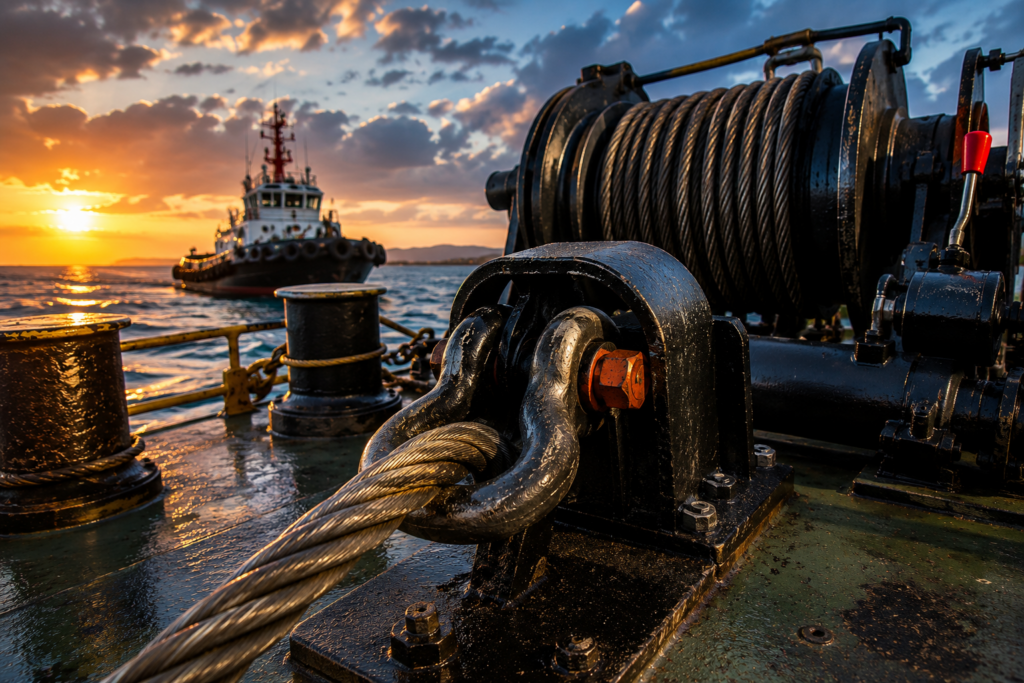

A berthing capstan takes the strain out of handling heavy mooring lines during docking and departure. Ports, shipyards, and vessels rely on this rotating drum to manage line tension safely, instead of leaving crews to haul ropes by hand. Because it reduces manual strain and speeds up mooring, a well-maintained berthing capstan is a core part of safe port operations.
What Is a Berthing Capstan?
A berthing capstan is a vertically-mounted, rotating drum that provides mechanical assistance for hauling heavy ropes or cables during berthing and mooring operations. It manages the tension and movement of mooring lines, so vessels stay securely docked even in shifting currents or wind. Depending on the application, a capstan runs on manual, electric, hydraulic, or pneumatic power.
Key Components of a Berthing Capstan
- Rotating drum — the central component that winds the rope or cable.
- Drive system — electric motors, hydraulic systems, or manual gears that power the unit.
- Control system — allows precise speed and torque regulation for safe operation.
- Base structure — secures the capstan to the deck or quay and keeps it stable under load.
Types of Berthing Capstans
- Electric capstan — powered by electric motors, so it suits small to medium-sized vessels well.
- Hydraulic capstan — built for high-power applications, which makes it a common choice for larger vessels.
- Manual capstan — operated by hand, therefore it works best for smaller operations or emergency backup.
- Customized capstan — engineered for specific operational needs, such as harsh environmental conditions.
How Berthing Capstans Work
1. Preparation
Crews secure the mooring lines to the vessel first, then pass them through guiding elements such as fairleads.
2. Engagement
The rope winds around the capstan drum next, so it is ready to take the load once the drive engages.
3. Operation
The capstan then rotates to pull the line, adjusting tension or moving the vessel as needed.
4. Securing
Once the vessel reaches the desired position, the crew secures the mooring lines on bitts or bollards.
Benefits of Berthing Capstans
- Enhanced safety — reduces manual handling of heavy ropes, so it minimizes accidents on deck or quay.
- Efficiency — streamlines mooring operations, which saves time during docking and departure.
- Versatility — adapts to various ship sizes and mooring conditions.
- Durability — built to withstand harsh marine environments with minimal maintenance.
Applications of Berthing Capstans
- Commercial ports — essential for mooring cargo ships and tankers.
- Naval operations — used to dock naval vessels efficiently and securely.
- Shipyards — facilitates vessel movement during repair or maintenance.
- Recreational marinas — supports mooring of yachts and smaller craft.
Choosing the Right Berthing Capstan
Selecting the right berthing capstan comes down to a few key factors. Load capacity matters most, since the capstan must handle the expected line tension without strain. Power source is the next consideration, because electric, hydraulic, or manual operation each suits different vessel sizes and budgets. Environmental exposure also plays a role, as corrosion, temperature, and saltwater exposure all affect long-term reliability. Finally, operational speed should match the line-handling pace the port or vessel actually needs.
Maintenance of Berthing Capstans
| Task | Purpose |
|---|---|
| Inspection | Periodically checks the drum, motor, and control systems for wear and tear. |
| Lubrication | Keeps moving parts well-lubricated to prevent friction and corrosion. |
| Cleaning | Removes salt and debris so material degradation slows down. |
| Servicing | Addresses mechanical or hydraulic issues through professional inspection. |
Frequently Asked Questions
What is the main purpose of a berthing capstan?
A berthing capstan manages the tension and movement of mooring lines during docking, so a vessel stays secured without crew members hauling heavy ropes by hand.
What power sources do berthing capstans use?
A capstan can run on manual, electric, hydraulic, or pneumatic power, and the right choice depends on vessel size, load requirements, and operating environment.
How often should a berthing capstan be inspected?
Regular inspection intervals depend on usage and manufacturer guidance, but routine checks of the drum, motor, and control systems help catch wear before it causes a failure.
Which vessels benefit most from a hydraulic capstan?
Larger vessels and high-power applications benefit most from hydraulic capstans, since they handle heavier mooring loads than electric or manual units.
Can a berthing capstan be customized for harsh environments?
Yes, manufacturers build customized capstans for specific operational needs, including corrosion resistance and durability in extreme temperature or saltwater exposure.
Why Choose Al Safwan Marine
Trusted marine equipment and mooring solutions across the UAE and GCC region.
Hydraulic Services Automation Load Testing
Follow Al Safwan Marine on LinkedIn for updates on our marine equipment and services.
Filed under Hydraulics, Marine supply