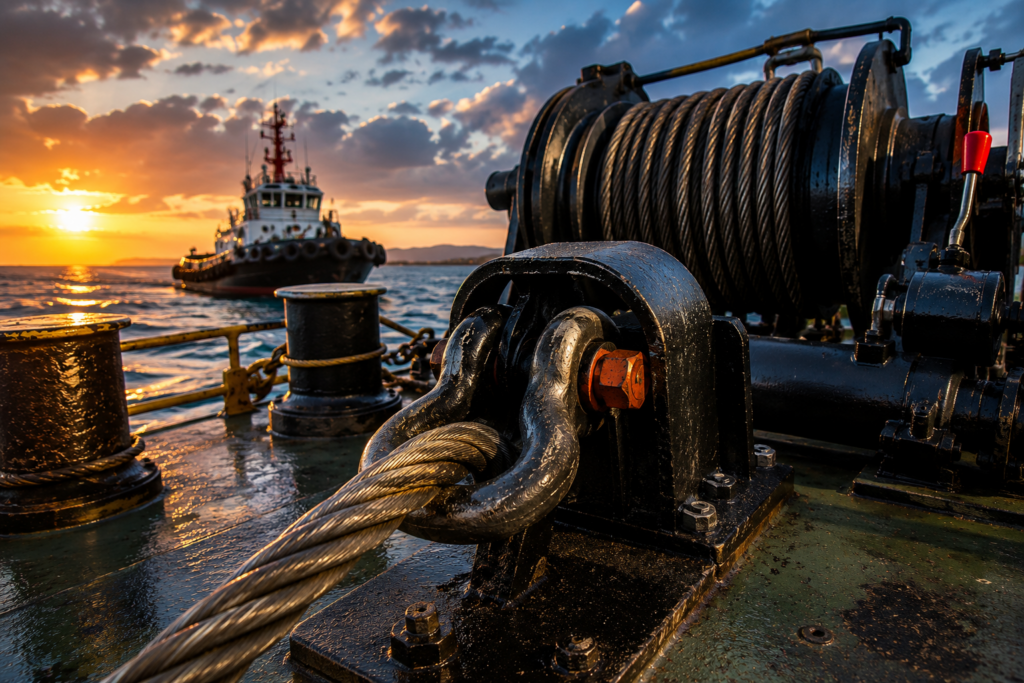
A mooring winch only gets noticed when it stops holding tension — and by then, a vessel is drifting off the berth with lines slack or snapping. Regular inspection and maintenance is what keeps that scenario from ever playing out.
Safe and efficient mooring operations are essential for commercial vessels, offshore assets, and port operations. A marine mooring winch is a critical deck machinery system that secures vessels safely during docking and undocking. Failure of a mooring winch can result in operational delays, equipment damage, safety risks, and costly downtime. Regular inspection, preventive maintenance, and timely repairs help ensure reliable performance, extend equipment life, and maintain compliance with international maritime standards.
What is a Marine Mooring Winch?
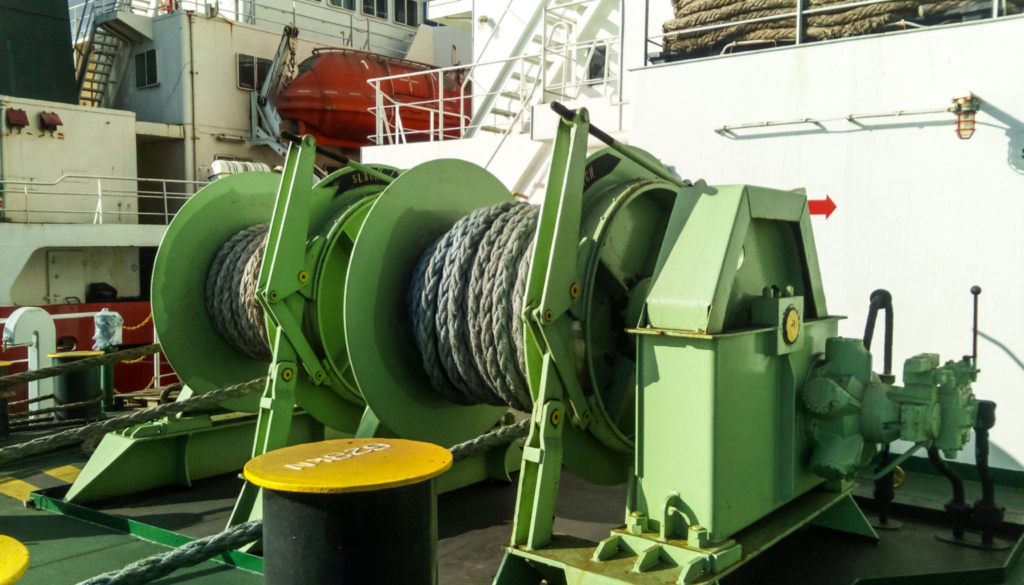
A marine mooring winch is used to control and maintain the tension of mooring lines while a vessel is berthed or operating alongside offshore facilities. Modern winches are equipped with advanced braking systems, hydraulic or electric drives, and automated controls to ensure safe and efficient mooring operations. Common types include:
- Electric Mooring Winches
- Hydraulic Mooring Winches
- Electro-Hydraulic Mooring Winches
- Automatic Tension Mooring Winches
- Manual Mooring Winches
Marine Mooring Winch Services
Professional servicing helps prevent unexpected failures and keeps mooring systems operating safely. Typical services include:
- Mooring winch inspection
- Preventive maintenance
- Hydraulic system servicing
- Electrical troubleshooting
- Mechanical repairs
- Brake system testing
- Gearbox inspection and overhaul
- Wire rope replacement
- Drum refurbishment
- Load testing
- Commissioning
- Emergency onboard repairs
Related service: Winch load testing is part of our wider Load Testing capability, and hydraulic drive and pump work is supported by our dedicated Hydraulic Services team.
Inspection & Preventive Maintenance
Routine inspections help identify wear, corrosion, hydraulic leaks, and mechanical issues before they become critical failures. Preventive maintenance typically includes:
Visual & Corrosion Checks Visual inspection and corrosion assessment of the winch structure.
Brake & Safety Devices Brake system checks, functional testing, and safety device inspection.
Hydraulic & Wire Rope Hydraulic oil inspection and wire rope examination for wear.
Gearbox & Bearings Gearbox servicing and bearing lubrication to prevent premature wear.
A planned maintenance programme improves equipment reliability while reducing downtime and repair costs.
Hydraulic & Electrical Troubleshooting
Modern mooring winches rely on hydraulic and electrical systems for safe operation. Professional troubleshooting helps restore performance quickly and minimizes operational interruptions. Services include:
- Hydraulic pump and motor repairs
- Hydraulic leak detection
- Valve and pressure testing
- Electric motor servicing
- PLC and control panel diagnostics
- Sensor calibration
- VFD troubleshooting
- Emergency stop system testing
Hydraulic and control system diagnostics on mooring winches follow the same engineering approach as our broader Automation and Hydraulic Hoses support for shipboard machinery.
Repair, Overhaul & Load Testing
Continuous operation in harsh marine environments causes wear on mechanical and hydraulic components. Regular overhauls restore equipment performance and improve long-term reliability. Typical overhaul services include:
- Gearbox overhaul
- Drum refurbishment
- Bearing and seal replacement
- Brake adjustment
- Shaft alignment
- Hydraulic component servicing
- Functional testing
- Static and dynamic load testing
- Final commissioning
Benefits of Professional Mooring Winch Maintenance
A proactive maintenance programme provides significant operational benefits:
- Improved crew safety
- Reduced vessel downtime
- Enhanced operational reliability
- Extended equipment life
- Lower maintenance costs
- Improved braking performance
- Increased mooring efficiency
- Compliance with international maritime standards
Applications
Marine mooring winch services are suitable for:
Container Ships Bulk Carriers Oil & Chemical Tankers LNG & LPG Carriers Offshore Support Vessels AHTS Vessels Platform Supply Vessels FPSOs Tug Boats Passenger & Cruise Vessels Dredgers Naval Vessels Port & Harbour Equipment
Frequently Asked Questions
How often should a mooring winch be inspected?
Routine inspections should follow the vessel’s Planned Maintenance System (PMS), manufacturer recommendations, and class requirements.
What are the common causes of mooring winch failure?
Hydraulic leaks, brake wear, gearbox damage, bearing failure, wire rope deterioration, motor faults, corrosion, and inadequate maintenance are among the most common causes.
Why is load testing important?
Load testing verifies that the winch and braking system can safely operate under working conditions while meeting safety and regulatory requirements.
Reliable mooring winches are essential for safe vessel operations and efficient port handling. Regular inspections, preventive maintenance, and professional repairs help reduce downtime, improve safety, and maximize equipment performance throughout the vessel’s service life. Our services span mooring winch inspection & maintenance, hydraulic & electrical troubleshooting, winch repair & overhaul, brake & load testing, commissioning, and marine automation support, backed by a worldwide service network covering 1,000+ ports.
Talk to Our Marine Engineers
Contact Al Safwan Marine today to discuss your marine mooring winch inspection, maintenance, repair, or overhaul requirements.
Our services include
Load Testing — Lifeboats and Cranes Hydraulic Services Hydraulic Hoses — Hoses and Accessories Automation Marine Automation & Calibration Lifeboats — Inspections and Repair
Al Safwan Marine — your global partner for marine inspection, testing & certification. Follow us on LinkedIn for the latest updates on mooring winch and deck machinery services.
Frequently asked questions
What is the difference between a mooring winch and a windlass?
A mooring winch stores and tensions mooring lines on a drum; a windlass handles the anchor chain with a gypsy. Combined windlass-mooring winches do both from one drive.
Electric or hydraulic mooring winch: which is better?
Electric winches are simpler to maintain and cleaner; hydraulic winches give smooth, high torque and suit heavy-duty and offshore duty. The choice usually follows the ship's power system and the loads involved.
How often should the mooring winch brake be tested?
At least once a year and after any brake lining replacement, following the ship's SMS and OCIMF MEG4 guidance, with results recorded for vetting inspections.
Filed under Hydraulics, Marine supply