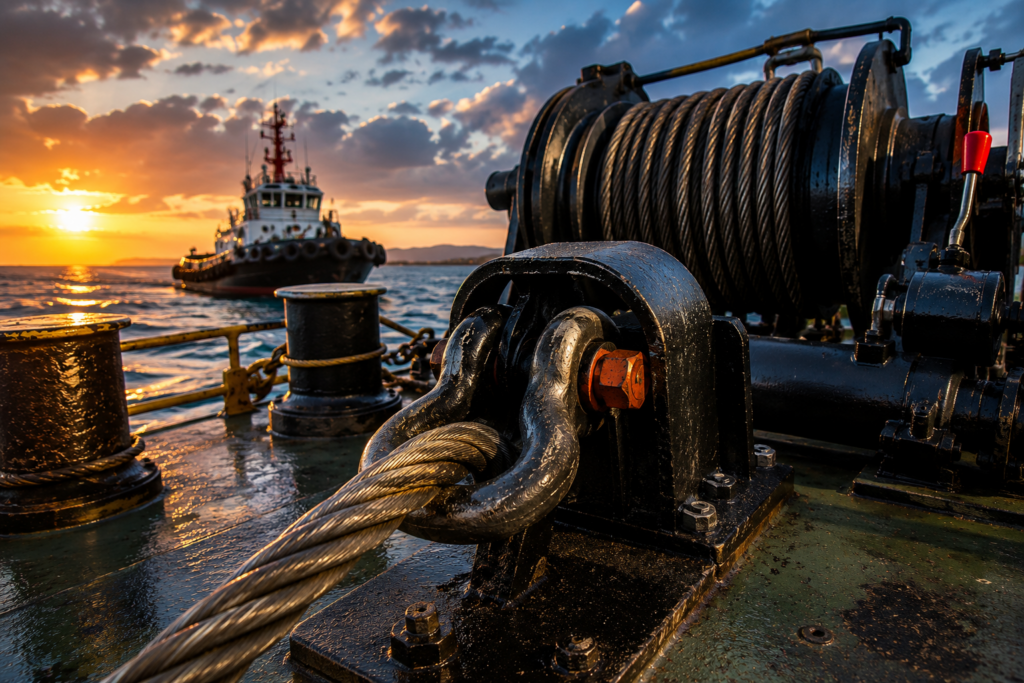

An anchor capstan gives a vessel controlled pulling force to deploy and retrieve the anchor safely. Because it operates under heavy load in saltwater and harsh weather, it needs regular installation checks, preventive maintenance, and timely repair to stay reliable. This guide covers what an anchor capstan does, how to maintain it, and when to call in professional support.
An anchor capstan is a vertical-axis mechanical device that handles anchor chains, ropes, and mooring lines during anchoring operations. Hydraulic or electric drive systems power it, so it lowers and recovers the anchor with controlled tension while reducing manual effort on deck. Vessel types that commonly carry one include:
- Container ships and bulk carriers
- Oil and chemical tankers
- Offshore support vessels (OSVs) and platform supply vessels
- Tug boats and passenger vessels
- Naval ships and offshore platforms
- Floating production units
Why Anchor Capstan Maintenance Matters
An anchor capstan runs under heavy mechanical load and constant exposure to saltwater, moisture, and corrosion, so wear adds up quickly without regular attention. Left unchecked, that wear can lead to mechanical failure and put both the vessel and crew at risk. Proper maintenance therefore helps in several ways: it improves anchoring safety, reduces downtime, prevents unexpected failures, and extends equipment lifespan. It also lowers repair costs over time, since minor issues get caught before they escalate, and it keeps crew safety and vessel reliability consistently high.
Anchor Capstan Installation
Correct installation sets the foundation for reliable performance, so it deserves the same attention as ongoing maintenance. A proper installation typically covers mechanical setup and foundation alignment, hydraulic piping, and electrical connections. It also includes brake adjustment, gearbox alignment, and motor installation, followed by functional testing and full system commissioning. Getting these steps right reduces future maintenance needs considerably.
Preventive Maintenance
Routine preventive maintenance catches minor issues before they turn into major failures, which is why it forms the backbone of a reliable anchoring system. Recommended tasks include lubrication of bearings and gears, hydraulic oil inspection, and brake system checks. Chain wheel inspection, drum condition checks, and motor performance testing round out the mechanical side, while corrosion inspection, seal replacement, and bolt tightening protect against long-term wear. Regular servicing along these lines improves reliability and cuts down on unexpected downtime.
Common Anchor Capstan Problems
Over time, an anchor capstan can develop mechanical, hydraulic, or electrical issues that affect performance. The most frequent problems include:
- Hydraulic oil leaks and brake malfunction
- Motor failure and gear wear
- Bearing damage and chain slippage
- Excessive vibration and electrical faults
- Corrosion and control system failures
Early identification and corrective maintenance help avoid expensive repairs and operational delays down the line.
Troubleshooting & Repair
Effective troubleshooting restores normal operation quickly and safely, so it should always follow a structured diagnostic process. Typical repair services cover hydraulic fault diagnosis, electrical fault finding, and motor repairs. Gearbox overhaul, brake repairs, and bearing replacement address the mechanical side, while shaft alignment, hydraulic pump servicing, and control panel troubleshooting round out a full repair scope. Professional repair work like this improves equipment reliability and reduces vessel downtime.
Retrofit & Modernization
Many existing anchor capstan systems can be upgraded to improve efficiency without a complete replacement, which makes retrofitting a cost-effective option. Common upgrades include hydraulic system improvements, electric drive conversion, and PLC integration. Remote operation systems, safety interlocks, and control panel modernization further extend the equipment’s working life, and energy-efficient motors combined with automation upgrades help lower long-term running costs.
Spare Parts Support
Quality replacement components keep an anchor capstan running reliably and reduce maintenance delays. Commonly needed parts include hydraulic and electric motors, gearboxes, bearings, and brake assemblies. Hydraulic pumps, seals, shafts, and couplings cover the mechanical side, while electrical components, control switches, and fasteners complete the list. Routine replacement of worn components helps maintain optimum performance across the system.
Applications
Anchor capstans are widely used across the marine and offshore industries, including commercial ships, container vessels, and bulk carriers. Oil and chemical tankers, offshore support vessels, AHTS vessels, and platform supply vessels rely on them just as heavily, alongside tug boats, passenger ships, and naval vessels. Offshore oil and gas platforms and shipyards also depend on anchor capstans for safe, efficient operations.
Frequently Asked Questions
What does an anchor capstan do?
An anchor capstan provides the controlled pulling force needed to deploy and retrieve the anchor while keeping proper tension on the anchor chain during operation.
How is an anchor capstan different from a berthing capstan?
An anchor capstan is built to handle anchor chains and heavy anchoring loads, while a berthing capstan focuses on hauling mooring lines during docking, so the two serve related but distinct roles on a vessel.
How often does an anchor capstan need preventive maintenance?
Maintenance intervals depend on usage and manufacturer guidance, but routine lubrication, hydraulic oil checks, and brake inspections should happen on a regular servicing schedule to prevent unexpected failures.
Can an older anchor capstan be retrofitted instead of replaced?
Yes, many existing systems can be upgraded through hydraulic system improvements, electric drive conversion, or PLC integration, which improves performance without the cost of a full replacement.
What causes most anchor capstan failures?
Hydraulic oil leaks, motor failure, gear wear, and corrosion cause most failures, and early inspection typically catches these issues before they lead to costly repairs.
Why Choose Al Safwan Marine
Trusted anchor capstan installation, maintenance, repair, and spare parts support across the UAE and GCC region.
Berthing Capstan Hydraulic Services Automation
Follow Al Safwan Marine on LinkedIn for updates on our marine equipment and services.
Frequently asked questions
What is the difference between a capstan and a windlass?
A windlass has a horizontal shaft and usually handles the anchor chain through a gypsy; a capstan has a vertical shaft, so its warping head can take a line from any direction. Many ships use a windlass forward and capstans aft for mooring.
What are the main parts of an anchor capstan?
The warping head (drum), a cable lifter or gypsy on anchor capstans, the vertical shaft and bearings, a band or disc brake, a pawl or ratchet, and the drive: an electric or hydraulic motor with a reduction gearbox, usually installed below deck.
How often should a capstan be maintained?
Follow the ship's planned maintenance system: greasing and visual checks weekly or before use, brake and gearbox oil checks monthly, and a full inspection of brake linings, bearings and the drive at least annually or at dry dock.
What causes a capstan to fail?
Common causes are worn brake linings, seized bearings from lost lubrication, gearbox oil contamination by seawater, hydraulic motor or valve leaks, and electrical faults in the motor or control circuit.
Filed under Hydraulics, Marine supply