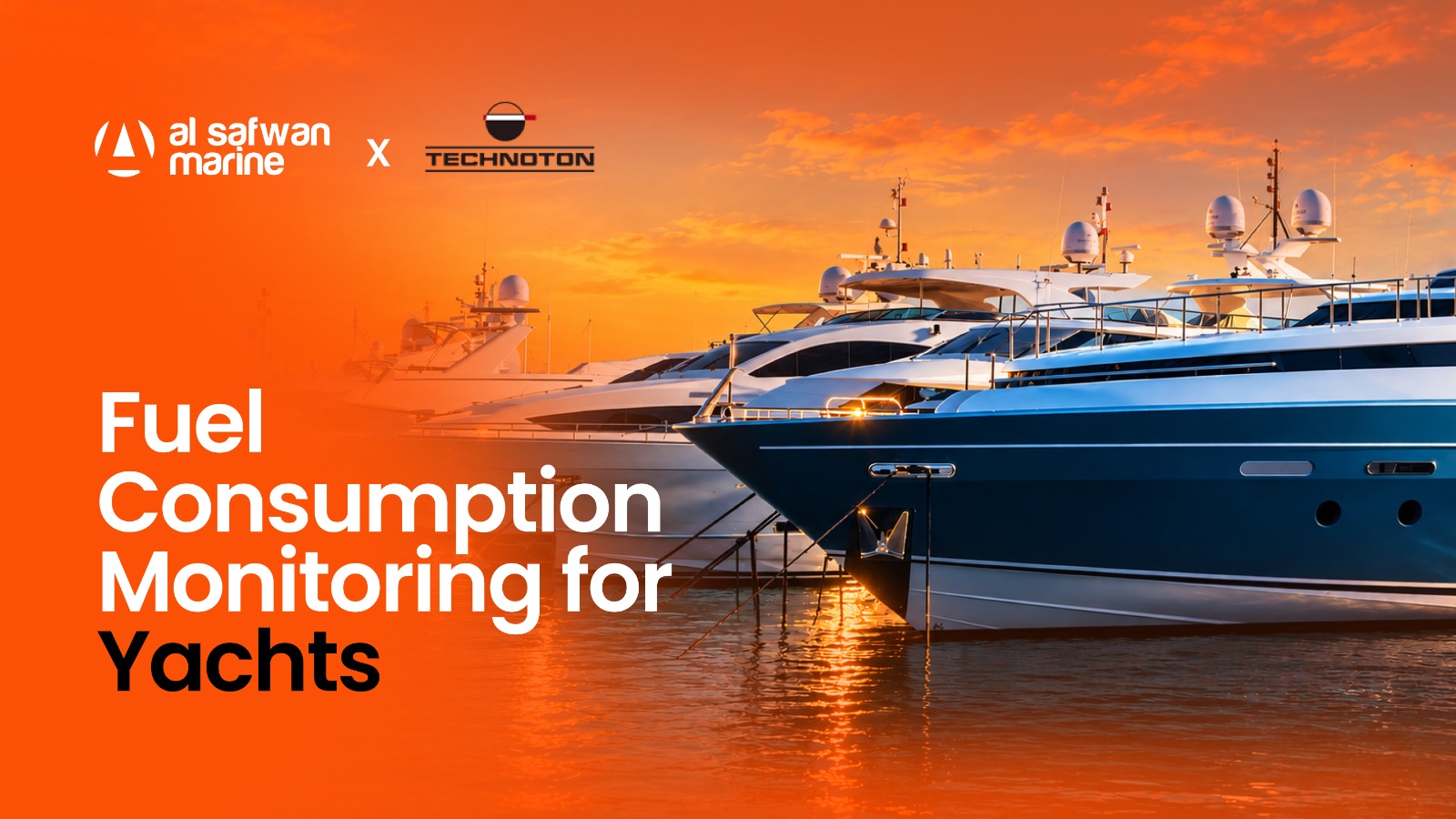
A fuel gauge tells you how much is left in the tank. It doesn’t tell you where it went, which engine used more, or whether last week’s crossing was run efficiently. Real-time fuel consumption monitoring closes that gap — and on a yacht, fuel is usually the single largest running cost.
Whether it’s a private yacht, luxury motor yacht, superyacht, or charter vessel, understanding exactly how fuel is consumed is essential for improving efficiency and reducing operating expenses. Modern fuel monitoring systems replace estimates with accurate, real-time data — letting owners and captains optimise engine performance, plan voyages more effectively, and catch inefficiencies before they become costly problems.
Why Real-Time Fuel Monitoring Matters
Every yacht operates under different conditions. Cruising speed, weather, sea state, engine load, and onboard equipment all influence how much fuel is actually burned — which is why a static gauge reading rarely tells the full story.
A real-time fuel monitoring system helps operators:
- Measure actual fuel consumption
- Improve fuel efficiency
- Optimise voyage planning
- Extend cruising range
- Monitor twin-engine performance
- Detect abnormal fuel usage early
- Support preventive maintenance
- Improve operational reliability
Related service: Fuel flow monitoring is part of our wider Automation and marine electronics integration, covering navigation systems, engine data, and centralised monitoring for yachts and commercial vessels across the UAE and worldwide.
Challenges of Traditional Fuel Monitoring
Many yachts still rely on standard fuel tank gauges or manual calculations. While useful for estimating fuel levels, these methods do not accurately measure:
- Fuel consumed by each engine
- Instant fuel consumption
- Fuel economy at different cruising speeds
- Fuel return flow
- Engine efficiency
- Historical fuel performance
Without precise fuel monitoring, unnecessary fuel consumption and engine inefficiencies can often go unnoticed for entire seasons.
The Benefits of Direct Fuel Flow Measurement
Dedicated fuel flow monitoring systems measure fuel entering and returning from the engine directly, rather than inferring consumption from tank levels. Al Safwan Marine installs and commissions Techoton fuel monitoring equipment — flow meters and sensors purpose-built for marine engines — to deliver this level of precision on yachts and commercial vessels alike. This enables yacht owners and captains to:
Live Consumption Monitor real-time fuel burn per engine, not just an overall estimate.
Cruising Efficiency Identify the speed and load range that delivers the best fuel economy.
Voyage Planning Plan range and refuelling stops with accurate, trip-based data.
Early Detection Spot engine abnormalities before they turn into major repairs.
Smart Integration with Onboard Navigation Systems
Modern fuel monitoring solutions can integrate seamlessly with compatible onboard navigation and marine electronics, providing a centralised view of critical operational data. Operators can monitor live fuel consumption, fuel used per trip, engine operating hours, fuel efficiency trends, and historical performance data — all from one place, without switching between separate systems.
Having all essential information in one place improves operational visibility and simplifies voyage management for the bridge and the engine room alike.
A Cost-Effective Upgrade for Modern Yachts
Fuel is one of the largest operating expenses for any yacht. A real-time fuel monitoring system offers a cost-effective way to accurately track fuel consumption, optimise engine performance, and improve voyage planning. Key benefits include reduced fuel consumption, lower operating costs, improved cruising efficiency, extended cruising range, better engine performance, and smarter maintenance planning.
With accurate fuel data, yacht owners and captains can make informed decisions that improve efficiency, reduce unnecessary fuel usage, and maximise long-term operational performance.
Applications
Fuel monitoring solutions are ideal for a wide range of vessels, including:
Private Yachts Luxury Motor Yachts Superyachts Flybridge Yachts Sport Yachts Sailing Yachts Charter Yachts Catamarans Chase Boats Support Vessels
These solutions are also suitable for commercial and offshore vessels requiring accurate fuel management and operational monitoring.
Choosing the Right Fuel Monitoring Solution
Selecting a fuel monitoring system involves more than choosing the right equipment. Long-term performance depends on:
- Professional installation
- Accurate calibration
- Seamless system integration
- Reliable commissioning
- Ongoing technical support
A professionally integrated solution delivers accurate data, reliable performance, and long-term operational value — rather than a gauge upgrade that goes uncalibrated after year one. Al Safwan Marine’s engineers are experienced with Techoton fuel monitoring systems, handling everything from sensor selection and installation to calibration, commissioning, and after-sales support.
Frequently Asked Questions
How is fuel flow monitoring different from a standard fuel gauge?
A standard gauge estimates fuel remaining in the tank. Fuel flow monitoring measures fuel actually entering and returning from each engine in real time, giving precise consumption data rather than an estimate.
Can fuel monitoring work with twin-engine yachts?
Yes. Fuel flow systems can measure each engine independently, making it possible to compare performance side by side and detect imbalances or abnormal usage on one engine.
Does fuel monitoring integrate with existing navigation systems?
Modern fuel monitoring solutions can integrate with compatible onboard navigation and marine electronics, centralising fuel, trip, and engine-hour data alongside existing bridge systems.
What vessels benefit most from fuel consumption monitoring?
Private yachts, superyachts, charter vessels, sport and sailing yachts, catamarans, chase boats, and commercial or offshore vessels all benefit, particularly those covering long distances or running twin-engine setups.
Why does installation and calibration matter for fuel monitoring accuracy?
Fuel flow sensors need correct installation and calibration to deliver reliable readings. Poor commissioning can produce inaccurate data, undermining the voyage planning and efficiency gains the system is meant to provide.
Does Al Safwan Marine install Techoton fuel monitoring systems?
Yes. Al Safwan Marine supplies, installs, calibrates, and commissions Techoton fuel flow meters and sensors for yachts and commercial vessels, with ongoing technical support after installation.
Real-time fuel monitoring is a smart investment for improving fuel efficiency, reducing operating costs, and enhancing overall yacht performance. By providing accurate fuel consumption data, it enables yacht owners and captains to make informed decisions, optimise voyage planning, improve engine efficiency, and maximise operational control.
Talk to Our Marine Engineers
Al Safwan Marine delivers advanced fuel monitoring — including Techoton systems — marine automation, and navigation integration for yachts, superyachts, commercial vessels, and offshore assets worldwide, with professional installation, calibration, and ongoing technical support.
Our services include
Automation Lifeboats — Inspections and Repair Fire Fighting Equipments — Inspections Liferafts — Inspections and Rental Co2 Hoses Supply — Marine Approved Load Testing — Lifeboats and Cranes Hydraulic Hoses
Al Safwan Marine — your global partner for marine inspection, testing & certification. Follow us on LinkedIn for the latest updates on marine automation and fuel monitoring solutions.
Filed under Automation & calibration