Reliable power management keeps vessels safe, efficient, and moving.
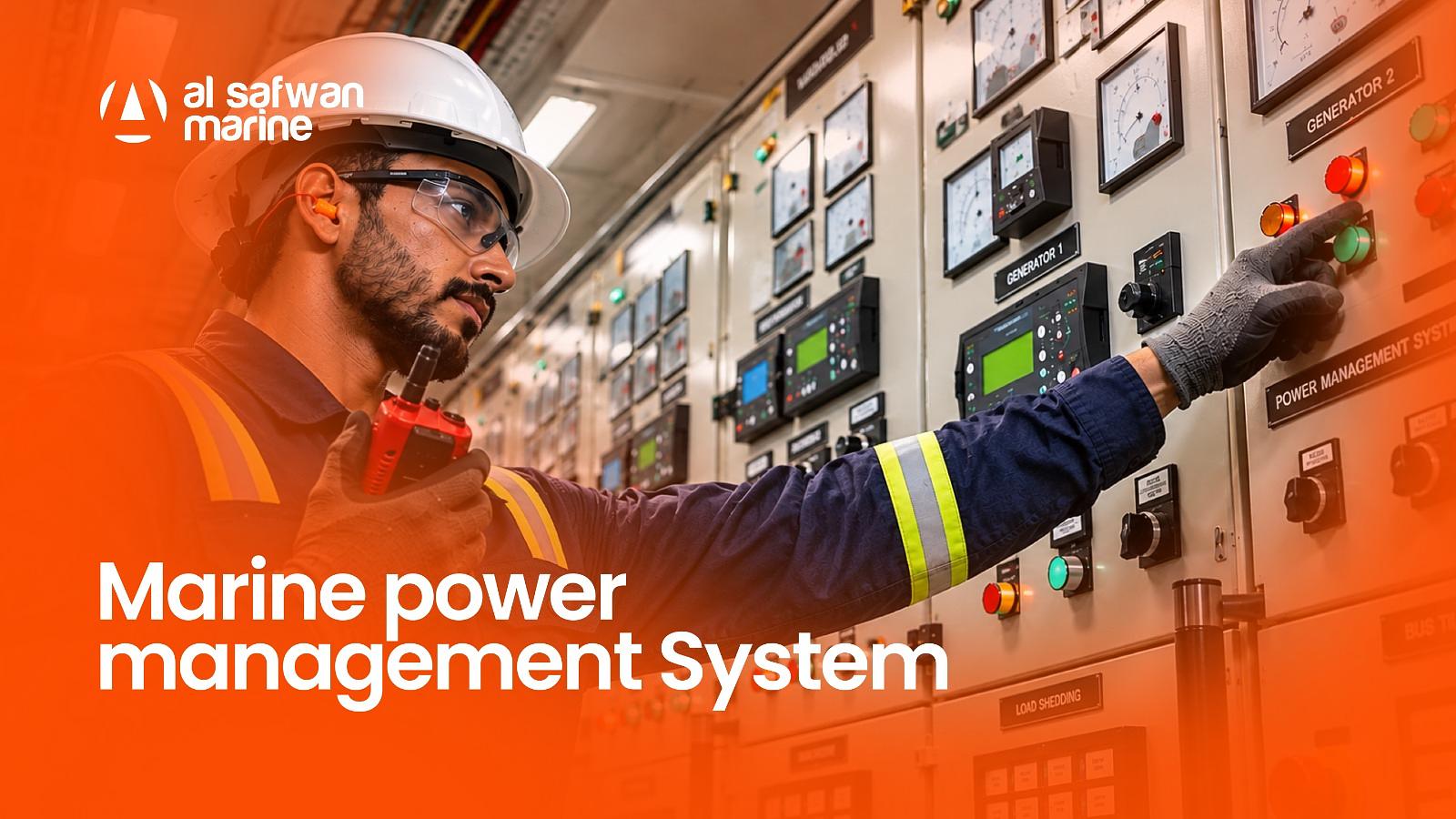
Modern vessels depend on stable electrical power for navigation, propulsion support, cargo handling, communication, HVAC, and lighting. A Marine Power Management System (PMS) automates generator synchronisation, load sharing, start and stop functions, and power distribution. As a result, it improves fuel efficiency, cuts maintenance costs, and prevents blackouts.
Whether you operate commercial ships, offshore support vessels, tankers, or workboats, an intelligent PMS keeps operations safe, efficient, and uninterrupted.
Why Marine Power Management Is Important
Electrical power is essential for every critical onboard operation. However, demand fluctuates during cargo handling, manoeuvring, offshore activities, and normal sailing, so vessels need a system that responds instantly.
A Marine Power Management System continuously monitors electrical demand and adjusts generator operation automatically. As a result, it maintains a stable power supply, reduces unnecessary fuel consumption, and improves equipment reliability.
What Is a Marine Power Management System (PMS)?
A Marine Power Management System (PMS) is an automation system that monitors, controls, and optimises electrical power generation onboard a vessel.
Instead of operating generators manually, crews rely on the PMS to manage power production based on real-time demand. In addition, it communicates with generators, switchboards, and protection systems to distribute power efficiently and reliably throughout the vessel.
A modern PMS can:
- Automatically start and stop generators
- Synchronise multiple generators
- Balance electrical loads
- Protect generators and switchboards
- Prevent power failures
- Improve fuel efficiency
- Monitor system performance
- Support vessel automation
How Does a Marine Power Management System Work?
A Marine PMS continuously monitors the vessel's electrical network. Then it adjusts generator operation to match changing power requirements.
Power Demand Monitoring
The system continuously measures onboard electrical consumption and determines the required generating capacity.
Automatic Generator Control
The PMS starts or stops generators based on actual power demand. As a result, operation stays efficient without unnecessary fuel consumption.
Generator Synchronisation
Before a generator connects to the main switchboard, the PMS automatically matches voltage, frequency, and phase angle for safe synchronisation.
Load Sharing
The PMS distributes electrical load evenly among running generators. Consequently, it prevents overload and improves efficiency.
Generator Protection
The system monitors electrical parameters and activates protection functions during abnormal operating conditions to safeguard onboard equipment.
Main Components of a Marine Power Management System
A complete Marine PMS consists of several integrated components that work together to ensure reliable power generation.
- Generator Controllers
- Synchronising Modules
- PLC-Based Automation
- Human Machine Interface (HMI)
- Protection Relays
- Circuit Breaker Controls
- Power Monitoring Devices
- Communication Network
- Alarm & Event Logging
- Switchboard Integration
Together, these components provide intelligent automation, stable power distribution, and continuous monitoring.
Related reading: A PMS is one part of a wider control picture. See our Marine Automation Services overview and our Automation & Calibration Services guide for the systems it works alongside.
Benefits of a Marine Power Management System
A modern Power Management System offers several operational advantages for vessel owners and operators.
- Improves fuel efficiency
- Reduces maintenance costs
- Extends generator lifespan
- Balances electrical loads automatically
- Prevents generator overload
- Reduces the risk of blackouts
- Improves operational safety
- Enhances power reliability
- Supports marine automation
- Optimises overall vessel performance
By automating power generation and distribution, a Marine PMS reduces operating costs while improving the safety and efficiency of marine operations.
Generator Synchronisation for Safe Power Transfer
Generator synchronisation is one of the most important functions of a Marine Power Management System. Before connecting a generator to the main switchboard, the PMS matches its voltage, frequency, phase sequence, and phase angle with the existing supply. Only when these parameters align does the system close the circuit breaker and connect the generator safely.
Automatic synchronisation, in turn, eliminates manual errors, prevents electrical disturbances, protects switchboard equipment, and ensures a smooth transition without interrupting onboard operations.
Intelligent Load Sharing
Once multiple generators run together, the PMS continuously distributes the electrical load evenly between them. Instead of letting one generator carry most of the load while others sit underused, the system maintains balanced operation. Effective load sharing helps to:
- Reduce engine stress
- Improve fuel efficiency
- Extend generator life
- Lower maintenance costs
- Ensure stable electrical performance
Balanced distribution also minimises the risk of overload trips and unexpected shutdowns.
Automatic Generator Start & Stop
Power demand changes throughout the voyage. For example, cargo operations, dynamic positioning, and manoeuvring may require additional generating capacity.
A Marine PMS starts extra generators automatically whenever demand increases. When demand drops, it shuts down unnecessary generators, so only the required units keep running. This intelligent automation helps:
- Lower fuel consumption
- Reduce engine running hours
- Decrease maintenance requirements
- Improve overall operational efficiency
Blackout Prevention & Fast Recovery
Unexpected power failures can disrupt propulsion support systems, navigation equipment, cargo handling, and other essential functions. Therefore, a Marine Power Management System continuously monitors generator performance and responds immediately to abnormal conditions.
If a running generator fails, the PMS starts a standby generator, reconnects it safely, and restores power within a short period. This capability significantly improves operational safety and reduces the impact of electrical failures.
Generator Protection Functions
Modern Power Management Systems include multiple protection features that safeguard generators, switchboards, and other electrical equipment. Typical protection functions include:
- Reverse Power Protection
- Generator Overload Protection
- Overcurrent Protection
- Overvoltage Protection
- Undervoltage Protection
- Over Frequency Protection
- Under Frequency Protection
- Phase Failure Monitoring
- Short Circuit Protection
- Earth Fault Detection
These functions reduce the risk of equipment damage, improve reliability, and help maintain continuous operations. In addition, regular instrument calibration keeps the electrical readings behind them accurate.
Fuel Optimisation & Energy Efficiency
Fuel is one of the largest operating expenses for commercial vessels. A Marine Power Management System helps cut consumption by keeping generators within their optimum load range. Instead of running several lightly loaded generators, the PMS adjusts operation continuously to match actual demand. The result is:
- Lower fuel costs
- Reduced emissions
- Improved engine efficiency
- Longer equipment life
- Better voyage economics
For fleet operators managing multiple vessels, these savings add up to significant long-term operational efficiency.
Remote Monitoring & Smart Diagnostics
Many modern systems support remote monitoring, so engineers and fleet managers can view real-time data from shore or onboard monitoring stations. Operators can monitor:
- Generator performance
- Electrical load
- Alarm history
- System events
- Power consumption
- Equipment status
Remote diagnostics also identify potential issues before they cause equipment failure. As a result, downtime falls and maintenance planning improves, especially within a structured fleet management programme.
PMS Upgrades & Retrofit Solutions
Many vessels still operate with ageing Power Management Systems that no longer meet modern requirements. Older controllers are difficult to maintain, spare parts may become unavailable, and limited automation hurts efficiency and reliability.
Rather than replacing the complete switchboard, owners can modernise their vessels through a PMS retrofit. Typical upgrade services include:
- Generator controller replacement
- PLC and HMI upgrades
- Switchboard automation improvements
- Generator synchronisation upgrades
- Load sharing enhancements
- Communication network upgrades
- Alarm and monitoring improvements
- Integration of modern automation platforms
A well-planned retrofit improves system performance while minimising vessel downtime.
System Commissioning & Preventive Maintenance
Proper commissioning ensures every component of the Power Management System performs safely before entering service. Commissioning typically includes:
- Generator controller configuration
- Synchronisation testing
- Load sharing verification
- Protection setting validation
- Automatic start/stop testing
- Blackout recovery testing
- Alarm verification
- Functional testing under operating conditions
Regular preventive maintenance further improves long-term reliability. Routine inspections, software updates, controller diagnostics, cable checks, and protection testing minimise unexpected failures and extend equipment life.
Applications Across Different Vessel Types
Marine Power Management Systems serve a wide range of commercial and offshore vessels where reliable electrical power is essential. Common applications include:
- Offshore Support Vessels (OSVs)
- Platform Supply Vessels (PSVs)
- Oil & Chemical Tankers
- LNG Carriers
- Bulk Carriers
- Container Ships
- Passenger Ferries
- Cruise Ships
- Tug Boats
- Research Vessels
- Naval Ships
- Workboats
- Yachts & Superyachts
Regardless of vessel type, an efficient PMS improves reliability, safety, and operational performance.
Why Choose Al Safwan Marine?
A dependable Marine Power Management System requires careful planning, precise installation, and ongoing technical support. At Al Safwan Marine, we provide end-to-end marine electrical and automation solutions that improve vessel performance and meet international marine standards.
Our experienced marine engineers support new installations, upgrades, retrofits, troubleshooting, testing, and commissioning for commercial vessels across the UAE, GCC, and international ports.
Our Marine PMS Services
- Marine Power Management System Design
- PMS Installation
- PMS Upgrades & Retrofits
- Generator Synchronisation
- Automatic Load Sharing
- Generator Protection Configuration
- PLC Programming
- HMI Development
- Switchboard Automation
- Electrical Control Panel Upgrades
- System Commissioning
- Factory Acceptance Testing (FAT)
- Site Acceptance Testing (SAT)
- Troubleshooting & Diagnostics
- Annual Maintenance Contracts (AMC)
- Technical Support & Training
Our objective is to help shipowners improve electrical reliability, optimise power generation, reduce fuel consumption, and minimise operational downtime.
Conclusion
Reliable electrical power is essential for safe, efficient, and uninterrupted vessel operations. A modern Marine Power Management System optimises generator performance, reduces fuel consumption, improves electrical reliability, and minimises maintenance costs while protecting critical onboard equipment.
Whether you are planning a new installation, upgrading an ageing automation system, or retrofitting an existing vessel, an intelligent PMS improves operational efficiency and supports long-term fleet performance.
Al Safwan Marine delivers dependable marine electrical and automation solutions for commercial vessels, offshore operators, and shipowners worldwide. Moreover, our engineering team supports every stage, from design and installation to commissioning, maintenance, and technical assistance, so vessels operate safely and efficiently throughout their service life.
Contact Al Safwan Marine
Planning a new installation, an upgrade, or a retrofit? Contact our engineers to discuss your Marine Power Management System requirements.
Our services include
Marine Automation Services Automation & Calibration Services Marine Calibration Services Automation Fleet Management Services
Al Safwan Marine — your global partner for marine inspection, testing & certification. Follow us on LinkedIn for the latest updates on marine power management and automation services.
Frequently asked questions
What is a Marine Power Management System (PMS)?
A Marine Power Management System is an automation system that controls generator operation, synchronisation, load sharing, protection, and electrical power distribution onboard a vessel.
Why should a vessel upgrade its existing PMS?
Upgrading improves system reliability, fuel efficiency, automation, operational safety, and compatibility with modern marine electrical systems.
Can an existing vessel be retrofitted with a new PMS?
Yes. Most vessels can be upgraded with modern Power Management Systems without replacing the complete switchboard.
What is generator synchronisation?
Generator synchronisation matches voltage, frequency, and phase before connecting generators to the main electrical bus, ensuring safe and uninterrupted power transfer.
How does automatic load sharing improve efficiency?
It evenly distributes electrical demand across running generators, reducing overload, improving fuel efficiency, and extending generator life.
Can a Marine PMS help prevent blackouts?
Yes. The system continuously monitors generator performance and can automatically start standby generators to maintain uninterrupted electrical power.
Which vessels benefit from a Marine Power Management System?
Cargo vessels, offshore support vessels, tankers, ferries, tugboats, workboats, research vessels, naval ships, and yachts all benefit from intelligent power management.
Does Al Safwan Marine provide installation and commissioning?
Yes. Al Safwan Marine provides installation, commissioning, upgrades, retrofits, testing, troubleshooting, preventive maintenance, and technical support for Marine Power Management Systems.
Filed under Automation & calibration