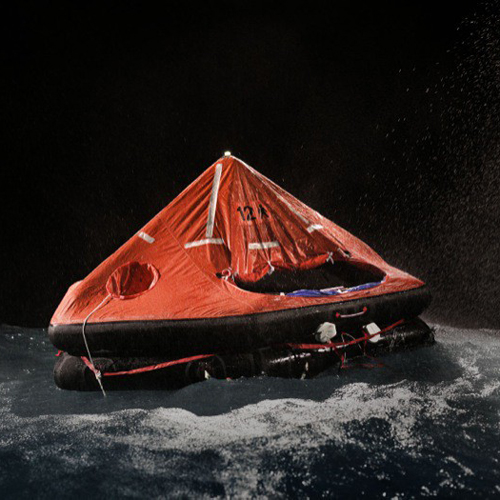
A liferaft is the last line of defense at sea. Here’s what IMO and SOLAS actually require of it — from construction and drop testing to canopy design and servicing.
When lives are at stake, every piece of lifesaving equipment onboard must perform flawlessly. Among the most critical of these is the liferaft — a self-contained survival craft designed to keep crew members and passengers safe until rescue arrives.
To ensure maximum reliability in emergencies, liferafts must meet strict international standards set by the International Maritime Organization (IMO) through the International Convention for the Safety of Life at Sea (SOLAS) and the Life-Saving Appliances (LSA) Code. Together, these regulations define how liferafts should be designed, constructed, tested, equipped, and maintained to guarantee dependable performance under the most demanding sea conditions.
Why Liferaft Standards Matter
A liferaft is the last line of defense during a maritime emergency. Whether crew are abandoning a vessel due to fire, flooding, collision, or another critical situation, everyone onboard depends on the liferaft to provide immediate protection. For this reason, international standards help ensure that every approved liferaft:
- Performs reliably in emergencies
- Protects occupants from harsh weather
- Remains stable and buoyant
- Can be deployed quickly
- Supports survival until rescue
- Meets global maritime safety requirements
These standards are mandatory for commercial vessels operating under SOLAS regulations.
Construction Requirements
The construction of a liferaft must allow it to withstand prolonged exposure to severe marine environments. According to IMO and SOLAS requirements, every approved liferaft should be capable of remaining afloat for at least 30 days in all sea conditions, resisting damage caused by waves, sunlight, saltwater, and weather exposure, and maintaining buoyancy even if it’s handled roughly during deployment. Consequently, the materials used must be durable, weather-resistant, and suitable for continuous exposure to harsh marine environments.
Drop Test Requirements
Before receiving approval, liferafts undergo rigorous testing. One of the most important is the drop test, where the liferaft must withstand being dropped into the water from a height of 18 metres without affecting its operational performance. If the installation height onboard exceeds 18 metres, the liferaft must also successfully withstand testing from the actual installation height. These tests verify that the liferaft remains fully functional after deployment.
Impact Resistance
Emergency evacuations are rarely calm — during abandonment, occupants may jump into or onto the liferaft from significant heights. For this reason, liferafts must withstand repeated impacts from people jumping from heights of at least 4.5 metres without structural damage or loss of buoyancy, so the raft stays safe throughout the evacuation process.
Canopy Requirements
The canopy is one of the most important features of a liferaft, since it protects survivors from environmental exposure while creating a safer survival environment. Every approved canopy should provide:
- Protection against rain and seawater
- Insulation from extreme heat and cold
- Adequate ventilation
- Clearly marked entrances
- Easy access for boarding
- Sufficient headroom for occupants
A properly designed canopy greatly improves comfort and increases survival chances during extended rescue operations.
Related reading: A liferaft works alongside a vessel’s other lifesaving appliances during evacuation. See our Lifeboat Inspections and Repair and Embarkation Ladder Inspection services for the rest of a compliant abandon-ship setup.
Buoyancy & Stability
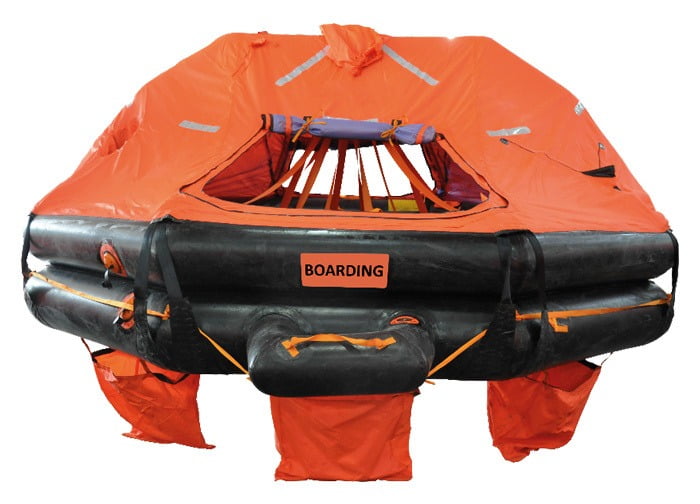
A liferaft must remain stable under all operating conditions. International standards therefore require liferafts to maintain sufficient buoyancy, prevent capsizing, support occupants safely, and remain operational even in rough seas. Its design should let survivors stay secure while they await rescue.
Carrying Capacity
Every liferaft is certified for a specific number of persons. According to SOLAS requirements, liferafts should carry a minimum of six persons, the carrying capacity must never exceed the manufacturer’s approved limits, and weight distribution should maintain overall stability. Ultimately, selecting the correct liferaft capacity is essential for vessel compliance and passenger safety.
Essential Liferaft Equipment
Every approved liferaft comes equipped with survival equipment to assist occupants during emergencies. Typical equipment includes:
- Interior and exterior lighting
- Lifelines
- Painter line
- Boarding ladder or ramp
- Sea anchor
- Rainwater collection arrangements
- Emergency survival pack
- First aid kit
- Repair kit
- Signalling equipment
- Emergency drinking water and rations (where applicable)
Each component is designed to improve survivability while occupants await rescue.
Inspection & Maintenance Requirements
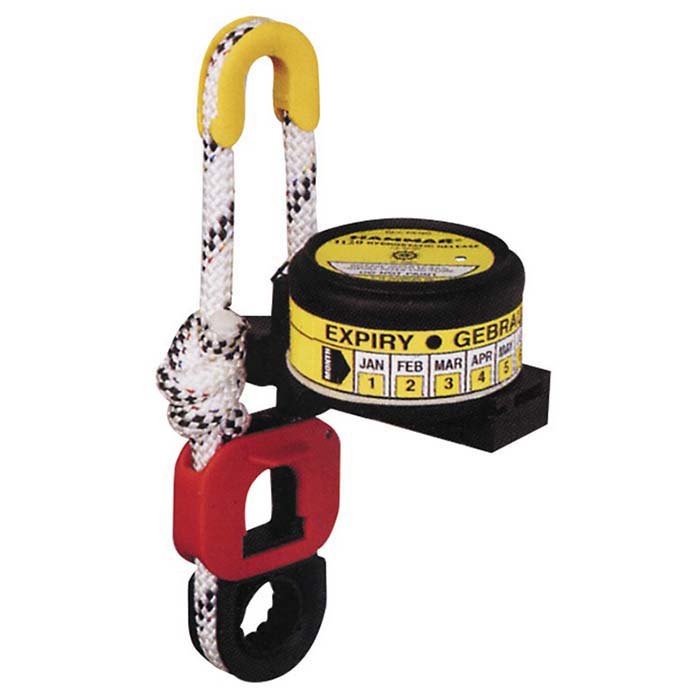
Owning a compliant liferaft is only part of the responsibility — regular servicing ensures the equipment remains fully operational throughout its service life. Specifically, routine inspections help verify inflation system performance, gas cylinder condition, fabric integrity, canopy condition, survival equipment completeness, leak-tightness, container condition, and Hydrostatic Release Unit (HRU) validity. Technicians must always carry out servicing at an authorized service station, following manufacturer and IMO requirements.
Benefits of Regular Liferaft Servicing
Routine servicing provides significant safety and operational benefits:
- Ensures SOLAS compliance
- Maintains certification validity
- Detects hidden defects
- Improves emergency readiness
- Extends equipment life
- Protects passengers and crew
- Supports successful Flag State and Class surveys
After all, preventive maintenance is always more cost-effective than emergency equipment failure.
Frequently Asked Questions
How long should a liferaft remain operational at sea?
IMO-approved liferafts are designed to remain afloat and operational for at least 30 days under normal survival conditions.
Why are liferafts drop-tested?
Drop testing verifies that the liferaft can withstand deployment from its installed height without affecting its performance.
How often should liferafts be serviced?
Most SOLAS liferafts require annual servicing by an authorized service station, unless the manufacturer and Flag Administration specify otherwise.
Why is the canopy important?
The canopy protects survivors from wind, rain, waves, sunlight, and temperature extremes while providing a safer environment during rescue operations.
Safety Starts Long Before an Emergency
A liferaft is more than a regulatory requirement — it’s a vital lifesaving appliance designed to protect lives when every second counts. Meeting IMO and SOLAS standards ensures liferafts stay ready to perform under the most demanding conditions, while regular inspection, servicing, and certification help maintain their reliability, giving shipowners and operators confidence that their emergency equipment is prepared whenever it’s needed.
Why Choose Al Safwan Marine?
Al Safwan Marine provides professional liferaft inspection, annual servicing, testing, maintenance, and certification services for commercial vessels, offshore installations, and marine operators worldwide. Our OEM-trained engineers perform every service in accordance with IMO, SOLAS, LSA Code, Flag State, Classification Society, and manufacturer requirements — from annual servicing and inflation testing to emergency equipment inspection and certification.
Our services include
Liferafts — Inspections and Rental Lifeboats — Inspections and Repair Fire Fighting Equipments — Inspections Embarkation Ladder Inspection Load Testing — Lifeboats and Cranes CO2 Hoses Supply — Marine Approved Automation Hydraulic Services
Al Safwan Marine — your global partner for marine inspection, testing & certification. Follow us on LinkedIn for the latest updates on lifesaving appliance compliance and marine inspection services.
Filed under Liferafts