A Pre-PSC inspection checklist helps vessels clear Port State Control with fewer deficiencies at UAE ports.
Port State Control (PSC) officers verify compliance with SOLAS, MARPOL and STCW. Moreover, they assess the vessel's condition, documentation, crew readiness and safety equipment.
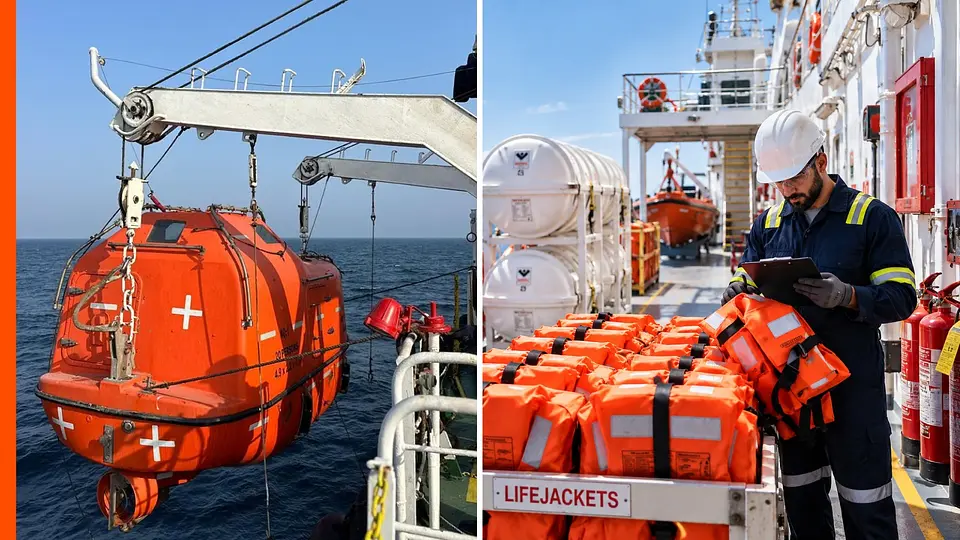
Life Saving Appliances (LSA) and Fire Fighting Equipment (FFE) rank among the most critical areas. Therefore, a Pre-PSC inspection helps you find and fix problems before the official visit, which improves compliance and reduces risk.
What Is Port State Control (PSC)?
Port State Control is an international inspection programme that maritime authorities run to verify that foreign-flagged vessels comply with accepted maritime regulations. In addition, these inspections confirm that qualified crews operate ships to global safety standards.
During a PSC inspection, officers typically examine:
- Statutory certificates
- Vessel condition
- Life Saving Appliances (LSA)
- Fire Fighting Equipment (FFE)
- Navigation equipment
- Pollution prevention systems
- Crew competency
- Emergency preparedness
- Planned maintenance records
A routine check can expand into a detailed examination if officers find deficiencies.
Why a Pre-PSC Inspection Is Important
Preparing before the inspection is one of the most effective ways to reduce operational risk. Instead of waiting for inspectors to find problems, operators can verify that critical systems work and that documentation is complete.
A well-executed Pre-PSC inspection helps you:
- Verify the operational readiness of LSA and FFE
- Reduce the likelihood of inspection deficiencies
- Improve compliance with SOLAS requirements
- Minimise delays during port calls
- Reduce the risk of vessel detention
- Improve emergency preparedness
- Enhance crew confidence during inspections
- Protect the owner's operational reputation
Furthermore, preventive inspections catch maintenance issues before they become costly repairs. Our guide on preventive vs corrective marine maintenance explains the cost benefit in more detail.
Common PSC Deficiencies
Routine maintenance and regular inspections prevent many PSC deficiencies. In particular, officers often report observations on LSA, FFE, documentation and emergency preparedness.
Common deficiencies include:
- Expired liferaft service certificates
- Defective lifeboat release mechanisms
- Damaged rescue boats
- Corroded wire ropes
- Expired Hydrostatic Release Units (HRUs)
- Fire extinguishers with overdue servicing
- Damaged fire hoses and hydrants
- Inoperative fire detection systems
- Faulty emergency lighting
- Missing EEBDs
- Incomplete maintenance records
- Missing statutory certificates
- Poorly maintained emergency escape routes
- Crew unfamiliarity with emergency procedures
As a result, addressing these issues before arrival significantly reduces the likelihood of observations.
Who Should Use This Guide?
This checklist suits professionals who manage vessel safety, maintenance and regulatory compliance. It is particularly useful for:
- Ship Owners
- Ship Managers
- Technical Superintendents
- Marine Engineers and Chief Engineers
- Masters and Deck Officers
- Marine Safety Officers
- Fleet Managers
- Offshore Operators
- Planned Maintenance Teams
- Marine Inspection Companies
- Ship Management Companies
Whether you are preparing for an upcoming inspection or building a preventive maintenance programme, this guide offers a practical framework.
LSA Pre-PSC Inspection Checklist
PSC officers examine Life Saving Appliances first. These systems protect crew and passengers in emergencies, so they must stay fully operational at all times. For the full testing standard, read our post on the testing of life-saving appliances (MSC.81(70)).
Lifeboats
Lifeboats must stay ready for use and launch safely at any time. Our team handles lifeboat inspection and repair across UAE ports. Inspect the following:
- Hull structure for cracks or damage
- Engine starting and running performance
- Fuel system condition
- Steering mechanism
- Propeller condition
- Release gear operation
- Battery condition
- Emergency food and water rations
- Medical kit
- Searchlight operation
- Compass
- Survival equipment
- Maintenance records and service certificates
Inspection Item | Verify |
|---|---|
Hull | No damage or corrosion |
Engine | Starts and runs correctly |
Steering | Fully operational |
Release Gear | Functions correctly |
Equipment | Complete and serviceable |
Liferafts
Liferafts should always stay ready for immediate deployment. Our annual liferaft inspection guide covers the full servicing process. Check the following:
- Valid servicing certificates
- Hydrostatic Release Unit (HRU) expiry
- Painter line condition
- Container integrity
- Proper securing arrangements
- Accessibility and correct positioning
Inspection Item | Verify |
|---|---|
Service Certificate | Valid |
HRU | Within expiry |
Container | Undamaged |
Lashings | Secure |
Accessibility | Unobstructed |
Rescue Boats
Rescue boats play a critical role in man-overboard and emergency operations. Likewise, they fall under our lifeboat and rescue boat services. Inspect:
- Hull condition
- Engine performance
- Fuel level
- Communication equipment
- Launching arrangements
- Navigation lights
- Emergency equipment and safety gear
Davits & Launching Appliances
PSC officers pay close attention to launching systems. In addition, they often ask for valid load testing certificates. Verify:
- Winch operation
- Brake performance
- Wire rope condition
- Sheaves and lubrication
- Limit switches
- Hydraulic systems, where applicable (see our hydraulic services)
- Load testing certificates and maintenance records
Life Jackets & Lifebuoys
Make sure all personal life-saving equipment meets SOLAS requirements. Check:
- Required quantity available
- Correct storage locations
- Reflective tape
- Whistles and lights
- Buoyant lifelines
- Physical condition
- Easy accessibility
Emergency Escape Equipment
Next, inspect the condition and accessibility of the following:
- Immersion suits (see also immersion suit inspection and air pressure testing)
- Thermal Protective Aids (TPA)
- Emergency Escape Breathing Devices (EEBD)
- Escape route signage
- Emergency lighting
- Muster station markings
FFE Pre-PSC Inspection Checklist
Fire Fighting Equipment is another major focus of PSC inspections. Every fire protection system must follow international standards and stay ready for immediate use. Our fire fighting equipment inspection service covers each item below.
Fire Extinguishers
Inspect each extinguisher for:
- Correct location
- Pressure gauge readings
- Safety pin and seal
- Physical damage and corrosion
- Inspection tag
- Hydrostatic test date
- Service validity
Inspection Item | Verify |
|---|---|
Pressure | Within operating range |
Inspection Tag | Current |
Safety Pin | Intact |
Cylinder | No corrosion |
Fire Hoses & Hydrants
Verify the following:
- Hose flexibility
- Couplings and nozzles
- Valve operation
- Leakage
- Accessibility
- Hose rack condition
Fire Pumps
Test each of these items:
- Main fire pump
- Emergency fire pump
- Automatic starting
- Water pressure and flow performance
- Suction and discharge valves
Fixed Fire Fighting Systems
For fixed systems, inspect the following. We also supply marine-approved CO₂ hoses when replacements are due.
- CO₂ cylinders
- Foam systems
- Release mechanisms
- Pressure gauges
- Distribution piping
- Warning notices
- Locking arrangements
Fire Detection & Alarm Systems
Verify each of the following:
- Smoke, heat and flame detectors (where applicable)
- Fire alarm panel
- Manual call points
- Audible and visual alarms
- Emergency power supply
Emergency Escape Breathing Devices (EEBD)
Ensure the following:
- Correct quantity onboard
- Cylinder pressure
- Expiry dates
- Accessibility and cabinet condition
- Identification labels
Fireman's Outfit
Finally, check each part of the outfit:
- Fireman's suit, helmet, gloves and boots
- Self-Contained Breathing Apparatus (SCBA)
- Lifeline and flashlight
- Spare cylinders
Quick PSC Equipment Checklist
Use this table as a fast reference before the inspection.
Equipment | What to Verify |
|---|---|
Lifeboats | Engine, release gear, equipment |
Liferafts | HRU, certificates, container |
Rescue Boats | Engine, launch system |
Davits | Wire ropes, brakes, winches |
Life Jackets | Lights, whistles, condition |
Fire Extinguishers | Pressure, servicing, location |
Fire Hoses | Leaks, nozzles, accessibility |
Fire Pumps | Pressure, operation |
Fire Detection System | Detectors, alarms, panels |
EEBD | Quantity, pressure, expiry |
Fireman's Outfit | Complete PPE and SCBA |
These systematic checks help operators find deficiencies early. Consequently, they improve compliance, enhance safety and reduce the risk of delays or detention.
Documentation & Crew Readiness
PSC inspections go beyond equipment checks. In addition, inspectors review vessel documentation and test how well the crew responds in emergencies. Keep the following documents complete, valid and easy to reach:
- LSA and FFE inspection certificates
- Service and maintenance records
- Load test certificates
- Fire drill records
- Lifeboat and abandon ship drill records
- Planned Maintenance System (PMS) records
- Statutory certificates
- Crew training records
Organised documentation speeds up the inspection and shows effective safety management.
Before Port Arrival Checklist
Complete these final checks before you arrive at port:
- Verify all LSA and FFE certificates are valid.
- Test fire alarm and detection systems.
- Inspect lifeboats and liferafts.
- Test the emergency fire pump.
- Check fire extinguishers and hoses.
- Verify EEBDs and Fireman's Outfit.
- Conduct fire and abandon ship drills.
- Review maintenance records.
- Ensure emergency exits are clear.
- Confirm the crew know the emergency procedures.
A final inspection before arrival exposes issues early and reduces the risk of PSC deficiencies.
Best Practices for PSC Readiness
A proactive maintenance programme improves compliance and reliability. Best practices include:
- Conduct routine onboard safety inspections.
- Rectify defects immediately.
- Service equipment through approved providers.
- Maintain accurate inspection records.
- Perform regular emergency drills.
- Train the crew on emergency procedures.
- Review certificates before expiry.
- Inspect safety equipment before every port call.
Benefits of Regular Pre-PSC Inspections
Routine Pre-PSC inspections deliver several operational advantages:
- Improved vessel safety
- Better regulatory compliance
- Fewer inspection deficiencies
- Lower maintenance costs
- Enhanced crew preparedness
- Reduced operational downtime
- Increased equipment reliability
- Greater inspection confidence
Overall, preventive inspections keep the vessel ready and support safe, efficient operations.
Conclusion
Preparing for a PSC inspection means more than meeting regulations. It protects lives, maintains operational efficiency and ensures vessel safety. Regular checks of LSA, FFE, documentation and crew readiness therefore reveal issues before the official inspection.
With a structured Pre-PSC programme, owners and operators reduce deficiencies, improve compliance with international maritime regulations and lower the risk of delays or detention.
Why Choose Al Safwan Marine?
At Al Safwan Marine, we provide comprehensive LSA inspections, FFE inspections, lifeboat and liferaft servicing, davit and winch inspections, load testing, marine safety solutions and offshore technical services. Our experienced team supports vessel owners, ship managers and offshore operators with reliable inspection, testing, maintenance and certification services that keep vessels safe, compliant and ready for every Port State Control inspection.
Whether you are preparing for a scheduled PSC inspection or strengthening your preventive maintenance programme, Al Safwan Marine delivers dependable marine safety solutions tailored to your operational needs.
Lifeboats Liferafts Fire Fighting Equipment Load Testing Hydraulic Services CO₂ Hoses Supply Contact Us
Follow Al Safwan Marine on LinkedIn for more marine safety updates.
Filed under Fire fighting, Lifeboats & davits, Liferafts, Load testing & lifting, Marine supply