Preventive marine maintenance or repair after failure: which one really costs a vessel owner less?
Marine vessels operate in harsh environments, so equipment reliability directly affects safety, efficiency, and profit. For that reason, maintenance matters on every cargo vessel, offshore support vessel, tugboat, and tanker.
In this guide, we compare preventive and corrective maintenance. We also explore costs, risks, practical examples, and best practices for commercial fleets.
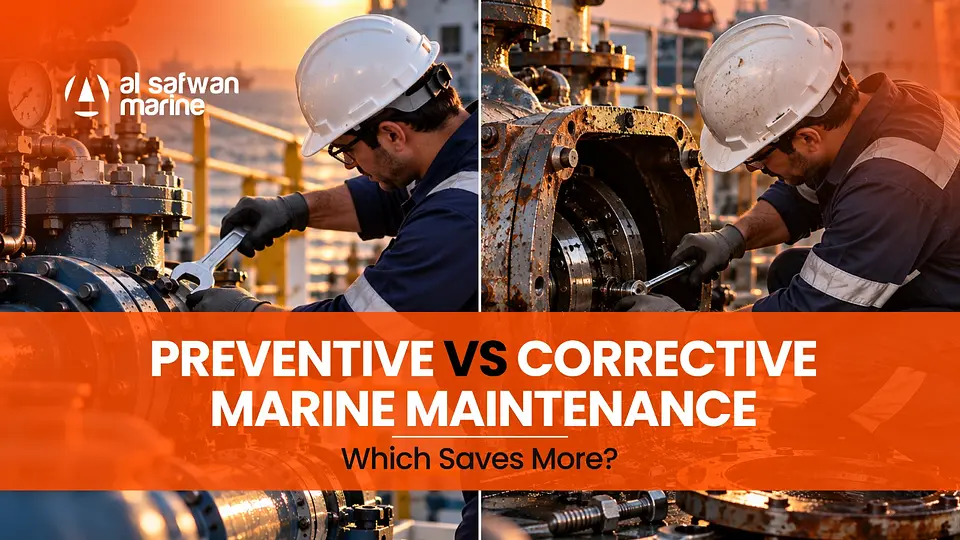
What Is Preventive Marine Maintenance?
Preventive marine maintenance is a planned strategy that inspects, services, tests, and replaces components before they fail. Crews follow set intervals based on operating hours, manufacturer recommendations, or a planned maintenance system (PMS).
Instead of waiting for a breakdown, this approach detects wear early. As a result, unexpected failures become far less likely.
Typical preventive activities
- Engine servicing
- Oil and filter replacement
- Hydraulic system inspections
- Fire safety equipment testing
- Mooring equipment inspection
- Pump and valve maintenance
- Electrical system testing
- Corrosion inspection and treatment
- Calibration of critical instruments
- Lubrication of rotating machinery
What Is Corrective Marine Maintenance?
Corrective marine maintenance takes place after equipment fails or a fault appears. Its purpose is to restore normal operation through repair or replacement.
Teams may plan corrective work for minor issues. However, they often carry it out as emergency repairs after unexpected failures.
Common examples
- Replacing a failed hydraulic pump
- Repairing a damaged gearbox
- Replacing a failed electrical motor
- Welding cracked deck structures
- Repairing leaking pipelines
- Replacing damaged valves
- Emergency engine repairs
Corrective maintenance is sometimes unavoidable. Nevertheless, relying on it alone leads to costly downtime and operational disruption.
Preventive vs Corrective Marine Maintenance
Feature | Preventive | Corrective |
|---|---|---|
Maintenance Approach | Planned and scheduled | Performed after failure |
Equipment Downtime | Minimal | Often significant |
Repair Costs | Predictable | Usually higher |
Safety Risk | Lower | Higher |
Equipment Life | Extended | Reduced if failures recur |
Operational Reliability | High | Variable |
Spare Parts Planning | Easier | Often urgent |
Budget Control | Better | Less predictable |
Fleet Availability | Higher | Lower |
Cost Analysis
Preventive maintenance needs regular inspections and scheduled servicing. Even so, it usually delivers lower long-term operating costs.
Preventive Maintenance Costs
- Routine servicing
- Scheduled inspections
- Planned spare parts replacement
- Lubricants and consumables
- Predictable labour costs
Corrective Maintenance Costs
- Emergency repairs
- Expedited spare parts
- Vessel downtime
- Higher labour costs
- Possible towing or emergency assistance
- Lost operational revenue
- Contract penalties
For commercial fleets, a single unexpected failure can cost more than several months of scheduled maintenance.
Risk Assessment
Each strategy carries a different level of operational risk.
Risks of Preventive Maintenance
- Planned maintenance costs
- Equipment temporarily offline
- Need for proper scheduling
Risks of Corrective Maintenance
- Unexpected breakdowns
- Operational delays
- Increased safety hazards
- Environmental risks
- Emergency repair expenses
- Potential regulatory non-compliance
In short, a preventive programme significantly reduces unexpected failures. Operators therefore keep their vessels safer and more reliable.
Real-Life Examples
Example 1 · Preventive Success
A commercial cargo vessel schedules quarterly inspections of its hydraulic systems. During one inspection, technicians find a worn hose with early signs of deterioration. They replace it during routine maintenance, so the hose never fails at sea and the vessel avoids costly downtime.
Example 2 · Corrective Scenario
An offshore support vessel delays routine maintenance on a cooling pump. During an offshore operation, the pump fails unexpectedly and the engine overheats. The vessel must suspend operations, and emergency repairs, replacement parts, and delays cost far more than scheduled maintenance would have.
Best Practices for Commercial Fleets
An effective preventive programme improves vessel reliability and operational efficiency. To build one, follow these steps:
- Develop a Planned Maintenance System (PMS)
- Follow manufacturer maintenance schedules
- Maintain detailed maintenance records
- Inspect critical systems regularly
- Monitor equipment performance
- Replace worn components before failure
- Train maintenance personnel regularly
- Keep critical spare parts in stock
- Schedule periodic safety inspections
- Review data to identify recurring issues
A well-managed programme reduces downtime and extends equipment life. In addition, it supports compliance with industry regulations.
Benefits of Preventive Marine Maintenance
Adopting a preventive approach offers several long-term advantages:
- Reduced unplanned downtime
- Improved crew safety
- Lower repair costs
- Increased equipment lifespan
- Better fuel efficiency
- Enhanced operational reliability
- Improved regulatory compliance
- Better maintenance planning
- Higher vessel availability
- Increased customer confidence
Which Maintenance Strategy Saves More?
For most commercial vessels, preventive maintenance provides the greatest long-term value. Corrective work is sometimes unavoidable. However, relying only on repairs after failure raises costs, lengthens downtime, and increases risk.
The strongest strategy combines scheduled preventive work with timely corrective action when issues arise. This balanced approach maximizes reliability, improves safety, and lowers the total cost of vessel ownership.
Conclusion
Choosing the right maintenance strategy is essential for vessel safety, operational efficiency, and long-term profitability. Corrective maintenance remains necessary for unexpected failures. Even so, preventive maintenance lets operators spot issues early, reduce repair costs, and improve fleet reliability.
By investing in regular inspections, planned servicing, and proactive practices, commercial fleet operators extend equipment life, reduce downtime, and run more efficient marine operations.
Why Choose Al Safwan Marine?
At Al Safwan Marine, we provide marine maintenance, inspection, and engineering solutions that keep your vessels operating safely and efficiently. Our experienced team supports shipowners, offshore operators, and commercial fleets with preventive programmes, equipment inspections, repair services, hydraulic solutions, and marine engineering expertise.
Al Safwan Marine – Your Trusted Partner for Marine Engineering, Maintenance, and Offshore Solutions.
Hydraulic Services Load Testing Automation Lifeboats Fire Fighting Equipments Liferafts
Follow Al Safwan Marine on LinkedIn for more marine safety and maintenance insights.
Filed under Fleet management