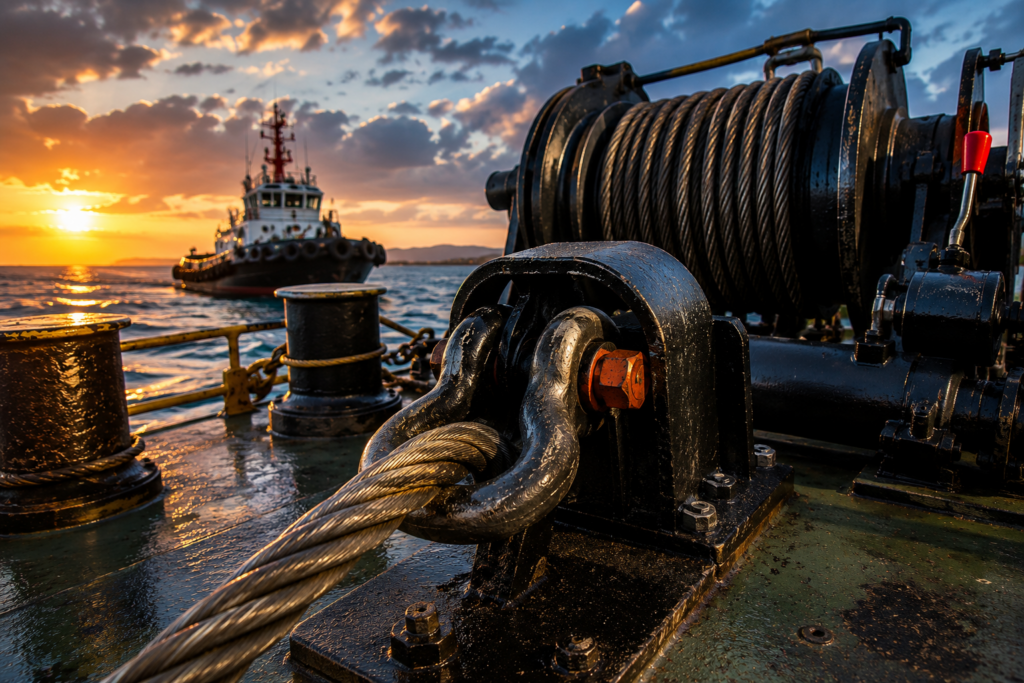

A well-maintained fairlead keeps mooring, towing, and anchor lines running smoothly under heavy load. Left unchecked, wear and corrosion on deck-mounted guides lead to rope damage, misalignment, and unplanned downtime. This guide covers what a fairlead does, the problems that show up over time, and how routine inspection and repair keep it reliable.
What Is a Fairlead?
A fairlead is a deck-mounted guide that controls the direction of ropes, wires, and mooring lines while reducing friction and preventing excessive wear. It keeps lines moving smoothly under tension and helps distribute loads evenly during anchoring, towing, and mooring operations. Vessels and platforms that commonly carry one include:
- Commercial ships and container vessels
- Oil and chemical tankers, and bulk carriers
- Offshore support vessels (OSVs) and tug boats
- Passenger ships and naval vessels
- Offshore platforms and floating production units (FPSOs)
Importance of Fairleads in Marine Operations
A properly functioning fairlead improves both operational efficiency and onboard safety in several ways. It guides mooring and towing lines smoothly while preventing twisting and tangling, and it reduces friction and line wear that would otherwise shorten a rope’s working life. Beyond the line itself, it protects surrounding deck equipment and improves load distribution across the system. Together, these functions enhance crew safety and support safe anchoring and mooring, which is why reliable fairleads matter so much in ports, terminals, offshore installations, and shipyards.
Types of Fairleads
Roller Fairlead
Built with rotating rollers, this type minimizes friction and provides smooth movement for heavy mooring and towing lines.
Sheave Fairlead
A sheave or pulley redirects wire ropes here, so friction stays low during heavy lifting and towing operations.
Fixed Fairlead
This stationary guide suits routine mooring operations where ropes follow a fixed direction.
Closed Fairlead
An enclosed design provides additional line control, therefore it helps prevent accidental rope displacement during vessel movement.
Common Fairlead Problems
Fairleads operate under constant mechanical stress and harsh environmental conditions, so problems tend to build up gradually. The most frequent issues include:
- Corrosion and roller wear
- Bearing failure and seized rollers
- Structural cracks and misalignment
- Excessive friction and surface damage
- Loose mounting bolts and rope groove wear
Routine inspections help detect these issues early, before they lead to operational failures.
Fairlead Inspection & Maintenance
Preventive maintenance extends equipment life and improves operational reliability, so it deserves a regular place on the maintenance schedule. A thorough maintenance routine typically covers visual and roller inspections alongside bearing lubrication. Corrosion assessment and structural integrity checks follow next, together with alignment inspection and fastener tightening. Wear measurement, surface cleaning, and functional testing round out the process. Regular maintenance along these lines reduces unexpected downtime and improves vessel safety overall.
Fairlead Repair & Replacement
| Repair Service | When It’s Needed |
|---|---|
| Roller or bearing replacement | Worn or seized rollers and bearings that increase friction or cause uneven movement. |
| Welding and structural restoration | Structural cracks or damage that compromise the fairlead’s load-bearing integrity. |
| Alignment correction | Misalignment that causes rope groove wear or uneven line tension. |
| Surface refurbishment and coating | Corrosion or surface damage that threatens long-term reliability. |
| Load and operational testing | Verification after repair or component replacement, before the unit returns to service. |
Damaged or worn fairleads should be repaired or replaced promptly, since professional repairs restore equipment reliability while extending service life.
Applications
Fairleads are widely used across the marine and offshore industries, including commercial shipping, offshore oil and gas, and shipyards. Ports and harbours rely on them just as heavily, alongside marine construction and offshore wind farms. Naval operations, tug and salvage work, passenger ferries, and fishing vessels round out the range of applications where reliable line guidance matters most.
Benefits of Professional Fairlead Maintenance
- Improved vessel safety and reduced rope damage
- Lower maintenance costs and increased equipment lifespan
- Reduced downtime and improved operational efficiency
- Better load handling and enhanced regulatory compliance
Frequently Asked Questions
How often should a fairlead be inspected?
Inspection frequency depends on usage and manufacturer guidance, but routine visual and roller checks, along with corrosion assessment, should happen on a regular schedule to catch wear early.
What causes most fairlead failures?
Corrosion, roller wear, bearing failure, and misalignment cause most failures, and routine inspection typically catches these issues before they lead to structural damage or rope failure.
Can a damaged fairlead be repaired instead of replaced?
Yes, many fairleads can be restored through roller or bearing replacement, welding repairs, alignment correction, or surface refurbishment, which is often more cost-effective than full replacement.
How does a fairlead work with an anchor or berthing capstan?
A fairlead guides the line as it feeds to or from an anchor capstan or berthing capstan, so the two systems work together to keep chains and mooring lines properly aligned under load.
What’s the difference between a roller and a sheave fairlead?
A roller fairlead uses rotating rollers and suits dynamic systems like winches, while a sheave fairlead uses a pulley to redirect wire ropes during heavy lifting and towing operations.
Why Choose Al Safwan Marine
Trusted fairlead inspection, maintenance, repair, and replacement services across the UAE and GCC region.
Anchor Capstan Berthing Capstan Load Testing
Follow Al Safwan Marine on LinkedIn for updates on our marine equipment and services.
Frequently asked questions
What is the purpose of a fairlead?
To lead mooring and towing lines from the winch or bitts to the shore or tug at the right angle while keeping friction and chafe low.
What should be checked on a fairlead?
Free rotation of rollers, wear grooves, cracks in the base and welds, corrosion of pins and bearings, and lubrication, as part of the mooring equipment inspection.
Filed under Hydraulics, Marine supply