Every lifeboat, liferaft, and immersion suit onboard has to prove it works before anyone trusts it with their life. Here’s what IMO Resolution MSC.81(70) requires — and why it matters.
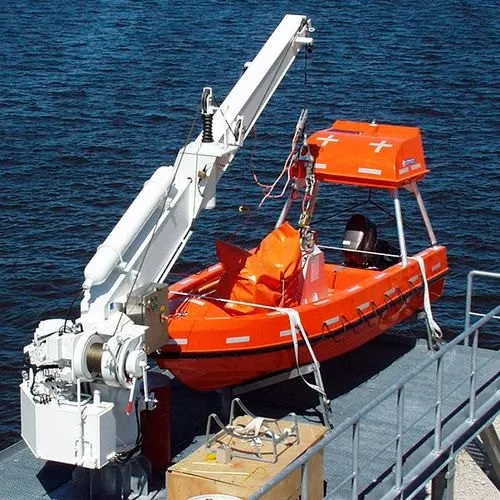
Life-saving appliances (LSA) rank among the most critical safety systems onboard any vessel. During an emergency, equipment such as lifeboats, rescue boats, liferafts, launching appliances, immersion suits, lifejackets, and release mechanisms must perform flawlessly to protect lives at sea.
To guarantee that reliability, the International Maritime Organization (IMO) established Resolution MSC.81(70), which provides standardized testing procedures for life-saving appliances. These procedures verify that lifesaving equipment meets international performance standards before approval, and that it continues to operate safely throughout its service life.
What Is IMO Resolution MSC.81(70)?
IMO Resolution MSC.81(70), adopted by the Maritime Safety Committee (MSC), provides internationally recognized testing procedures for life-saving appliances required under the SOLAS Convention and the Life-Saving Appliances (LSA) Code. Specifically, the resolution establishes uniform methods for testing lifesaving equipment to ensure:
- Safe operation during emergencies
- Compliance with SOLAS requirements
- Reliable performance under harsh marine conditions
- Consistent international safety standards
- Protection of crew members and passengers
Since its adoption, the recommendation has been revised several times to reflect advances in technology and improvements in maritime safety.
Why Testing of Life-Saving Appliances Matters
Life-saving appliances may sit unused for years before anyone actually needs them. For this reason, regular inspection and testing help identify hidden defects that could affect performance during an emergency. Specifically, proper testing helps to:
- Verify equipment reliability
- Ensure statutory compliance
- Detect wear and deterioration
- Confirm operational readiness
- Improve crew safety
- Support successful Flag State and Classification Society surveys
Ultimately, regular testing is essential for maintaining confidence in emergency equipment.
Life-Saving Appliances Covered Under MSC.81(70)
The recommendation applies to various types of lifesaving equipment, including lifeboats, rescue boats, liferafts, launching appliances, davits, winches, release and retrieval systems, lifejackets, immersion suits, marine evacuation systems, and lifebuoys. Each appliance must meet specific testing requirements before approval and throughout its operational life.
Related reading: Several of these appliances have their own dedicated compliance guides on our site — see General Requirements for Liferafts and Immersion Suits for a closer look at two of the categories covered here.
Key Testing Requirements
Testing procedures exist to verify that every lifesaving appliance performs safely under real operating conditions. Typical tests include:
Operational Testing
Confirms that the equipment functions correctly during normal and emergency operations.
Load Testing
Verifies the safe working load (SWL) of launching appliances, davits, and winches.
Strength Testing
Ensures structural components can withstand design loads and operating conditions.
Drop Testing
Evaluates whether lifesaving appliances can withstand deployment impacts.
Stability Testing
Confirms lifeboats and liferafts remain stable and safe after launching.
Functional Testing
Checks release mechanisms, braking systems, engines, steering systems, and recovery arrangements.
Environmental Testing
Assesses performance under extreme weather, temperature, corrosion, and prolonged seawater exposure.
Compliance with SOLAS & the LSA Code
MSC.81(70) supports the requirements of SOLAS Chapter III, the IMO Life-Saving Appliances (LSA) Code, Flag State regulations, Classification Society requirements, and manufacturer’s instructions. For life-saving appliances installed after 1 July 2010, compliance with the latest applicable testing recommendations is generally required. However, existing equipment may continue operating under previous approved standards if the Administration accepts it and confirms it’s suitable for service.
Benefits of Regular Testing
Routine testing offers several advantages:
- Improved emergency preparedness
- Increased crew safety
- Extended equipment service life
- Reduced operational risk
- Early detection of defects
- Better compliance during statutory surveys
- Increased confidence in emergency systems
After all, preventive testing is far more effective than discovering equipment failures during an emergency.
Frequently Asked Questions
What is IMO Resolution MSC.81(70)?
It’s an IMO recommendation that establishes standardized testing procedures for life-saving appliances used onboard ships.
Why is testing required?
Testing ensures lifesaving equipment operates correctly, complies with international regulations, and remains ready for emergency use.
Which equipment requires testing?
Lifeboats, rescue boats, liferafts, davits, launching appliances, release mechanisms, immersion suits, lifejackets, and other SOLAS-approved lifesaving equipment.
Who should perform the testing?
Qualified technicians should carry out testing using approved procedures and calibrated equipment, in accordance with IMO, SOLAS, Flag State, Classification Society, and manufacturer requirements.
Investing in Safety Saves Lives
Life-saving appliances exist for one purpose — to protect lives when emergencies occur. Their reliability depends on proper inspection, testing, and maintenance throughout their service life. By following the requirements of IMO Resolution MSC.81(70), shipowners and operators can keep their emergency equipment compliant, dependable, and ready to perform whenever it’s needed.
Why Choose Al Safwan Marine?
Al Safwan Marine provides professional inspection, testing, maintenance, load testing, and certification services for life-saving appliances across commercial vessels, offshore installations, and marine operators worldwide. Our OEM-trained engineers work in accordance with IMO, SOLAS, MSC.81(70), LSA Code, Flag State, and Classification Society requirements to ensure every piece of lifesaving equipment meets the highest international safety standards.
Our services include
Lifeboat Inspection & Testing Liferaft Servicing Davit & Winch Load Testing Immersion Suit Testing Fire Fighting Equipments — Inspections Embarkation Ladder Inspection Hydraulic Services
Al Safwan Marine — your global partner for marine inspection, testing & certification. Follow us on LinkedIn for the latest updates on lifesaving appliance compliance and marine inspection services.
Filed under Company news