A poorly heated fuel line doesn’t announce itself — it shows up later as soot, wasted fuel, and an engine working harder than it should. Getting HFO heaters right, from installation through daily upkeep, is one of the simplest ways to protect a vessel’s fuel system.
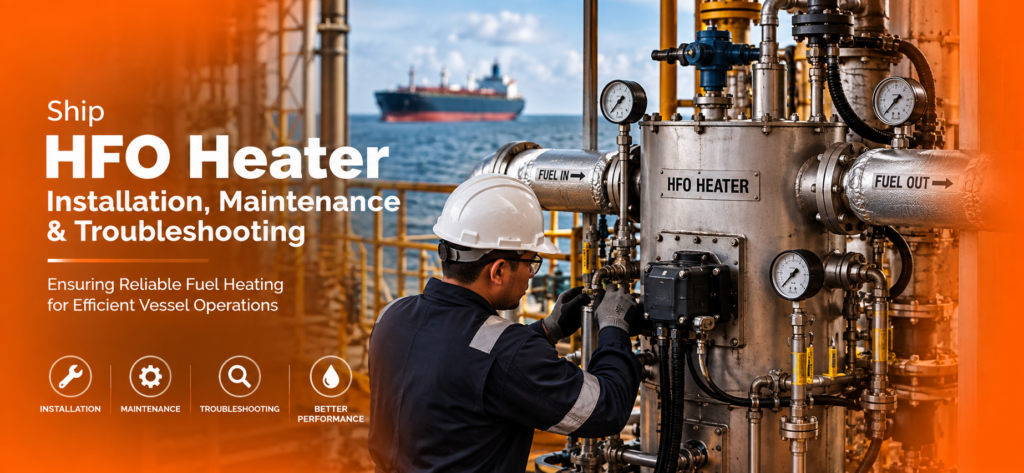
HFO heaters heat heavy fuel oil to the correct viscosity before it reaches the engine, enabling proper atomization and efficient combustion. On cargo ships, tankers, offshore support vessels, and other commercial vessels, correct installation and consistent maintenance keep these heaters running reliably and keep fuel costs under control.
Related service: HFO heater work is part of our broader Automation and marine engineering support, covering installation, commissioning, preventive maintenance, and troubleshooting for vessels across the UAE and worldwide.
Why HFO Heaters Are Important
Heavy fuel oil must be heated before it reaches the engine to achieve proper atomization and efficient combustion. A poorly maintained HFO heater can lead to:
- Increased fuel consumption
- Poor combustion efficiency
- Carbon deposits and soot formation
- Engine performance issues
- Higher maintenance costs
- Unexpected equipment failures
- Unplanned vessel downtime
Routine servicing helps maintain stable fuel temperatures and supports reliable engine operation.
Best Practices for HFO Heater Installation
Correct installation plays a vital role in long-term performance.
Select the Right Location
Install the heater in a well-ventilated area with sufficient access for inspection, maintenance, and repairs.
Prepare a Stable Foundation
Ensure the heater is securely mounted on a level, vibration-resistant foundation to protect connected components.
Install Piping Correctly
Use marine-grade pipes, fittings, and gaskets designed for heavy fuel oil applications. All connections should be properly sealed and pressure-tested.
Complete Electrical Connections
Electrical wiring should comply with the manufacturer’s specifications, including proper grounding and overload protection.
Install Safety Devices
Essential safety equipment includes:
- Pressure relief valves
- Temperature sensors
- Flame monitoring systems
- Fuel shut-off valves
- Safety interlocks
Apply Thermal Insulation
Proper insulation minimizes heat loss, improves energy efficiency, and maintains stable fuel temperatures throughout the system.
Preventive Maintenance for Reliable Performance
Routine maintenance helps prevent failures and ensures maximum efficiency.
Visual Inspection
Regularly inspect for fuel leaks, corrosion, loose connections, burner condition, damaged insulation, and electrical faults.
Burner Cleaning
Remove soot, carbon deposits, and other contaminants from burners and heating surfaces to maintain efficient heat transfer.
Fuel Filter Maintenance
Inspect and replace clogged fuel filters to maintain a consistent fuel supply.
Combustion Chamber Inspection
Clean the combustion chamber and verify proper burner alignment to ensure complete fuel combustion.
Ignition System Checks
Inspect spark electrodes, ignition transformers, and flame sensors for wear or damage.
Control System Testing
Verify the operation of temperature controllers, pressure switches, safety interlocks, and communication with the control panel.
Record Maintenance Activities
Maintain accurate service records to support preventive maintenance planning and regulatory compliance.
Common HFO Heater Problems and Troubleshooting
Early identification of faults helps reduce downtime and repair costs.
Insufficient Fuel Heating
Possible causes include blocked filters, faulty heating elements, incorrect temperature settings, or control system failures.
Burner Ignition Problems
Inspect the ignition system, fuel supply, burner assembly, and flame monitoring devices.
Poor Combustion
Check burner adjustment, fuel pressure, combustion chamber cleanliness, and air-fuel ratio.
Control System Faults
Inspect sensors, wiring, PLC controls, and alarm systems for abnormal readings or communication failures.
Safety Device Activation
Unexpected shutdowns may indicate issues with pressure, temperature, flame detection, or other safety systems requiring immediate attention.
Benefits of Professional HFO Heater Maintenance
A structured maintenance program helps vessel operators achieve:
- Improved fuel efficiency
- Reduced operating costs
- Enhanced engine performance
- Longer equipment life
- Improved combustion efficiency
- Increased operational reliability
- Reduced unplanned downtime
- Compliance with marine safety and operational standards
Frequently Asked Questions
How often should an HFO heater be serviced?
Service intervals depend on manufacturer guidance and vessel operating hours, but visual inspection, filter checks, and burner cleaning are typically carried out at each scheduled maintenance period, with a full inspection at least annually.
What causes insufficient fuel heating?
Blocked filters, faulty heating elements, incorrect temperature settings, and control system failures are the most common causes of insufficient fuel heating.
Why does poor combustion happen in HFO systems?
Poor combustion is usually linked to burner misadjustment, incorrect fuel pressure, a dirty combustion chamber, or an imbalanced air-fuel ratio.
What safety devices should an HFO heater have?
Essential safety devices include pressure relief valves, temperature sensors, flame monitoring systems, fuel shut-off valves, and safety interlocks.
What are the benefits of professional HFO heater maintenance?
Professional maintenance improves fuel efficiency, reduces operating costs, enhances engine performance, extends equipment life, and reduces the risk of unplanned downtime.
Proper installation, regular maintenance, and timely troubleshooting of HFO heaters are essential for safe and efficient vessel operations. Partnering with an experienced marine service provider helps improve fuel efficiency, reduce operating costs, minimize downtime, and extend the lifespan of critical fuel system components.
Talk to Our Marine Engineers
Al Safwan Marine provides professional marine engineering and technical support services for commercial and offshore vessels across the UAE and worldwide, including HFO heater installation, commissioning, preventive maintenance, troubleshooting, and repairs.
Our services include
Lifeboats — Inspections and Repair Fire Fighting Equipments — Inspections Liferafts — Inspections and Rental Co2 Hoses Supply — Marine Approved Automation Load Testing — Lifeboats and Cranes Hydraulic Hoses
Al Safwan Marine — your global partner for marine inspection, testing & certification. Follow us on LinkedIn for the latest updates on marine engineering and fuel system services.
Filed under Automation & calibration