Lesson 4 · 15 min
Ballast water: D-1, D-2 and the BWMS Code
You will be able to say which ballast water standard your ship must meet, what makes its treatment system legal, and what to do when it cannot treat.
Start here
The 2-minute primer
New to this? These 6 cards explain the lesson in plain words. Go through them first and the lesson will make sense.
Primer done.
-
1/6Picture this
No fresh fruit through customs
Think of flying into another country with an apple in your bag. Customs may take it off you. Tiny pests can hide in fruit and harm crops in a place that has no defence against them.
Ships carry a far bigger bag. They load sea water in one port as ballast and empty it in another, along with whatever tiny creatures live in it.
-
2/6The big idea
Clean the water before it leaves
Ships carry sea water in their tanks, called ballast, to stay steady. This ballast water can carry plankton, bacteria and larvae across the world, and some take over their new home.
An international agreement makes ships deal with it. The old way was swapping coastal water for ocean water. Today every ship must meet a stricter standard, which in practice means an approved treatment system on board.
-
3/6Words you'll meet
Six words, in plain English
- Ballast water
- sea water held in a ship’s tanks to keep it stable and at the right depth.
- D-1
- the old method, swapping the water in the tanks for open-ocean water during the voyage.
- D-2
- today’s standard, a strict limit on how many living organisms the discharged water may contain.
- BWMS (ballast water management system)
- the treatment machinery, often filters plus ultraviolet light or electrolysis, that cleans the ballast water.
- BWMS Code
- the compulsory rulebook for testing and approving treatment systems.
- Bypass
- a route that skips the treatment system, allowed only as a last resort and always recorded.
-
4/6Why it matters
A broken system gets ships held
Creatures carried in ballast water can take over a new place, as zebra mussels did in North American lakes. That is why ports check closely.
In a recent inspection campaign, the question ships failed most was the simplest one: does the treatment system actually work? The paperwork side is well established. A system that is switched off, broken or badly maintained is what gets ships held in port.
-
5/6In this lesson
What you’ll be able to do
- Tell the old exchange method from today’s treatment standard.
- Know which approval a ship’s treatment system needs.
- Handle muddy or difficult water without breaking the rules.
- Show an inspector that the system really works.
-
6/6Quick check
Which standard must every ship meet today?
Right: the swap method was only for the changeover years. Every ship must now meet the D-2 limit, usually with a treatment system.
The basics
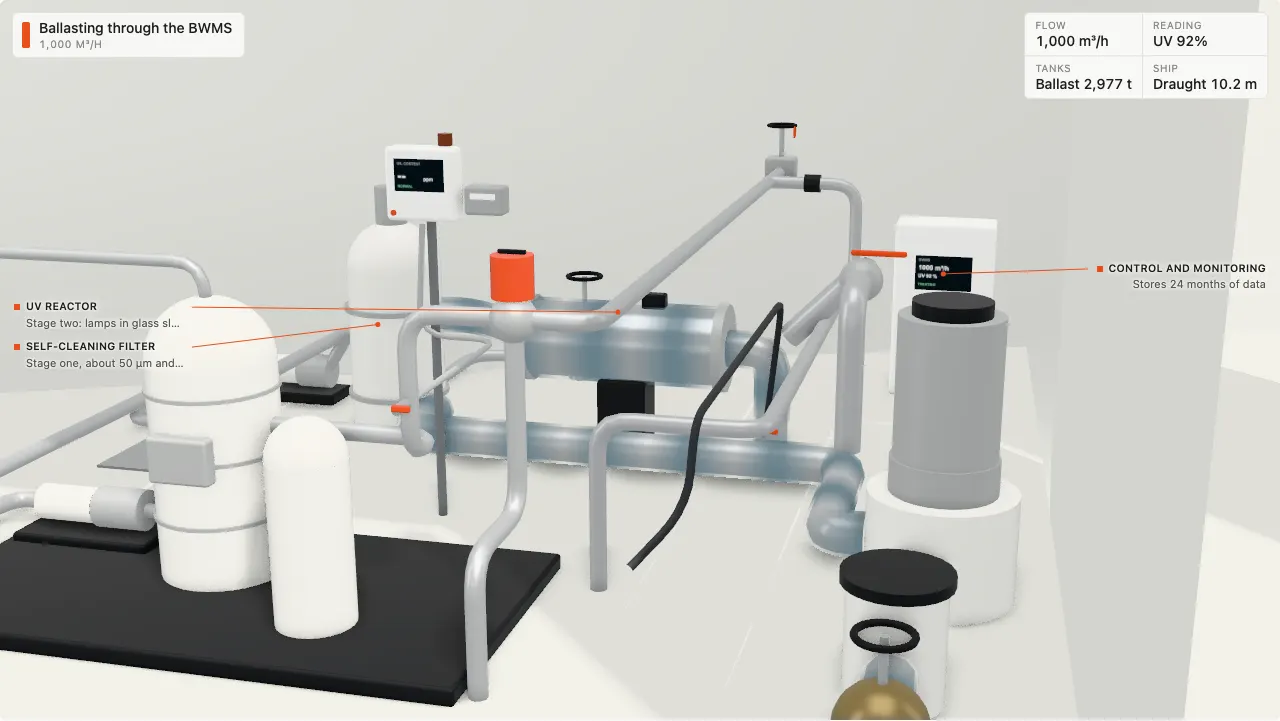
From 1 September to 30 November 2025, port state control officers in the Asia-Pacific, Europe, the Mediterranean and the Black Sea ran a joint campaign on ballast water management. The Tokyo MOU alone carried out 6,930 campaign inspections. The question ships failed most often, and the one that led to most campaign detentions, was the simplest: “Is the BWMS operational?”10 In the Black Sea region about 89% of all non-compliances fell under three questions: whether the ballast water management system (BWMS) works, whether the Ballast Water Record Book (BWRB) is properly kept, and whether the crew know the Ballast Water Management Plan (BWMP).11
The paperwork side of ballast water is mature. The hard part is a treatment system that has to kill or remove organisms in whatever water the ship finds, at full ballast rate, years after installation. This lesson covers the standards, which ship must meet which, how a BWMS is approved, what to do when it cannot cope, and the convention review now under way.
Sign in to read the rest of this lesson
Continue reading
Save your progress, open all 115 lessons and get a Course completed card when you finish.
or use your email
In the rest of this lesson
- Try it: A bulk carrier, its BWMS and a muddy river port
- In plain words
- In detail
- What the rules say
- Flag and class notes
- Key numbers
- What inspectors find
- 3 questions people ask
- Quiz: 6 questions
- Ask our engineers about this lesson
Familiarisation training from Al Safwan Academy. Finishing a course shows completion of online familiarisation training: it is not an STCW, flag-approved or manufacturer qualification, and these courses don't replace that training. The manufacturer's manual and your flag's rules always come first.