
 3D
Surveys, PSC and compliance
Surveys, audits and port state control
How surveys, safety and labour audits and port state inspections work, and how a ship gets ready for them.
7 lessons1 h 45 minPractical
Launch period. Every course is free for a limited time. What happens after
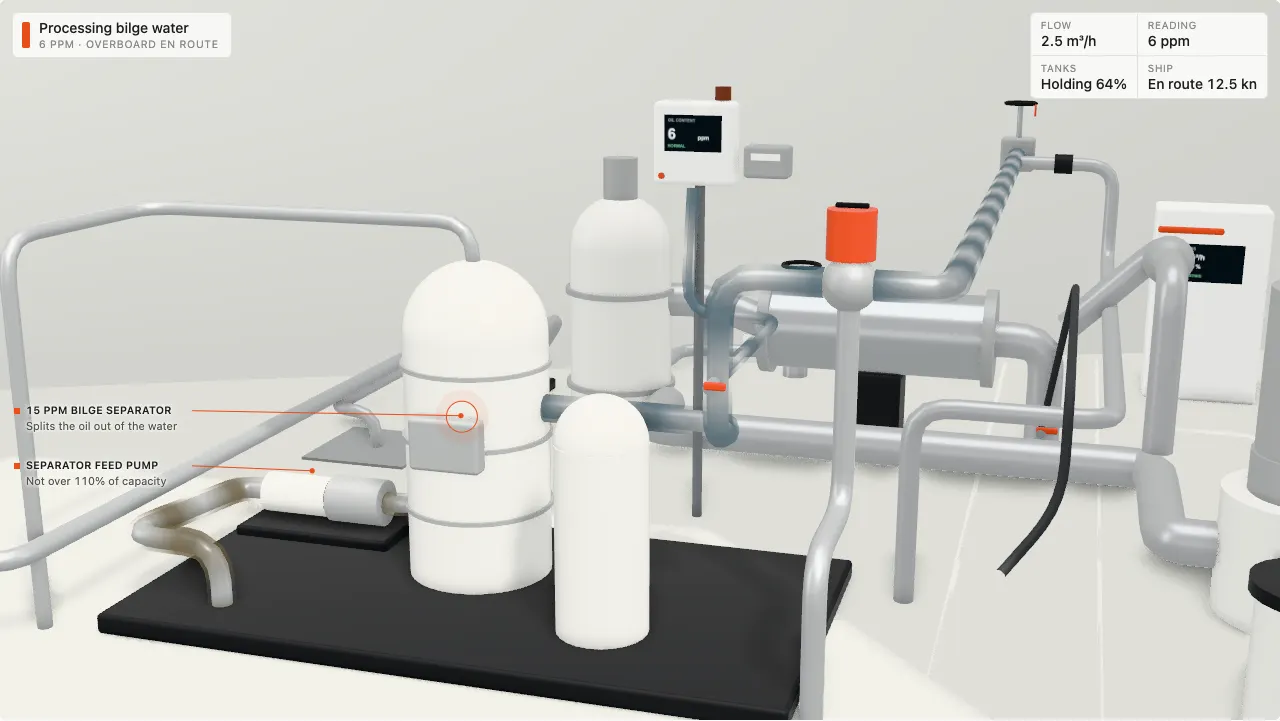
Oily water separators, bilge alarms, the Oil Record Book and ballast water systems, ready for inspection.
6 lessons 1 h 29 min Practical 3D simulator in every lesson Course completed card
You will be able to say, for any drop of oily water in the engine room, whether it may go overboard and what has to be recorded.
You will be able to trace an OWS system part by part, test it the way an inspector does, and keep its calibration and records in date.
You will be able to write and check Oil Record Book entries with the right codes, and spot the inconsistencies that turn an inspection into a prosecution.
You will be able to say which ballast water standard your ship must meet, what makes its treatment system legal, and what to do when it cannot treat.
You will be able to plan a BWMS commissioning test, keep the system ready for its annual survey, and know what will change when the 2026 amendments enter into force.
You will be able to tell which list an item belongs in, keep Part I of the IHM valid through every repair, and know which certificate your ship needs where.
Finish every lesson to get a Course completed card with your name and a QR code anyone can scan to verify.
Share it on LinkedIn, WhatsApp and elsewhere, or download the picture.
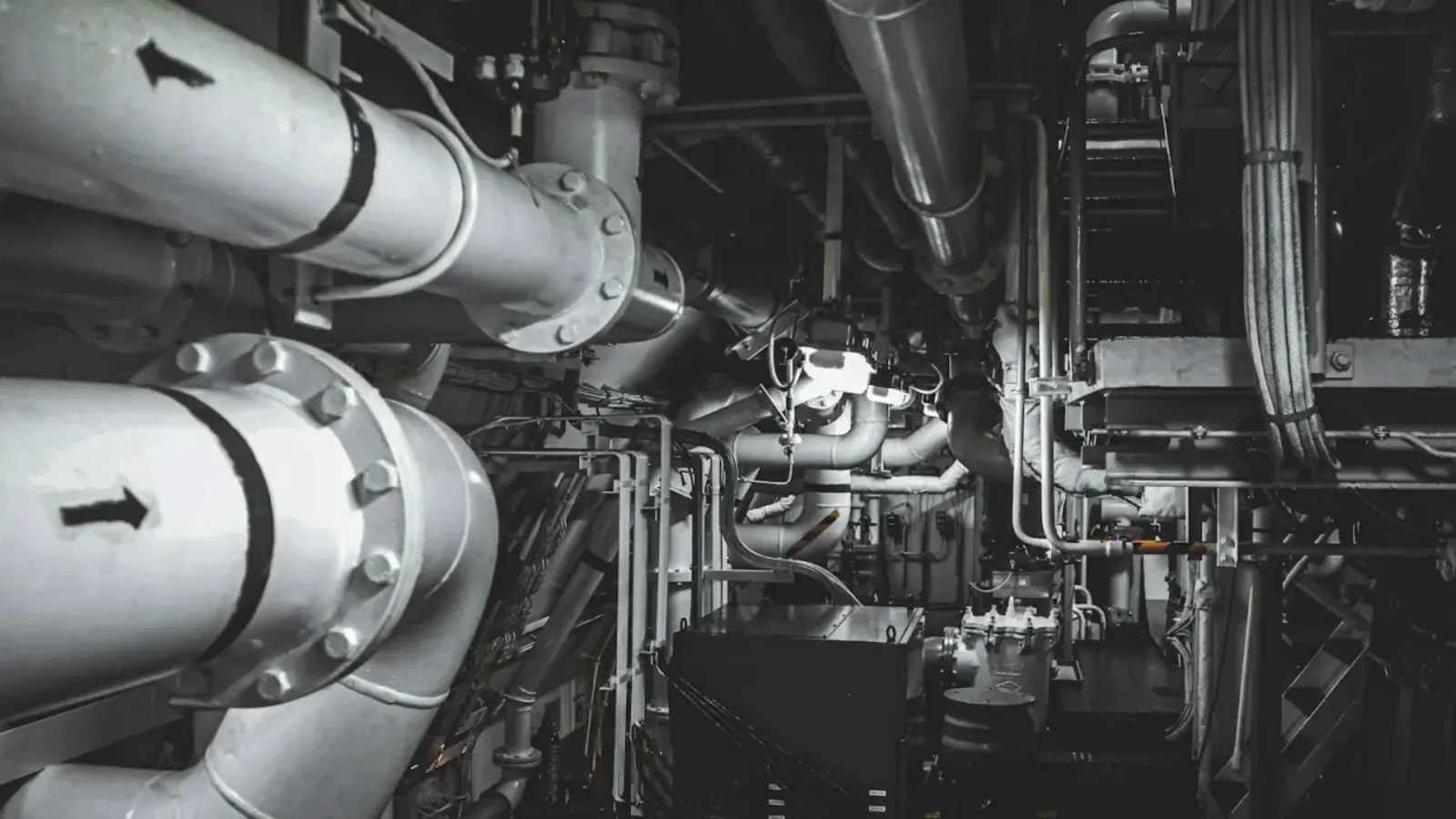
Pollution equipment is where an engine room’s paperwork meets criminal law. In 2016 a cruise operator agreed to pay a US$40 million criminal penalty after a newly hired engineer reported a “magic pipe” that had been used to pump oily waste overboard off England. In February 2025 the owner and operator of a bulk carrier were fined US$1.85 million and banned from US ports after a routine Coast Guard inspection found a portable pump and hose rigged to the bilge holding tank. In both cases the equipment was on board and certified. What failed was how it was used, tested and recorded.
Ballast water is the newer test. Since 8 September 2024 every ship under the Ballast Water Management (BWM) Convention has had to meet the D-2 discharge standard. During the joint port state control campaign of September to November 2025, “Is the BWMS operational?” was the question ships failed most often in the Tokyo MOU region. Since 26 June 2025 the Hong Kong Convention has also required an Inventory of Hazardous Materials (IHM), which every existing ship of 500 gross tonnage (GT) and above must have by 26 June 2030.
This course works from the instruments themselves: MARPOL Annex I and resolution MEPC.107(49) as amended, IMO’s Oil Record Book guidance, the BWM Convention and the BWMS Code, the commissioning testing guidance, the Hong Kong Convention, the 2023 IHM Guidelines and the EU Ship Recycling Regulation. Each lesson gives the rules with citations, the numbers you need, the changes coming in 2026 to 2028, and what inspectors and prosecutors actually find.
3D
Surveys, PSC and compliance
How surveys, safety and labour audits and port state inspections work, and how a ship gets ready for them.
7 lessons1 h 45 minPractical
 3D
Surveys, PSC and compliance
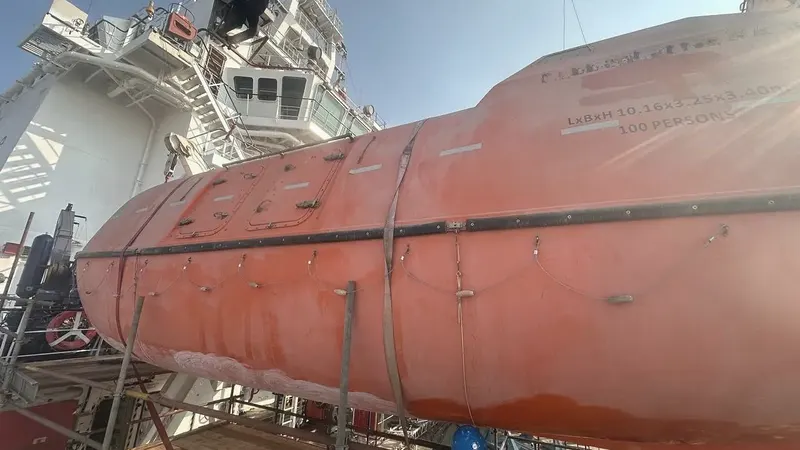
How surveys, class approval, flag rules and port state inspections shape lifeboat work on a managed fleet.
6 lessons1 h 30 minAdvanced
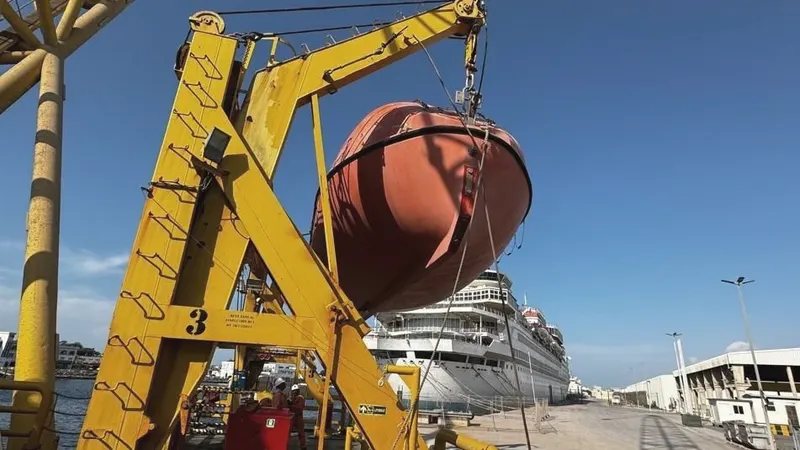 3D
Lifeboats and liferafts
Why lifeboats hurt people, which rules keep crews safe, and what to check, log and leave to specialists.
8 lessons1 h 30 minIntroductory