Lesson 6 · 14 min
Chemical and gas-tight suits: carriage, inspection and leak testing
You will know which protective suits a chemical tanker or gas carrier must carry, how gas-tight suits are classified, and how to inspect, leak test and retire them.
Start here
The 2-minute primer
New to this? These 6 cards explain the lesson in plain words. Go through them first and the lesson will make sense.
Primer done.
-
1/6Picture this
A beekeeper’s suit with one small hole
A beekeeper’s suit covers every bit of skin: hood, gloves, boots, all sealed together. It works perfectly, until there is one small tear at the wrist. Then a bee finds it.
A gas-tight suit is the same idea, but against poison gas and chemicals. It only protects you if there is no gap at all, not even a pinprick.
-
2/6The big idea
Sealed against gas, and proven tight
Some cargoes burn or poison through the skin, so breathing apparatus alone is not enough. Chemical tankers and gas carriers must carry complete sets of protective gear, and some cargoes need suits that keep gas out completely.
You cannot see a pinhole. So the suit is blown up with air like a balloon, and must hold its pressure in a leak test.
-
3/6Words you'll meet
Five words, in plain English
- Gas-tight suit
- a one-piece sealed suit with boots, gloves and visor attached, that gas cannot get into.
- EN 943
- the European standard that sets how gas-tight suits are built and tested.
- Type 1a
- a gas-tight suit with the breathing apparatus worn inside it.
- Leak test
- filling the suit with air to a set pressure and checking it does not drop too far.
- Decontamination
- washing chemicals off the outside of the suit before the wearer takes it off.
-
4/6Why it matters
A hidden leak can poison the wearer
A crew member closing a leaking valve on a toxic cargo trusts the suit with their life. A pinhole, a leaking valve or a suit past its service life can let the chemical through.
Taking a suit off before it is washed puts the chemical on the wearer’s skin and spreads it around the ship.
-
5/6In this lesson
What you’ll be able to do
- Know which suits and safety sets chemical tankers and gas carriers must carry.
- Tell the three types of gas-tight suit apart.
- Check a suit before use and run a leak test.
- Know when a suit must be taken out of service.
-
6/6Quick check
How do you prove a gas-tight suit has no tiny holes?
Right: pinholes are invisible, so the leak test fills the suit with air and checks the pressure barely drops.
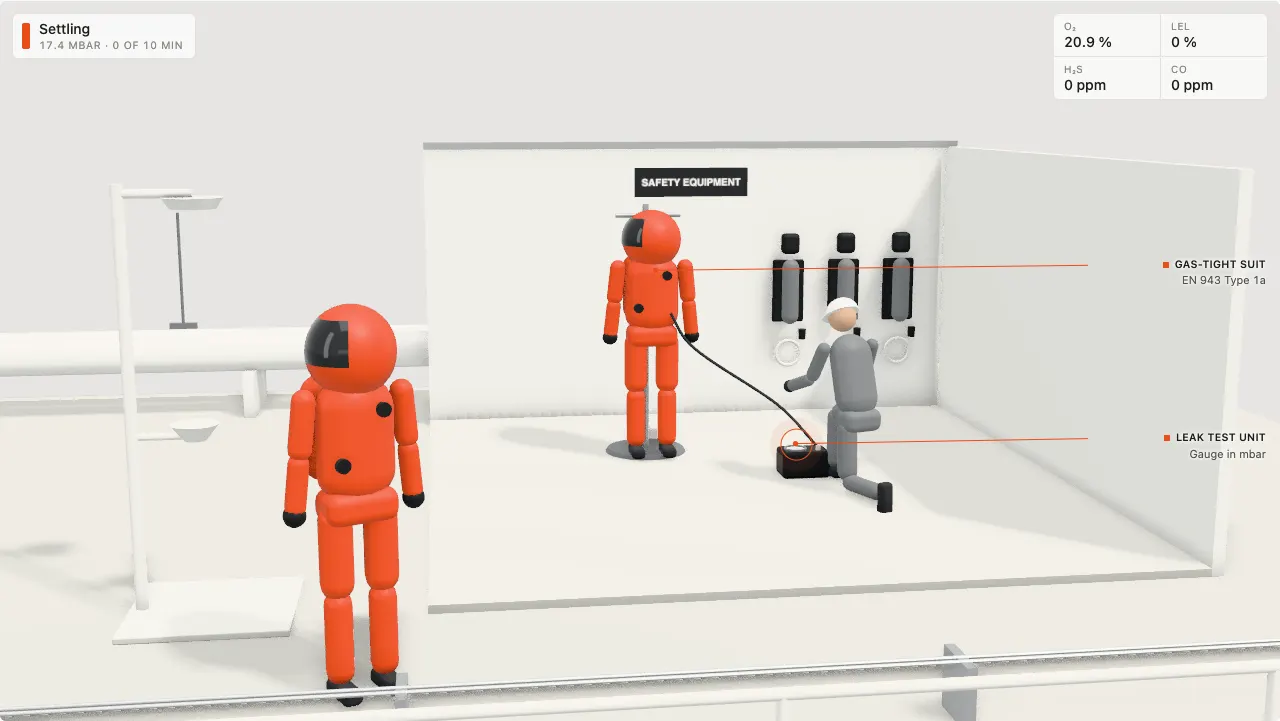
The basics
A chemical tanker crew member closing a leaking manifold valve on a toxic cargo, or a gas carrier crew member isolating a leak of ammonia, needs more than breathing apparatus. Some cargoes burn or poison through the skin, and vapour reaches the body through any gap in the clothing. The protection is a suit that keeps gas out completely, worn with a breathing set, and it only works if it has no hole the size of a pinprick.
The IBC and IGC Codes require these suits on ships carrying the right products. The European standard EN 943 sets how gas-tight suits are built and tested. The maker’s instructions set the leak tests that keep them in service. This lesson connects the three.
Sign in to read the rest of this lesson
Continue reading
Save your progress, open all 115 lessons and get a Course completed card when you finish.
or use your email
In the rest of this lesson
- Try it: A toxic cargo leak on a chemical tanker
- In plain words
- In detail
- What the rules say
- Flag and class notes
- Key numbers
- What inspectors find
- 3 questions people ask
- Quiz: 6 questions
- Ask our engineers about this lesson
Familiarisation training from Al Safwan Academy. Finishing a course shows completion of online familiarisation training: it is not an STCW, flag-approved or manufacturer qualification, and these courses don't replace that training. The manufacturer's manual and your flag's rules always come first.