
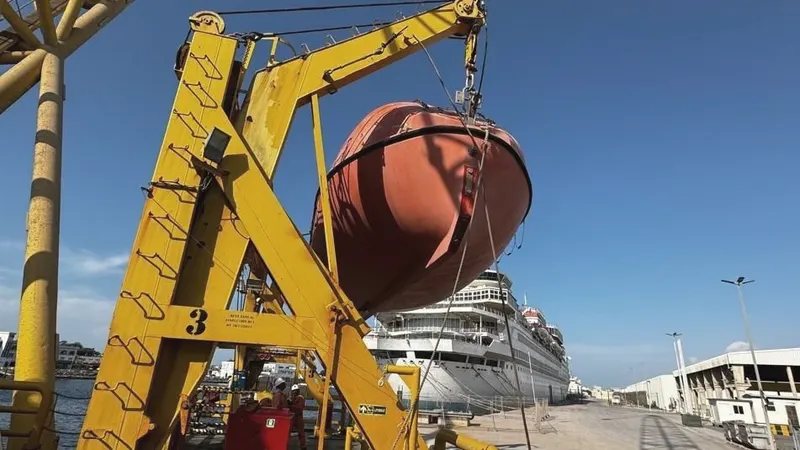
 3D
Lifeboats and liferafts
Lifeboat safety and the rules
Why lifeboats hurt people, which rules keep crews safe, and what to check, log and leave to specialists.
8 lessons1 h 30 minIntroductory
Launch period. Every course is free for a limited time. What happens after
Gas detection and enclosed spaces
Use and calibrate gas meters, and run an enclosed space entry that brings everyone back out.
6 lessons 1 h 30 min Introductory 3D simulator in every lesson Course completed card
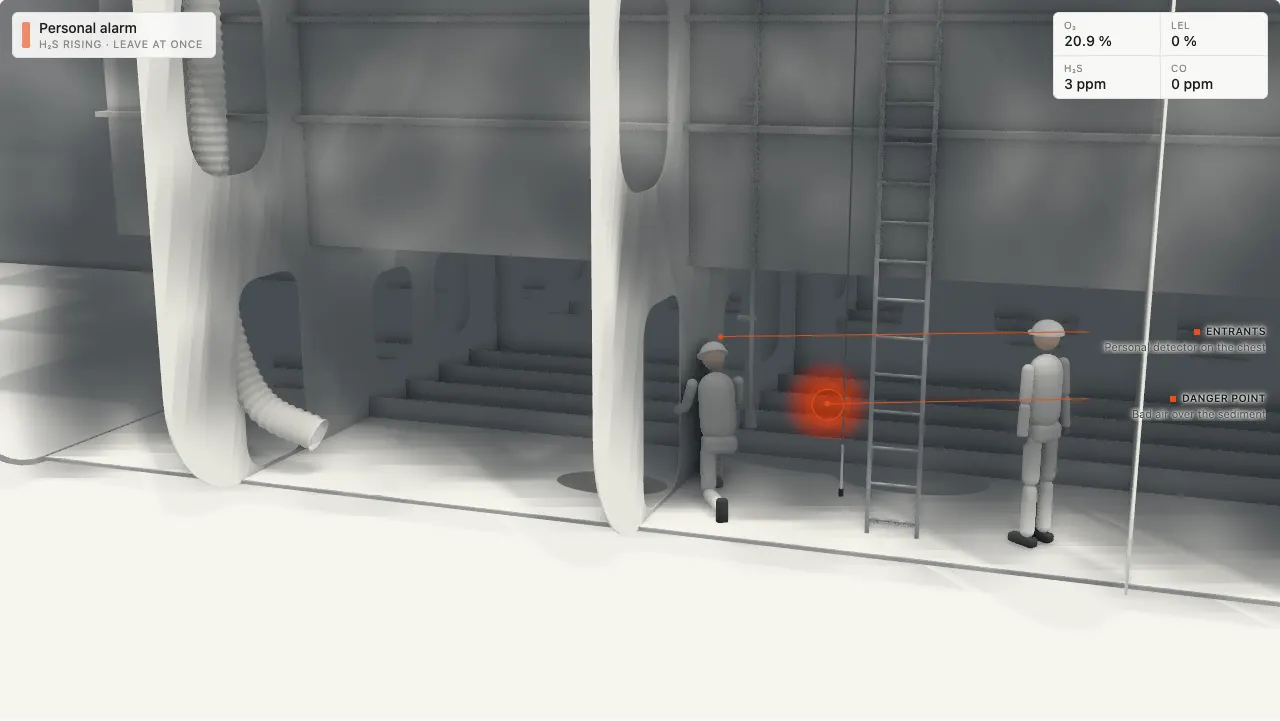
You will know where enclosed space deaths happen on ships, which gases cause them, how fast an atmosphere turns lethal and why the rules are written the way they are.
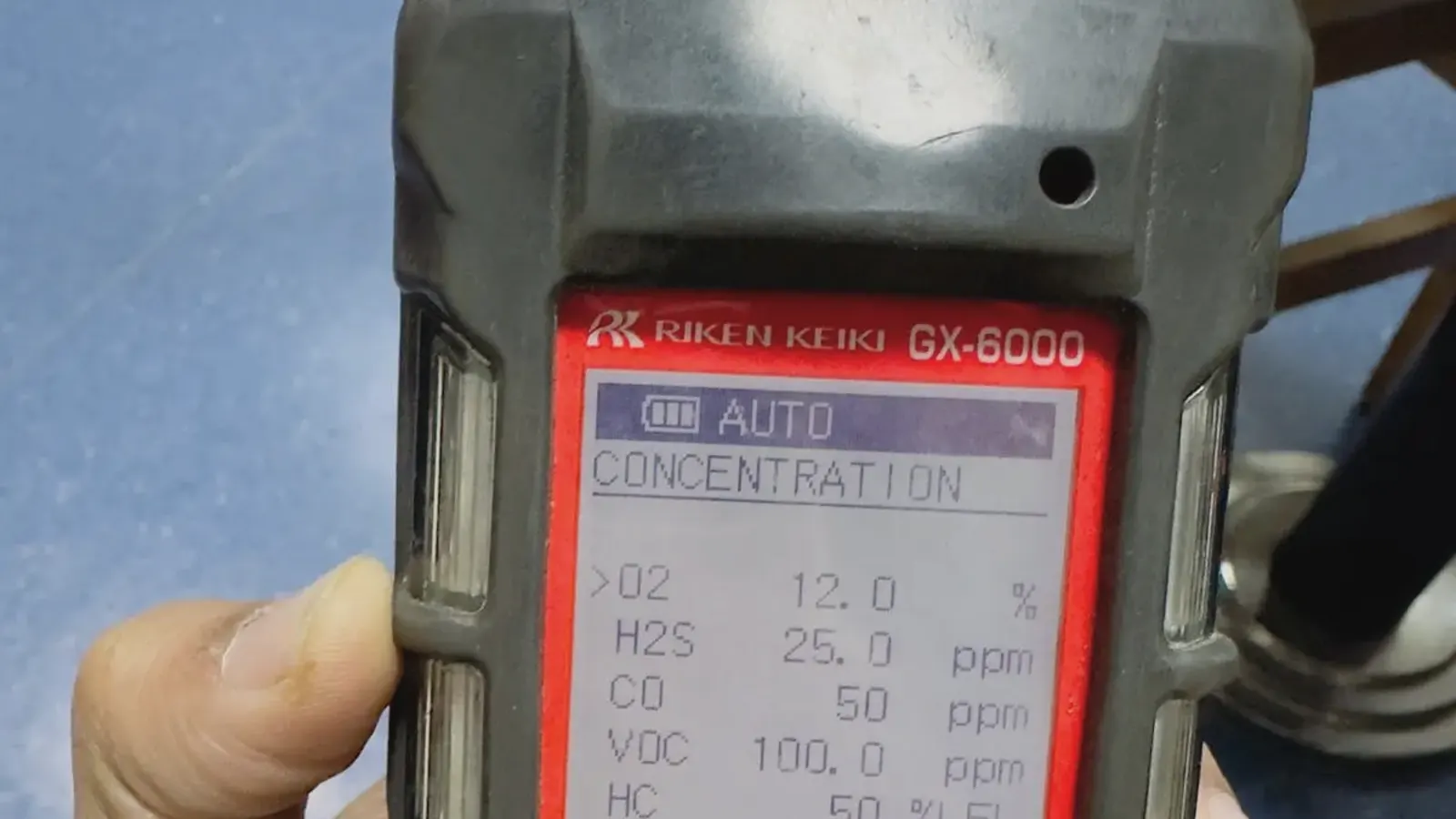
You will be able to choose, check and use a portable gas meter that meets SOLAS XI-1/7, and recognise the situations where its reading cannot be trusted.
You will be able to tell a bump test from a calibration, run both correctly, and check a gas detector's certificate and log the way a port state inspector would.
You will know which fixed gas detection each tanker type must have, where it samples, when it must alarm, and how it is tested and kept in service.
You will be able to run an enclosed space entry from the register to the permit, the pre-entry test, attendance and a planned rescue, as MSC.581(110) and SOLAS III/19 expect.
You will know which protective suits a chemical tanker or gas carrier must carry, how gas-tight suits are classified, and how to inspect, leak test and retire them.
Finish every lesson to get a Course completed card with your name and a QR code anyone can scan to verify.
Share it on LinkedIn, WhatsApp and elsewhere, or download the picture.
Ships still lose people in their holds, tanks, chain lockers and store rooms. The air in these spaces looks normal, has no smell and kills in minutes. InterManager’s analysis for the IMO, covering 1996 to May 2026, puts 47% of enclosed space accidents in cargo holds and their access ways, and finds that most happen during work that had been planned. Many victims are the rescuers: in the Sally Ann C casualty in 2015, the chief officer, then the chief engineer, then the second officer went into the same hold access without breathing apparatus. Oxygen there was later measured at 3.5%.
The rules have tightened. Since 1 July 2016, SOLAS regulation XI-1/7 has required every ship to carry a portable instrument that measures oxygen, flammable gas, hydrogen sulphide and carbon monoxide, with a suitable means of calibrating it. Since 1 January 2015, crew with entry or rescue duties have had to take part in an enclosed space drill at least once every two months. In June 2025 the IMO adopted resolution MSC.581(110). It replaces resolution A.1050(27) and adds a ship-specific Enclosed Space Register, a carbon dioxide limit before entry and an eight-hour limit on entry permits.
This course follows the equipment from the shelf to the space: how the portable meter is chosen and used, why a bump test is not a calibration, which fixed systems tankers and gas carriers must have, how a safe entry is run step by step, and how gas-tight chemical suits are checked. At the end you will be able to check a ship’s gas detection arrangements against the rules, as an officer, superintendent, technician or surveyor would.
3D
Lifeboats and liferafts
Why lifeboats hurt people, which rules keep crews safe, and what to check, log and leave to specialists.
8 lessons1 h 30 minIntroductory
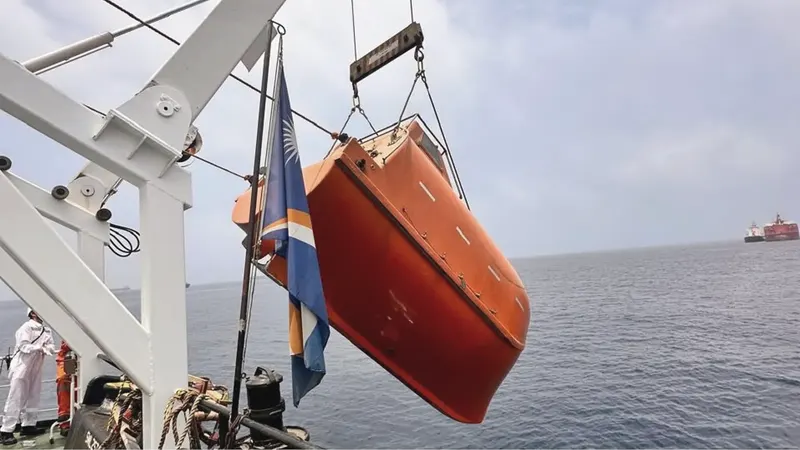 3D
Lifeboats and liferafts
What the annual and five-yearly lifeboat examinations must cover, step by step, from the hull to the winch brake.
8 lessons2 hAdvanced
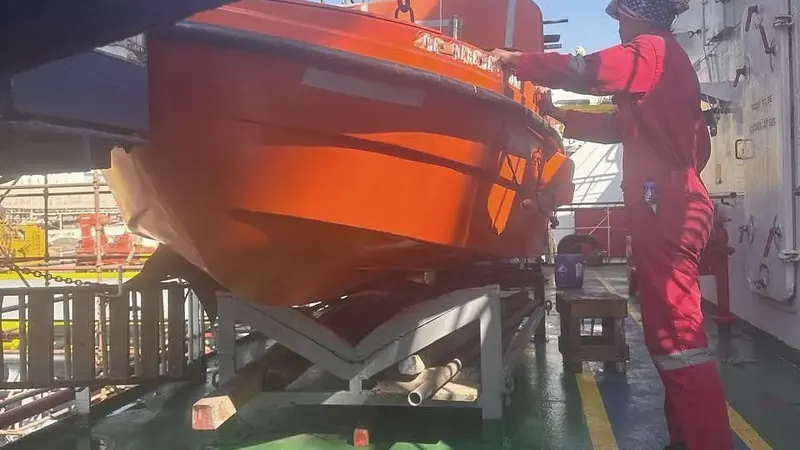 3D
Lifeboats and liferafts
How lifeboats, rescue boats and their davits work, how they are examined and load-tested, and how to drill safely.
9 lessons2 h 10 minPractical