Lesson 8 · 14 min
Lifeboat drills without accidents
You will be able to plan a lifeboat drill that meets SOLAS III/19 and teaches the crew, without putting anyone at needless risk.
Start here
The 2-minute primer
New to this? These 6 cards explain the lesson in plain words. Go through them first and the lesson will make sense.
Primer done.
-
1/6Picture this
A school fire drill, done calmly
At school, fire drills happen often. Everyone practises the route, but nobody jumps out of a window to make it feel real. You walk, you listen, you learn.
Lifeboat drills should feel the same. The crew must practise, but the practice should never be the thing that hurts them.
-
2/6The big idea
Practise often, but take out the risk
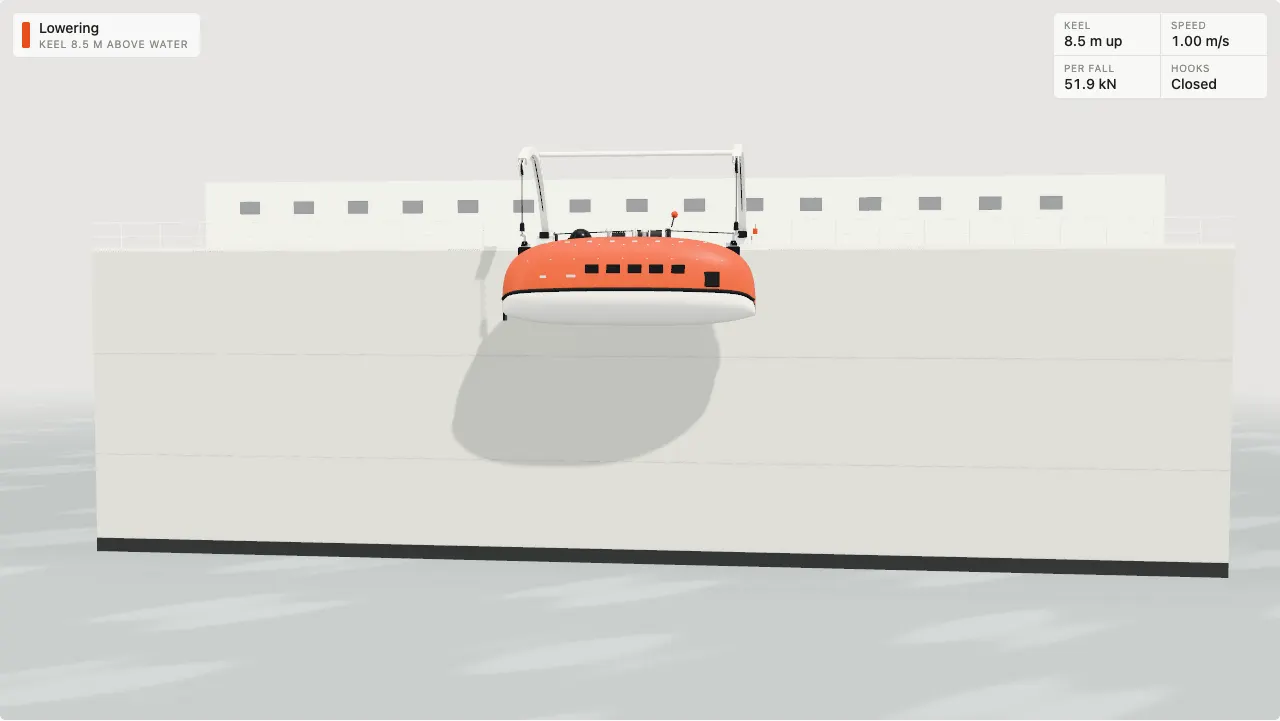
Each lifeboat must go into the water and be handled by its crew at least every three months. But nobody has to be inside while it is lowered from its stowed position.
The safe way: lower the boat empty first, bring it back up to the boarding deck, and let only the operating crew get in. Go slowly, explain, and talk it through afterwards.
-
3/6Words you'll meet
Five words, in plain English
- Abandon ship drill
- practice of leaving the ship, from gathering at the alarm to lowering a lifeboat.
- Muster station
- the place where each person gathers when the alarm sounds.
- Operating crew
- the few people needed to drive and handle the lifeboat.
- Embarkation level
- the deck where people step into the lifeboat.
- Debrief
- a short talk after the drill about what went well and what to fix.
-
4/6Why it matters
The deaths came in drills, not emergencies
UK investigators found that every lifeboat death in their ten years of data happened in a drill or a test, not a real emergency.
Rushed drills with tired crews, or full boats lowered from the stowed position, are where people get hurt. A calm, planned drill teaches more and puts no one at needless risk.
-
5/6In this lesson
What you’ll be able to do
- Know how often each drill and launch is required.
- Plan a drill around weather, rest and cargo work.
- Run a safe launch, release and recovery.
- Record the drill and its lessons in the log-book.
-
6/6Quick check
Who must be in the lifeboat while it is lowered from its stowed position?
Right: the rules do not require anyone inside during lowering. Lower it empty first, then let only the operating crew board.
The basics
The MAIB review that opened this course found that every lifeboat death in its ten years of data happened in a drill or a test, not in a real emergency. That is the paradox of lifeboat drills: the crew must practise, because a boat nobody has launched will not be launched well on the night it is needed, yet the practice itself is where people get hurt.
Since 2006 the rules have shifted to separate the two. The boat must still go into the water and be handled by its assigned crew, but nobody has to be inside it while it is lowered from the stowed position, and IMO guidance now asks for drills that are planned, unhurried and treated as learning. This lesson is about getting both right.
Sign in to read the rest of this lesson
Continue reading
Save your progress, open all 115 lessons and get a Course completed card when you finish.
or use your email
In the rest of this lesson
- Try it: Planning this month's abandon ship drill
- In plain words
- In detail
- What the rules say
- Flag and class notes
- Key numbers
- What inspectors find
- 4 questions people ask
- Quiz: 6 questions
- Ask our engineers about this lesson
Familiarisation training from Al Safwan Academy. Finishing a course shows completion of online familiarisation training: it is not an STCW, flag-approved or manufacturer qualification, and these courses don't replace that training. The manufacturer's manual and your flag's rules always come first.