Lesson 3 · 13 min
Weekly and monthly lifeboat checks by the crew
You will be able to run, record and supervise the weekly and monthly lifeboat checks so they meet SOLAS and stand up to an inspector.
Start here
The 2-minute primer
New to this? These 6 cards explain the lesson in plain words. Go through them first and the lesson will make sense.
Primer done.
-
1/6Picture this
Your bike, checked every week
If you ride a bike, you pump the tyres and squeeze the brakes yourself before you set off. But when the gears need taking apart, the bike goes to the shop.
Lifeboats work the same way. The crew does the regular checks. Anything that needs taking apart goes to a certified technician.
-
2/6The big idea
Could we use this boat right now?
Every week, the crew looks at each lifeboat and asks that question. They check the hooks are fully reset, run each engine for at least three minutes, and test the alarm.
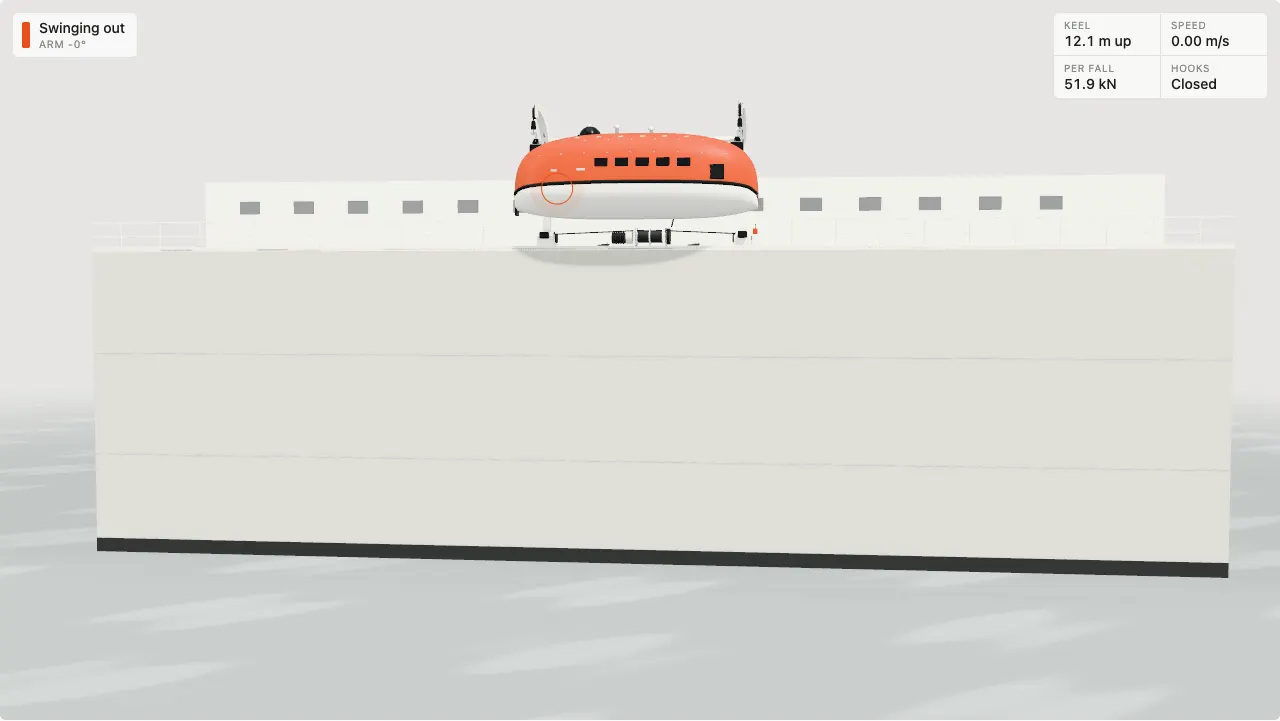
Every month, the boats are swung out with nobody inside, if the weather allows, and the crew works through the maker’s checklist. It all goes in the log-book.
-
3/6Words you'll meet
Five words, in plain English
- Reset
- the hook fully closed and locked again after use, ready to hold the boat.
- Turning out
- swinging the lifeboat out from its stowed position over the ship’s side.
- Checklist
- the maker’s list of items to inspect each month, one by one.
- Under load
- while the boat’s weight hangs on the hooks; no work on the release gear is allowed then.
- Countersign
- the master signs the checklist too, after the person who did the work.
-
4/6Why it matters
Small faults are found weekly, or missed
A hook not fully reset after a drill, a brake soaked in oil, a wire drying out: these are found, or missed, at the weekly and monthly checks.
The technician’s yearly visit happens once. The other 51 weeks belong to the crew, and inspectors can tell when log entries were copied rather than done.
-
5/6In this lesson
What you’ll be able to do
- Run the weekly checks the international rules require.
- Work through a monthly inspection step by step.
- Know what the crew must never take apart or adjust.
- Record and sign the checks so they stand up to an inspector.
-
6/6Quick check
Can the crew adjust a hook cable while the boat hangs on its wires?
Right: no maintenance or adjustment of release gear is allowed while the hooks are under load, and adjusting cables is technician work anyway.
The basics
The annual thorough examination gets the attention, but it happens once a year. The other 51 weeks belong to the crew. A hook that was not fully reset after a drill, a brake lining soaked in oil, a fall wire drying out in the sheave: these are found, or missed, at the weekly and monthly checks. The 2009 IMO circular on lifeboat accidents listed “inadequate maintenance of lifeboats, davits and launching equipment” and “lack of familiarity” among the main causes of injuries and deaths, alongside failing hooks.
This lesson is the routine that keeps a lifeboat ready between service visits: what SOLAS demands each week and month, what you may and may not touch, and what the records must show.
Sign in to read the rest of this lesson
Continue reading
Save your progress, open all 115 lessons and get a Course completed card when you finish.
or use your email
In the rest of this lesson
- Try it: Monthly inspection: lifeboat No. 1 (port), bulk carrier
- In plain words
- In detail
- What the rules say
- Flag and class notes
- Key numbers
- What inspectors find
- 4 questions people ask
- Quiz: 6 questions
- Ask our engineers about this lesson
Familiarisation training from Al Safwan Academy. Finishing a course shows completion of online familiarisation training: it is not an STCW, flag-approved or manufacturer qualification, and these courses don't replace that training. The manufacturer's manual and your flag's rules always come first.