Lesson 6 · 14 min
Immersion suits, anti-exposure suits and thermal protective aids
You will be able to inspect an immersion suit properly, know when its seams must be air tested, and know how flags treat suits over ten years old.
Start here
The 2-minute primer
New to this? These 6 cards explain the lesson in plain words. Go through them first and the lesson will make sense.
Primer done.
-
1/6Picture this
A boot is only as good as its seams
Think of a pair of wellington boots. They keep your feet warm and dry, until one tiny crack lets the cold water in. From the outside, a cracked boot can look perfect.
An immersion suit is a full-body version. It keeps a person warm in freezing sea, but only if the zip closes properly and the seams have not aged.
-
2/6The big idea
Keeping warm keeps you alive
Cold water is a killer at sea. An immersion suit is a waterproof one-piece with feet, gloves and hood, worn over clothes before abandoning ship. Cargo ships carry one for every person.
Every month the crew unpack each suit, run the zip, lubricate it and put it back with the zip open. Every few years the suit is pumped up with air and soapy water shows any leaking seams.
-
3/6Words you'll meet
Five words, in plain English
- Immersion suit
- a waterproof full-body suit that keeps a person warm and afloat in cold water.
- Anti-exposure suit
- a lighter, more flexible suit for rescue boat crews, so they can work while wearing it.
- Thermal protective aid
- a foil-like bag kept in liferafts and lifeboats to wrap a cold survivor in.
- Seams
- the glued joins where pieces of suit material meet, which can weaken with age.
- Air pressure test
- pumping the suit up gently and brushing soapy water on the seams to spot leaks.
-
4/6Why it matters
The commonest fault is a stiff zip
A suit with a stuck zip or a leaking seam lets cold water in, and the wearer chills fast.
Inspectors keep finding the same faults: stiff or broken zips first, failed seams next, then holes, missing lights or whistles and overdue air tests. A careful monthly check catches most of them early.
-
5/6In this lesson
What you’ll be able to do
- Tell an immersion suit, an anti-exposure suit and a thermal protective aid apart.
- Inspect a suit step by step at the monthly check.
- Know when the seams must be air tested.
- Check how your ship’s flag treats suits over ten years old.
-
6/6Quick check
How should a suit go back in its bag?
Right: the monthly check ends with the suit back in its bag, zip fully open, as the guidelines ask.
The basics
In cold water the cold itself is the killer: cold shock and lost body heat can take a person long before they would drown. An insulated immersion suit keeps a person’s core temperature from dropping more than 2 °C over six hours in near-freezing water, but only if water stays out. That depends on two things the crew cannot see from the outside of the bag: a zip that runs freely, and seams whose glue has not aged.
Inspectors keep finding the same faults. In the first half of 2023 (from 1 January to the flag’s advisory in June), immersion suit defects made up nearly a third of all life-saving deficiencies found in the Marshall Islands’ flag State inspections. The flag listed stiff or broken zips first, then failed seams, holes, missing lights or whistles and overdue air pressure tests. This lesson gives you the IMO inspection routine step by step, the air test that finds bad seams, and how different flags handle older suits.
Sign in to read the rest of this lesson
Continue reading
Save your progress, open all 115 lessons and get a Course completed card when you finish.
or use your email
In the rest of this lesson
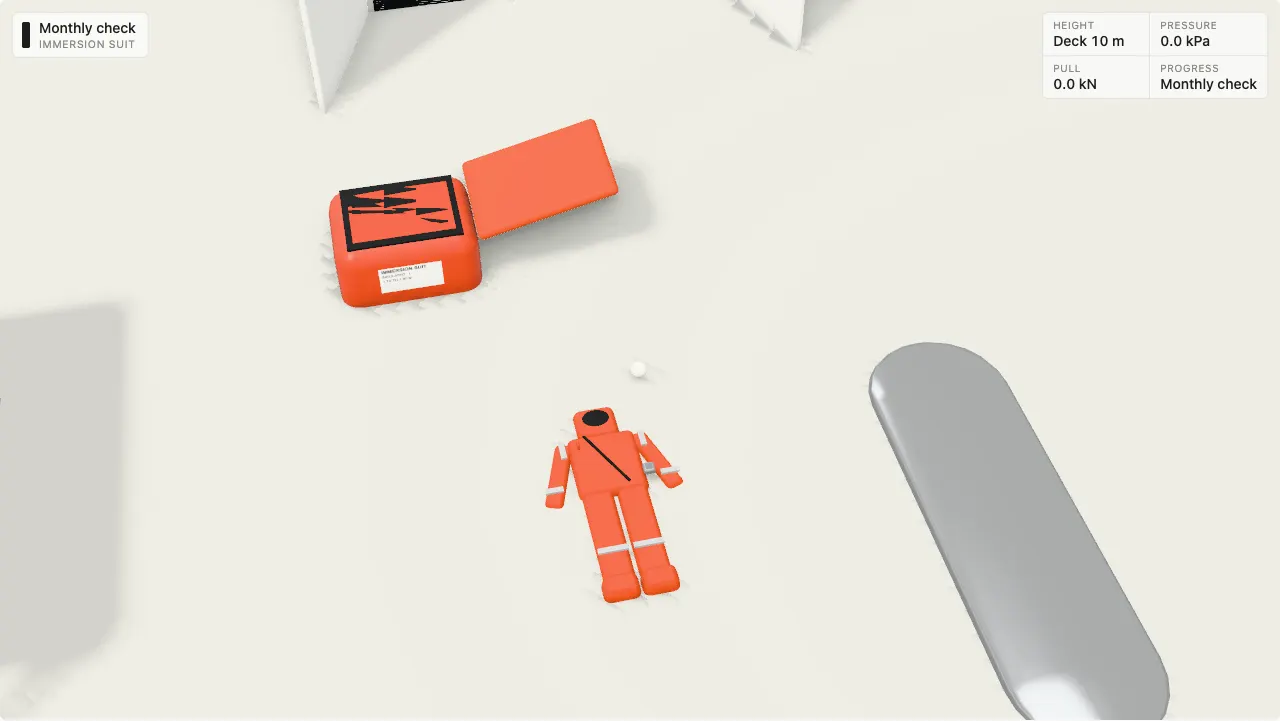
- Try it: Monthly inspection: immersion suits in the crew locker
- In plain words
- In detail
- What the rules say
- Flag and class notes
- Key numbers
- What inspectors find
- 4 questions people ask
- Quiz: 6 questions
- Ask our engineers about this lesson
Familiarisation training from Al Safwan Academy. Finishing a course shows completion of online familiarisation training: it is not an STCW, flag-approved or manufacturer qualification, and these courses don't replace that training. The manufacturer's manual and your flag's rules always come first.