
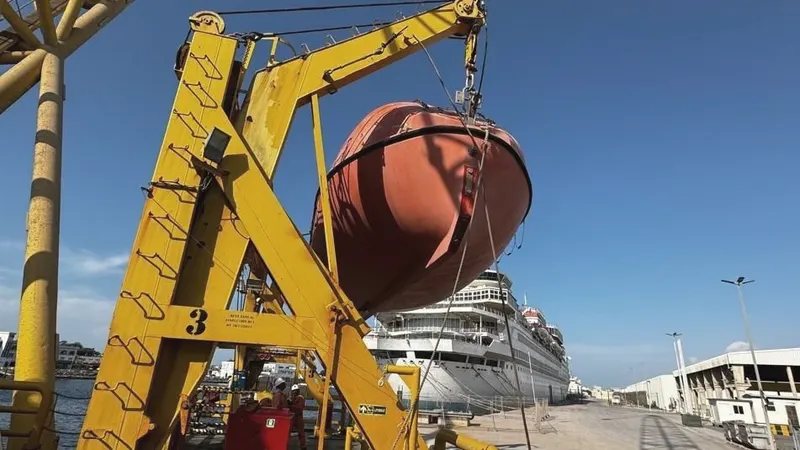
 3D
Lifeboats and liferafts
Lifeboat safety and the rules
Why lifeboats hurt people, which rules keep crews safe, and what to check, log and leave to specialists.
8 lessons1 h 30 minIntroductory
Launch period. Every course is free for a limited time. What happens after
Liferafts, evacuation slides, lifejackets, immersion suits, flares and beacons: how each one is serviced and tested.
8 lessons 1 h 49 min Practical 3D simulator in every lesson Course completed card
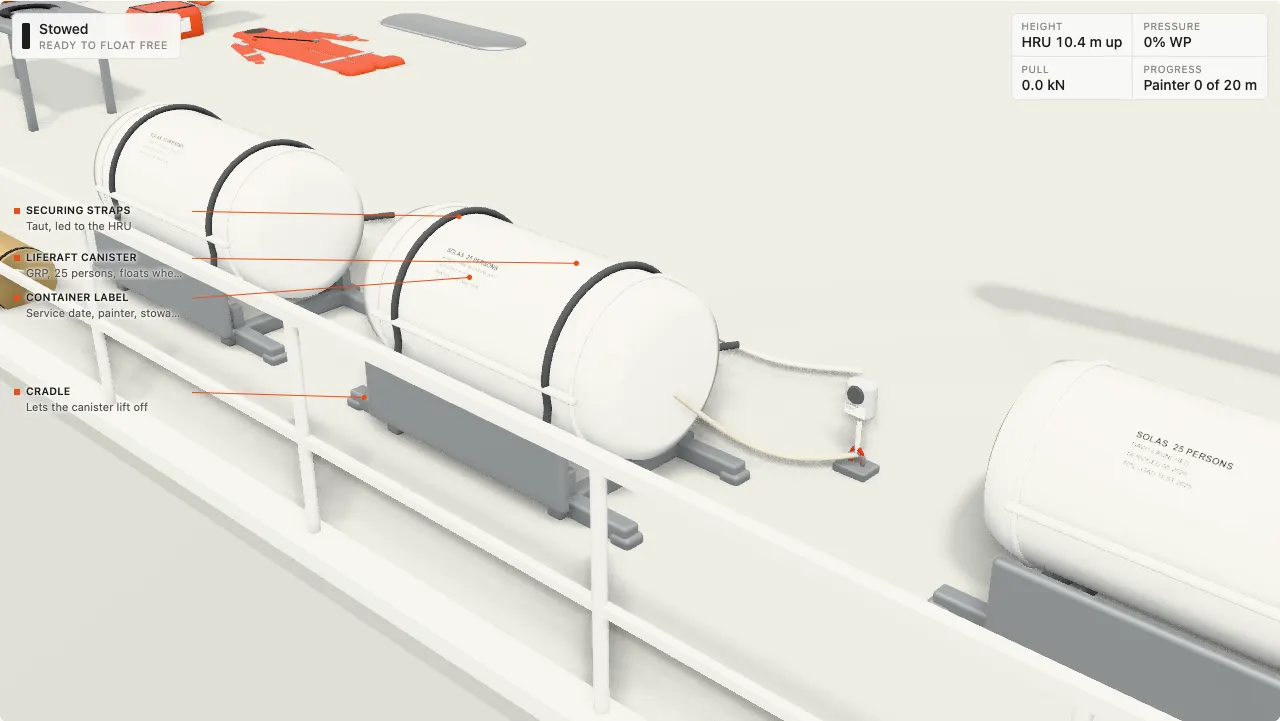
You will be able to name each part of a liferaft stowage, say why it is there, and spot the rigging mistakes that stop a raft from floating free.
You will know what happens to your liferaft at each service, which extra tests fall due in years 5, 10 and beyond, and how to keep the interval legal.
You will know how an HRU works, how to tell when it is due, how to fit one correctly, and what the surveyor and PSC officer check.
You will be able to plan an MES rotation, run a deployment the way the flag expects, and know what to do when one fails.
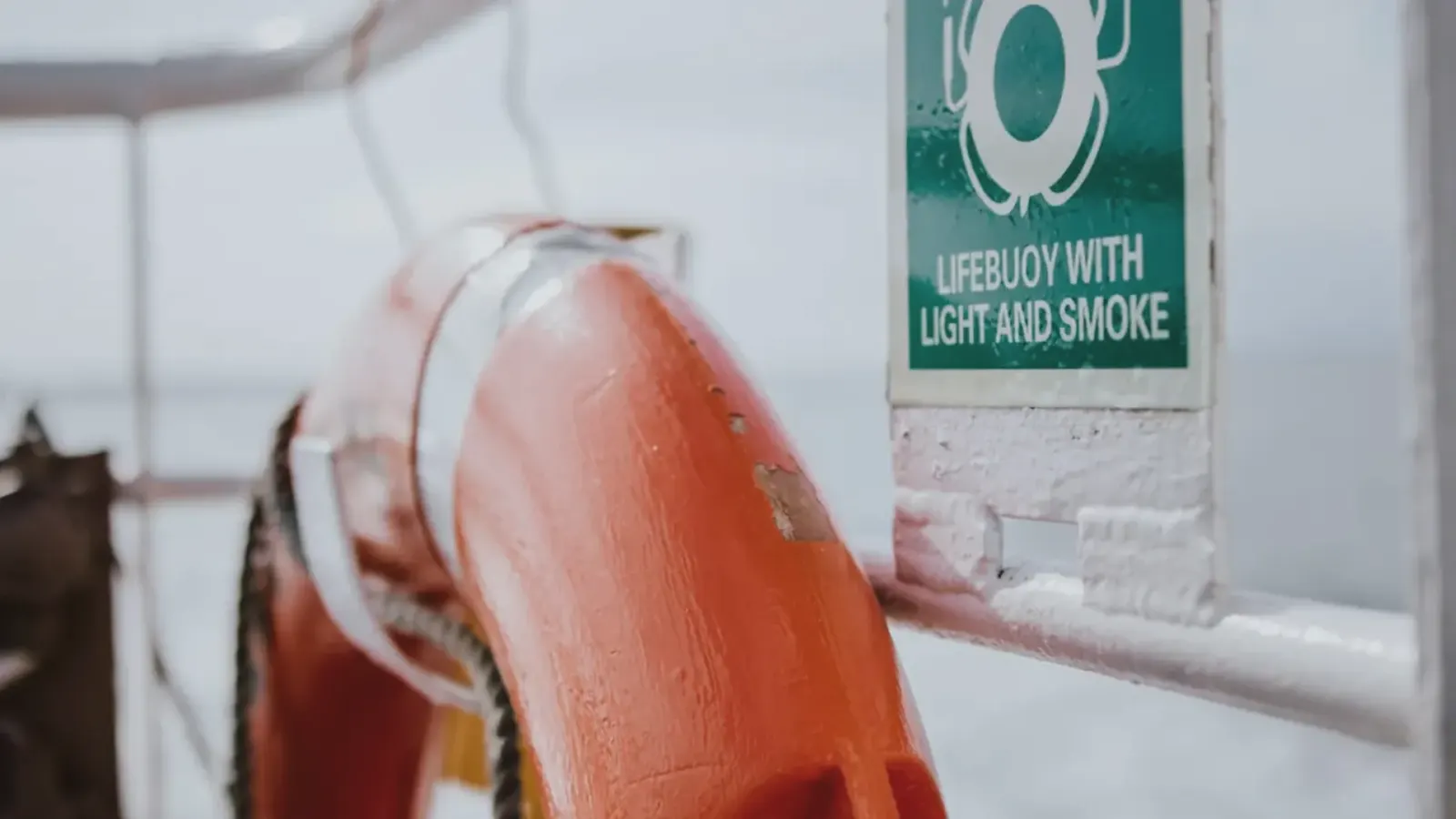
You will know how many lifejackets of which sizes a ship needs, what makes one compliant, and who checks, services or replaces what and when.
You will be able to inspect an immersion suit properly, know when its seams must be air tested, and know how flags treat suits over ten years old.
You will know which pyrotechnics a ship carries, how to read and manage their expiry, how to stow them, and what to do with old ones.
You will know what the radio surveyor checks on the EPIRB and SART each year, what happens at shore-based maintenance, and how to keep the beacon's identity right.
Finish every lesson to get a Course completed card with your name and a QR code anyone can scan to verify.
Share it on LinkedIn, WhatsApp and elsewhere, or download the picture.
A liferaft spends years in a white canister on deck. Nobody sees inside it until the day it goes to the service station or the day the ship sinks. In between, it has to float free, inflate in a minute and keep people alive. The same is true of the gear around it: the hydrostatic release that frees it, the lifejacket and immersion suit each person wears, the flares, and the beacon that tells a rescue centre where to look. Almost all of it is checked by the crew once a month and opened, tested and repacked by a shore-based specialist on a fixed cycle set by SOLAS chapter III, the LSA Code and IMO guidelines.
The small things are where it goes wrong. In 2021 the Australian Maritime Safety Authority issued over 100 deficiencies for wrongly fitted hydrostatic release units on liferafts and float-free EPIRBs, most often a painter not tied to the weak link. From 1 January 2023 immersion suit defects (stiff zips, failed seams, overdue air tests) made up nearly a third of all life-saving deficiencies found in Marshall Islands flag inspections. The UK told the IMO about marine evacuation systems that failed at their six-yearly test deployment, and the Bahamas now asks for a report on every one.
This course goes through each item in the order you would meet it on deck, from the liferaft cradle to the EPIRB bracket. For each one you will see what the rules say, who does what and how often, what the service record should show, and what port state control officers and surveyors write up.
3D
Lifeboats and liferafts
Why lifeboats hurt people, which rules keep crews safe, and what to check, log and leave to specialists.
8 lessons1 h 30 minIntroductory
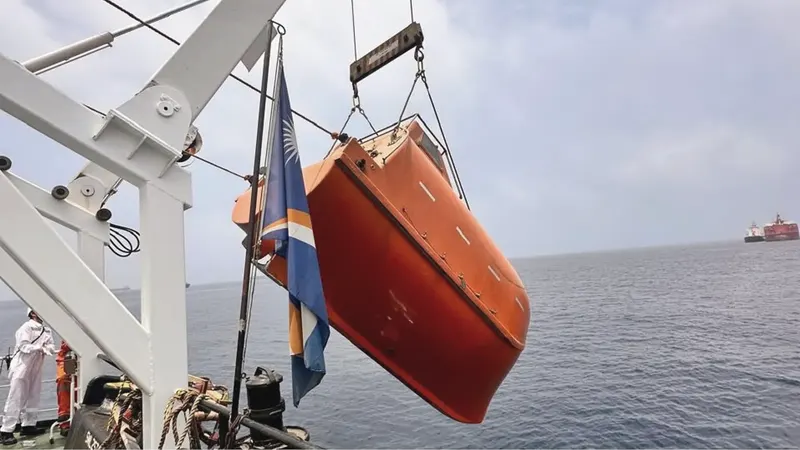 3D
Lifeboats and liferafts
What the annual and five-yearly lifeboat examinations must cover, step by step, from the hull to the winch brake.
8 lessons2 hAdvanced
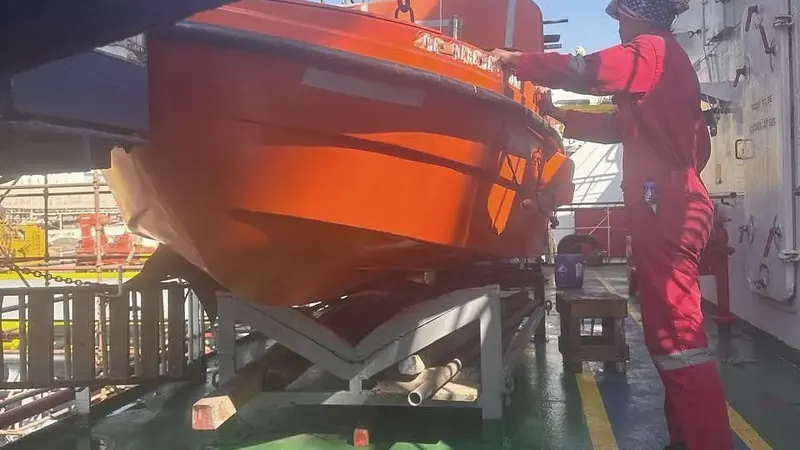 3D
Lifeboats and liferafts
How lifeboats, rescue boats and their davits work, how they are examined and load-tested, and how to drill safely.
9 lessons2 h 10 minPractical