Lesson 7 · 12 min
Pyrotechnics: expiry, stowage and disposal
You will know which pyrotechnics a ship carries, how to read and manage their expiry, how to stow them, and what to do with old ones.
Start here
The 2-minute primer
New to this? These 6 cards explain the lesson in plain words. Go through them first and the lesson will make sense.
Primer done.
-
1/6Picture this
Medicine with an expiry date
Think of the medicine cupboard at home. Each packet has a date on it. Past that date it may not work as it should, so you replace it, and you take the old packets back to the chemist instead of throwing them in the bin.
Distress flares work the same way. They have a date, they get replaced in time, and the old ones go back through a proper route.
-
2/6The big idea
Fireworks built to call for help
A ship carries three kinds of distress signal. Rocket flares shoot a red light high into the sky. Hand flares are held up in a survival craft. Smoke signals float and give off orange smoke for daytime spotting.
Their chemistry ages, so each one carries an expiry date from its maker. Old ones are replaced before the date and landed ashore safely.
-
3/6Words you'll meet
Five words, in plain English
- Pyrotechnics
- flares and smoke signals that burn to make light or smoke when calling for help.
- Rocket parachute flare
- a rocket that climbs high and hangs a bright red light under a small parachute.
- Hand flare
- a flare held in the hand that burns bright red, even after a dunk in water.
- Buoyant smoke signal
- a floating canister that gives off thick orange smoke so searchers can see it by day.
- Line-throwing appliance
- a rocket that carries a rope across to another ship or to the shore.
-
4/6Why it matters
Old flares can fail, or harm you
An out-of-date flare may not light, may burn too short, or may misfire in the hand. If some expire, a ship can drop below the number it must carry.
Getting rid of old ones also trips people up. Dumping them at sea, putting them in the rubbish or firing them for practice are all wrong, and in some countries against the law.
-
5/6In this lesson
What you’ll be able to do
- Name the signals a ship carries and where each is kept.
- Know what each signal must be able to do.
- Track expiry dates and replace flares in good time.
- Stow flares safely and send old ones ashore the right way.
-
6/6Quick check
What should you do with expired flares?
Right: old flares go back ashore, for example to the supplier or a liferaft service station, and never into the sea or the rubbish.
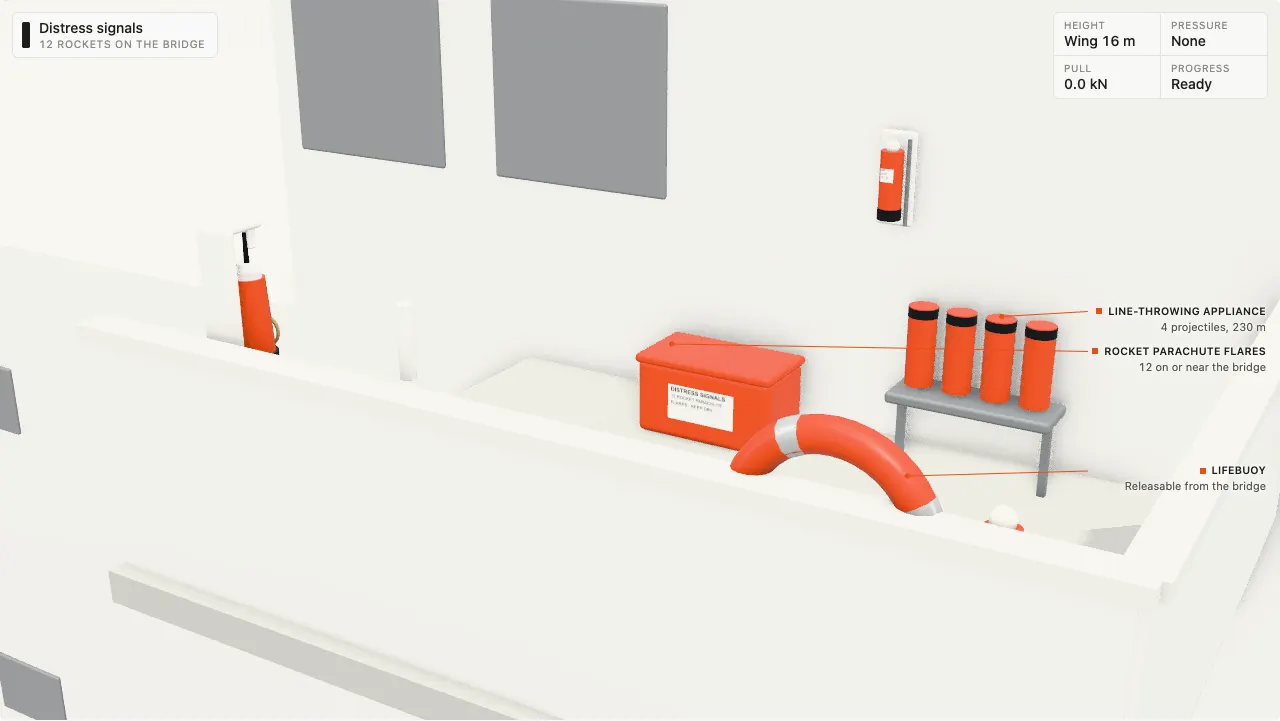
The basics
A distress flare is a small firework built to an exacting standard: a rocket that climbs to at least 300 m and hangs a red light of 30,000 candela under a parachute for 40 seconds, or a hand flare that keeps burning after being held under water. Its chemistry ages, though. An old flare may fail to light, burn short, or misfire in the hand.
So every pyrotechnic carries an expiry date, and ships end up with a steady stream of out-of-date ones from the bridge locker, the lifeboats, the liferafts and the lifebuoys. Surveyors check that none is out of date. What to do with the old ones trips people up: dumping them at sea, putting them in the rubbish or firing them “for practice” are all wrong, and in some countries illegal. This lesson covers the rules from carriage to disposal.
Sign in to read the rest of this lesson
Continue reading
Save your progress, open all 115 lessons and get a Course completed card when you finish.
or use your email
In the rest of this lesson
- Try it: The pyrotechnics locker, two months before the annual survey
- In plain words
- In detail
- What the rules say
- Flag and class notes
- Key numbers
- What inspectors find
- 4 questions people ask
- Quiz: 5 questions
- Ask our engineers about this lesson
Familiarisation training from Al Safwan Academy. Finishing a course shows completion of online familiarisation training: it is not an STCW, flag-approved or manufacturer qualification, and these courses don't replace that training. The manufacturer's manual and your flag's rules always come first.