 3D
Gas detection and enclosed spacesStart here
Gas detection, enclosed spaces and calibration
Use and calibrate gas meters, and run an enclosed space entry that brings everyone back out.
6 lessons1 h 30 minIntroductory
Topic · free courses
Why enclosed spaces kill, how to test the air with a portable gas meter, and the permit, testing and rescue steps that make an entry safe.
3D
Gas detection and enclosed spacesStart here
Use and calibrate gas meters, and run an enclosed space entry that brings everyone back out.
6 lessons1 h 30 minIntroductory
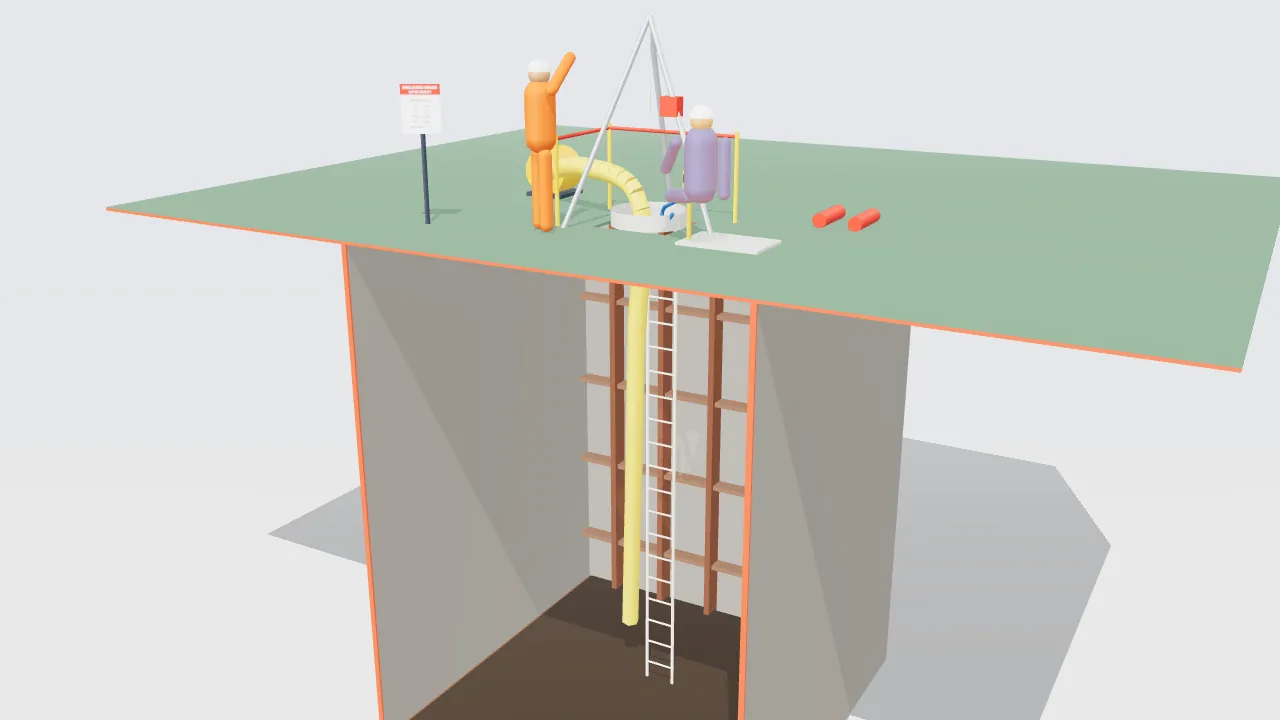
No. MSC.581(110) warns that an open door or hatch may wrongly be taken as a sign of safe air, and recommends an attendant or a physical barrier with a warning sign. Holds whose hatches have been open for some time can still hold unsafe air, especially in access trunks.
InterManager’s data shows about two thirds of the dead (where rank was known) were masters, chief engineers, chief officers and second engineers. They are the people who check spaces, sign permits and react first in an emergency, often under time pressure, which MSC.581(110) names as a cause of many accidents.
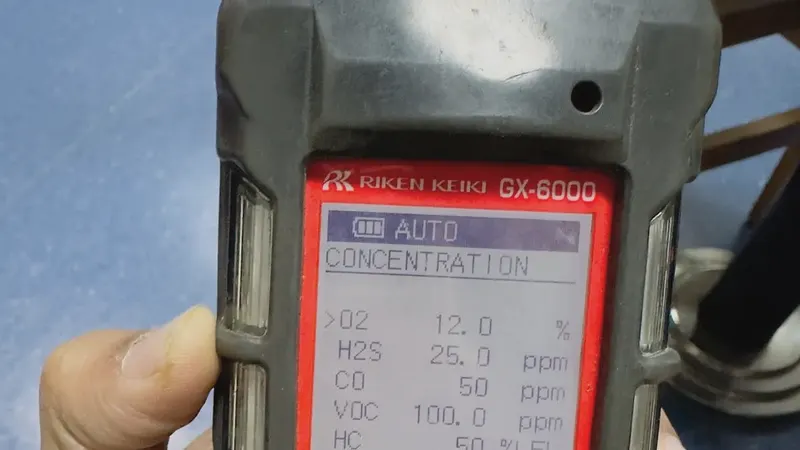
Not by the IMO recommendation. MSC.581(110) asks for a steady 20.9% oxygen, and anything less, or any trace of flammable or toxic gas, means treating the space as unsafe. With organic cargoes, carbon dioxide can already be dangerous while oxygen still looks acceptable.
Legally one instrument can, since the rule says “instrument or instruments”. In practice you also need a calibrated spare for when it is out of service, and MSC.581(110), the chemical tanker and gas carrier rules and some flags expect two. Some flags require an alternative instrument on board while one is ashore for calibration.
Circ.1477 treats them as different jobs. The pre-entry instrument samples remotely through a hose from outside; a personal detector warns its wearer once inside. Some flags accept that the same model may do both roles, but the pre-entry test must still be done from outside, before anyone enters.