
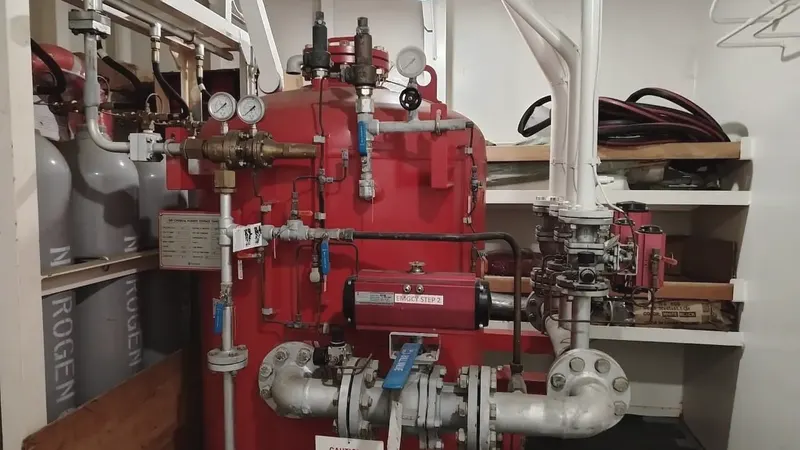
 3D
Fire safety
Fixed fire-fighting and detection systems
How CO2, foam, water mist, sprinklers and fire detection work on board, and how each system is tested.
8 lessons2 h 6 minPractical
Launch period. Every course is free for a limited time. What happens after
Check, service and test extinguishers, breathing sets and fire hoses the way surveyors expect.
7 lessons 1 h 40 min Introductory 3D simulator in every lesson Course completed card
You will know which instrument governs each piece of portable fire-fighting equipment, what is mandatory, what is guidance, and who checks it how often.
You will be able to match each extinguisher type to the fires it suits, explain why some agents are banned from some spaces, and check the number and placement against the rules.
You will be able to run or check an extinguisher service against A.951(23), count spare charges correctly and recognise a unit that must be taken out of service.
You will know what a compliant SCBA must have, what to check weekly, monthly and yearly, how breathing air is tested and when cylinders must be hydrostatically tested.
You will know what an EEBD may and may not be used for, how many a ship needs and where, and how to check, test and replace them.
You will be able to check a ship's hydrants, hoses, nozzles and international shore connection against SOLAS and the FSS Code, and plan their monthly to five-yearly tests.
You will be able to check a fire-fighter's outfit item by item, count and place outfits correctly, and confirm that fire-party radios meet SOLAS regulation II-2/10.10.4.
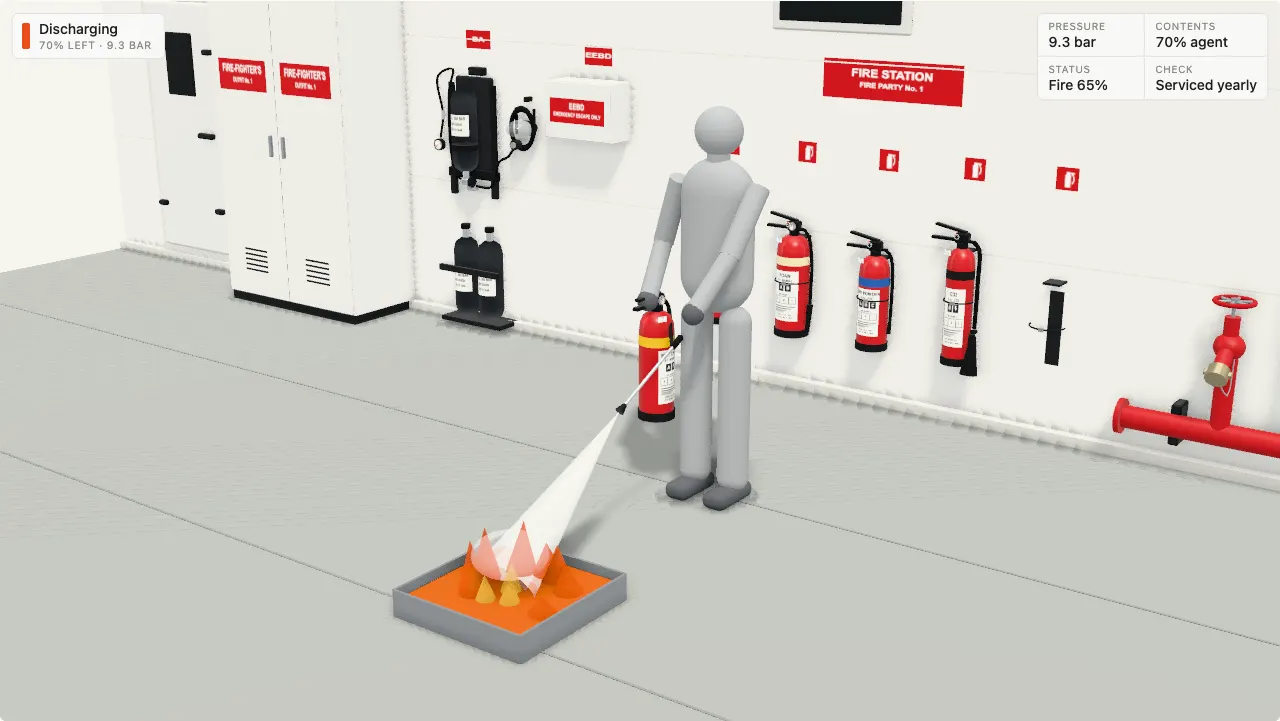
Finish every lesson to get a Course completed card with your name and a QR code anyone can scan to verify.
Share it on LinkedIn, WhatsApp and elsewhere, or download the picture.
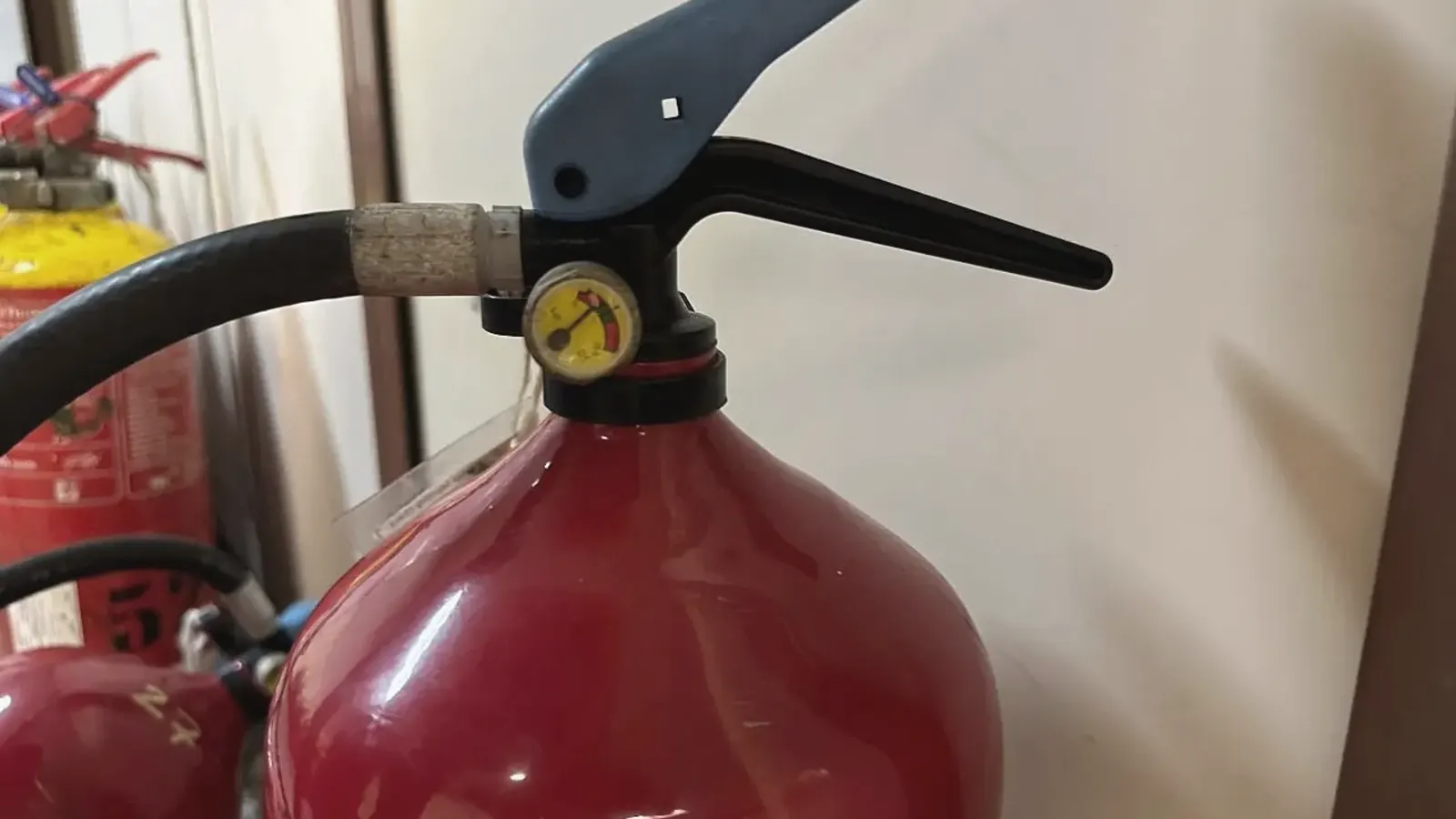
Fire safety is the largest single group of port state control findings. In the Paris MoU region, deficiencies under SOLAS chapter II-2 made up 17.2% of everything inspectors recorded in 2024. During the joint Tokyo MOU and Paris MoU fire safety campaign in 2023, Tokyo MOU inspectors alone logged 392 deficiencies against “fire fighting equipment and appliances”. Much of that is the kit in this course: extinguishers, hoses and nozzles, breathing apparatus, escape sets and fire-fighter’s outfits.
Neglected equipment does more than fail a survey. In 2022 a deck officer on a tanker was killed when a 17-year-old foam extinguisher, condemned for corrosion, burst at its base as he discharged it. The flag state investigation found that eight badly corroded extinguishers had been passed at the ship’s annual service, only for the crew to condemn them two weeks later.
The course works from the regulations themselves: SOLAS chapter II-2, the Fire Safety Systems (FSS) Code, IMO’s maintenance guidelines (MSC.1/Circ.1432 as amended and resolution A.951(23)) and the flag notices that tighten them. Each lesson gives the rules with citations, the intervals and numbers you need on deck, the findings inspectors write up most often, and a short exercise.
3D
Fire safety
How CO2, foam, water mist, sprinklers and fire detection work on board, and how each system is tested.
8 lessons2 h 6 minPractical
 3D
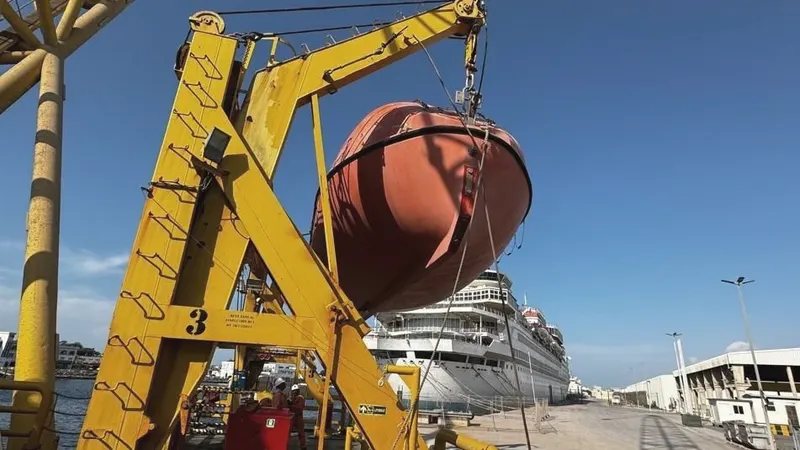
Lifeboats and liferafts
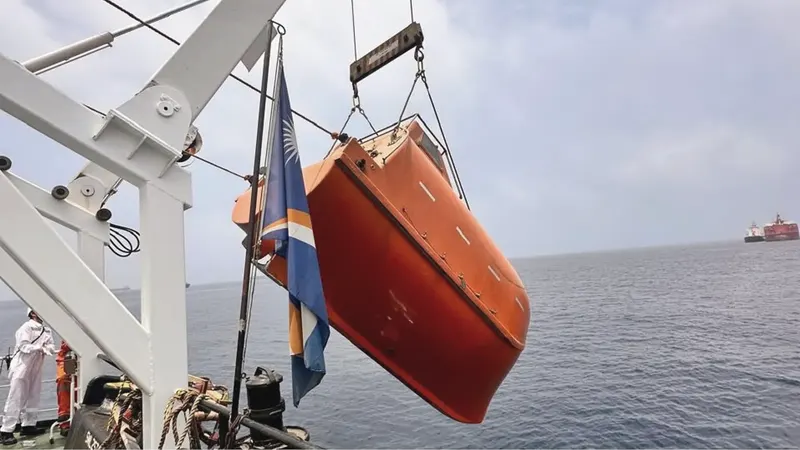
Why lifeboats hurt people, which rules keep crews safe, and what to check, log and leave to specialists.
8 lessons1 h 30 minIntroductory
 3D
Lifeboats and liferafts
What the annual and five-yearly lifeboat examinations must cover, step by step, from the hull to the winch brake.
8 lessons2 hAdvanced