
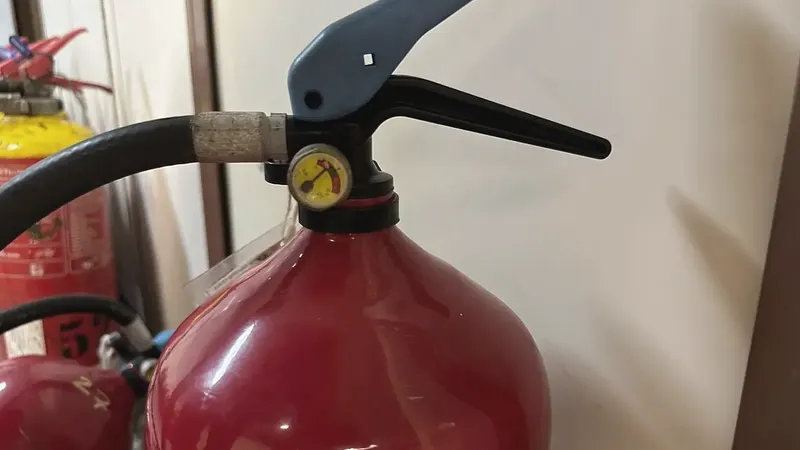
 3D
Fire safety
Portable fire-fighting equipment and breathing apparatus
Check, service and test extinguishers, breathing sets and fire hoses the way surveyors expect.
7 lessons1 h 40 minIntroductory
Launch period. Every course is free for a limited time. What happens after
How CO2, foam, water mist, sprinklers and fire detection work on board, and how each system is tested.
8 lessons 2 h 6 min Practical 3D simulator in every lesson Course completed card
A map of which fixed fire system each space on a ship needs, how much extinguishing medium is enough, and where to find the rule.
You will know every part of a high-pressure CO2 system, what each check involves, who may do it, and how to work on the system without killing anyone.
You will know the foam systems on tankers, engine rooms and ro-ro decks, how foam concentrate ages, and how to sample, test and record it so it still works when needed.
You will know how water-based fire systems on ships are built and approved, and how to run the weekly to ten-yearly tests, including when failed sprinkler heads mean replacing a whole batch.
You will know what protects a ship's galley range hood, exhaust duct and deep-fat fryers, how each part is tested, and the faults that start galley fires.
You will know which spaces need which detectors, how the panel, loops and power supplies must work, and how to test every detector and call point within the IMO intervals.
You will understand the passive fire protection that holds a fire inside its space, and know how to test fire doors and dampers and spot the damage that refits and repairs leave behind.
You will be able to build or audit a fire safety maintenance plan that covers every fixed system, splits crew work from specialist work, and stands up to a survey or PSC inspection.
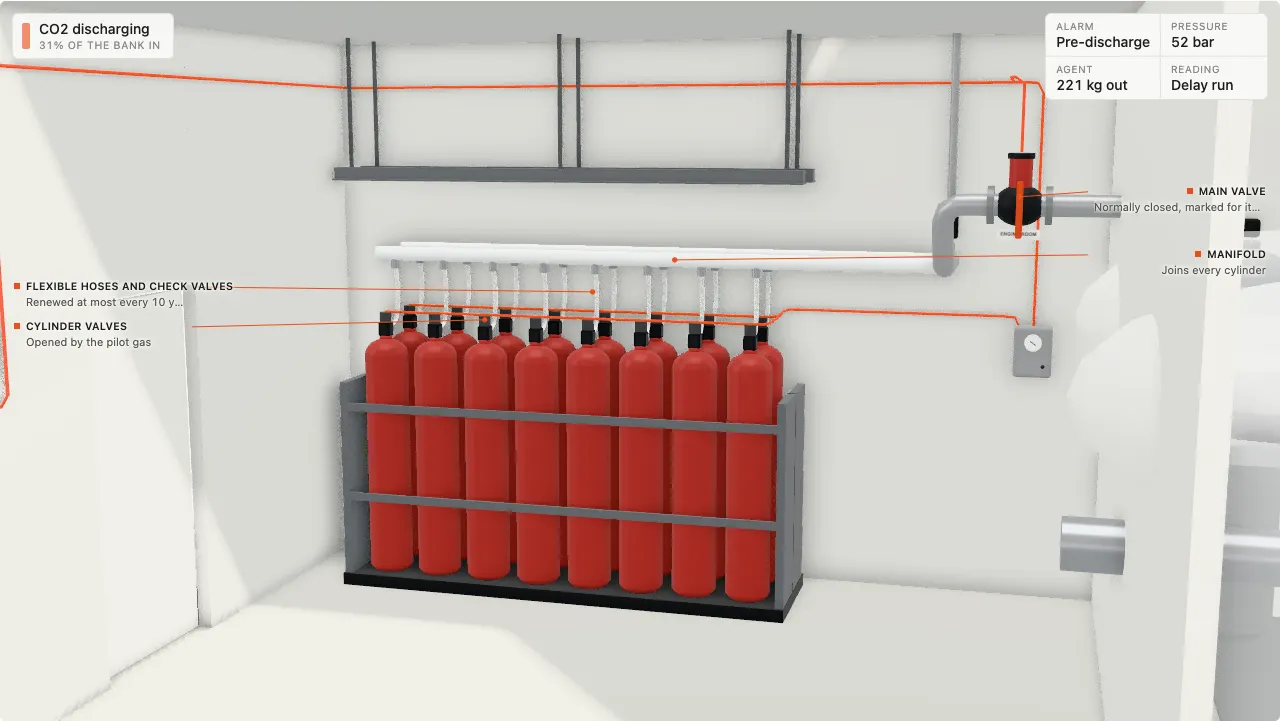
Finish every lesson to get a Course completed card with your name and a QR code anyone can scan to verify.
Share it on LinkedIn, WhatsApp and elsewhere, or download the picture.
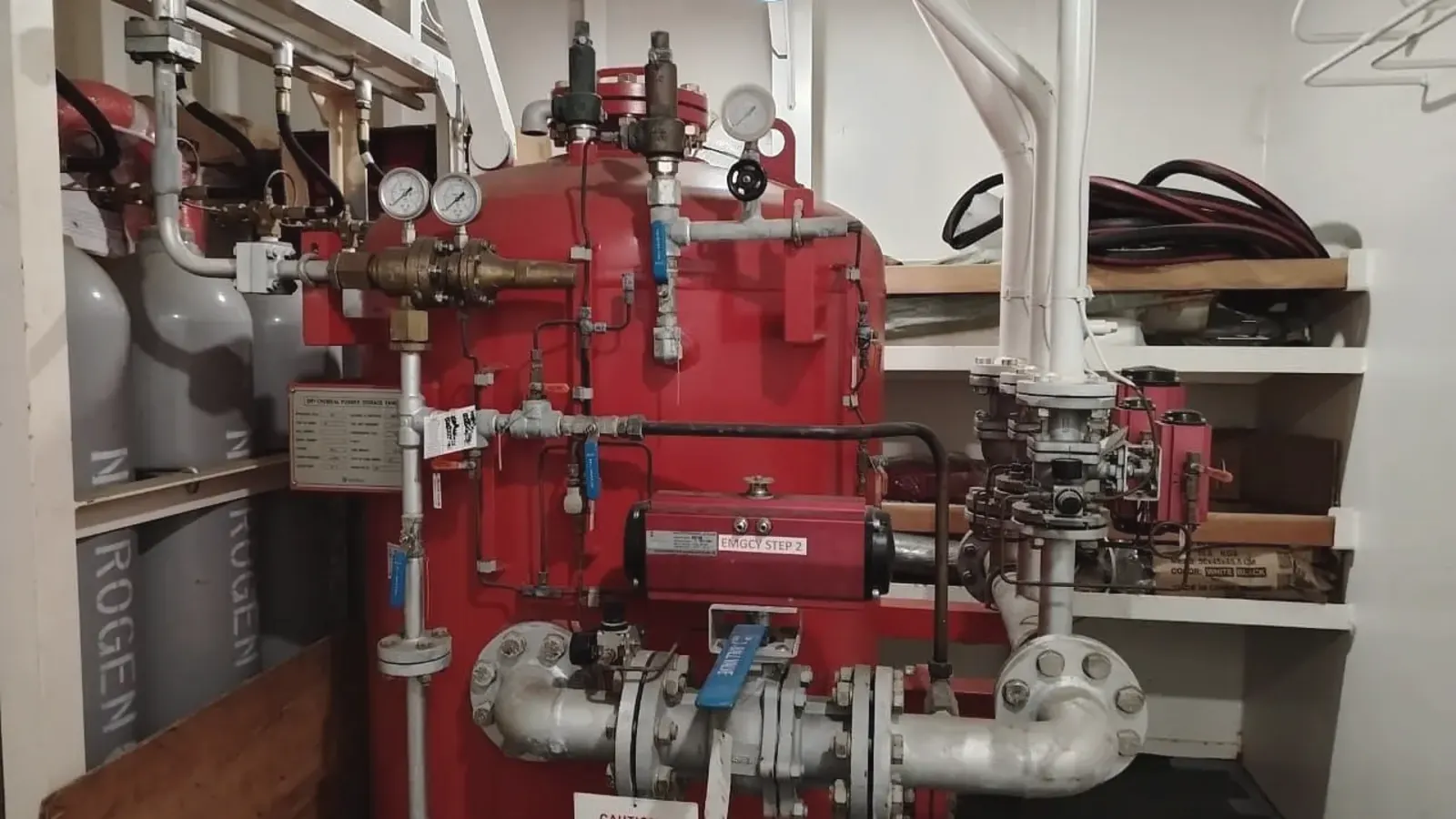
A ship cannot call the fire brigade. When a fire starts in the engine room, the cargo hold or the galley duct, the systems built into the ship have to find it, hold it inside its space and put it out. Those systems sit unused for years and are expected to work perfectly the one time they are needed. They can also kill: from 1975 to 2000, unintended discharges of carbon dioxide (CO2) fire-extinguishing systems caused 72 deaths and 145 injuries, mainly in the marine industry and mostly during maintenance on or near the system itself. In 2019, a CO2 leak during repair work on a cargo ship in Weihai, China, killed 10 people. Fire safety is also the area port State control inspectors write up most: in 2023, fire safety measures made up about one fifth of all deficiencies recorded by the Tokyo MOU.
This course follows the fixed systems from the rule book to the engine room. It starts with SOLAS chapter II-2 and the Fire Safety Systems (FSS) Code: which spaces need which system, and how much extinguishing medium is enough. It then takes each family of systems in turn: CO2 (the weighing, the blow-through and the 10-yearly cylinder tests under MSC.1/Circ.1318/Rev.1), foam and the annual foam concentrate analysis (including the PFOS ban that took effect on 1 January 2026), water mist, sprinklers and water spray, galley exhaust ducts and deep-fat fryers, fire detection, and the passive protection of fire doors, dampers and fire-rated divisions. The last lesson pulls everything into one maintenance plan, from the weekly lamp test to the ten-yearly hydrostatic test, and shows who does what.
Every rule statement is cited to the instrument and paragraph, so you can check it against your flag’s requirements and your class society’s rules. The manufacturer’s instructions always come first for your particular system.
3D
Fire safety
Check, service and test extinguishers, breathing sets and fire hoses the way surveyors expect.
7 lessons1 h 40 minIntroductory
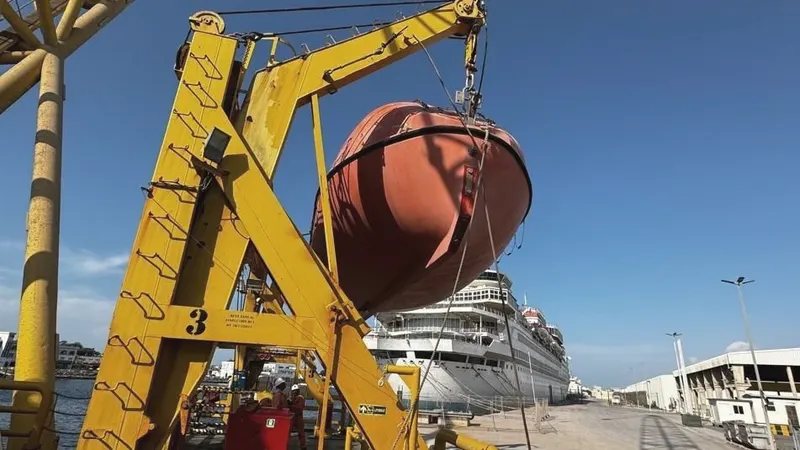 3D
Lifeboats and liferafts
Why lifeboats hurt people, which rules keep crews safe, and what to check, log and leave to specialists.
8 lessons1 h 30 minIntroductory
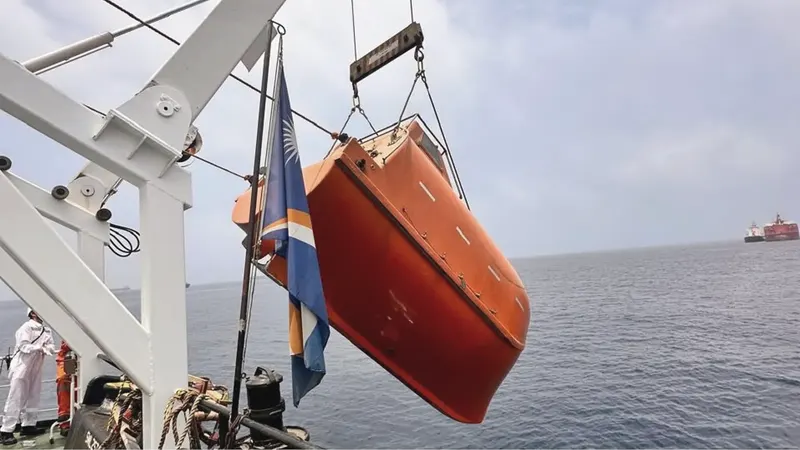 3D
Lifeboats and liferafts
What the annual and five-yearly lifeboat examinations must cover, step by step, from the hull to the winch brake.
8 lessons2 hAdvanced