
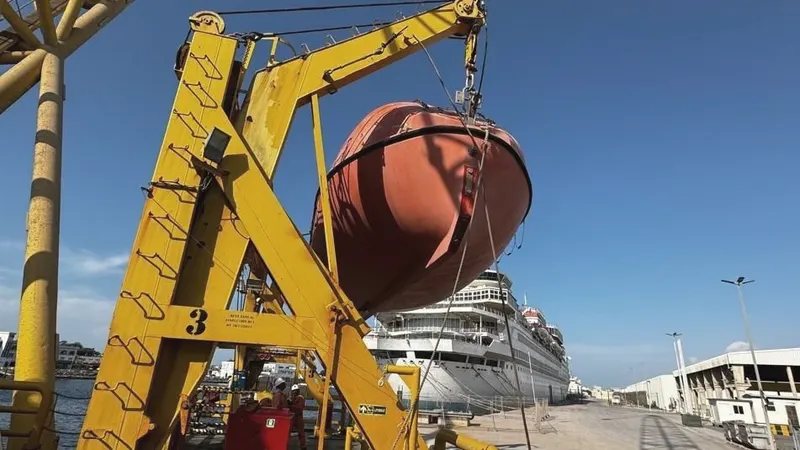
 3D
Lifeboats and liferafts
Lifeboat safety and the rules
Why lifeboats hurt people, which rules keep crews safe, and what to check, log and leave to specialists.
8 lessons1 h 30 minIntroductory
Launch period. Every course is free for a limited time. What happens after
Twenty hands-on lessons on ship hydraulics, from the first push of a jack to crane circuits and steering gear.
20 lessons 2 h 16 min Introductory 3D simulator in every lesson Final quiz Course completed card
Level 1 · Foundations
Pressure in a trapped liquid pushes equally on every surface it touches, so a small piston and a big piston share the same pressure, and the big one gets the bigger force.
Flow decides how fast things move. Pressure is how hard the oil has to push to make that happen, and it comes from the load and from every restriction the oil passes through.
The pump makes flow, the load makes pressure, the relief valve sets the limit and the control valve decides where the oil goes. Every hydraulic machine is built on these four parts.
A hydraulic diagram is drawn with a small set of standard shapes: circles for pumps and motors, squares for valves, rectangles for cylinders. Learn twelve and you can read most machine schematics.
Viscosity is how thick the oil is. Hot oil thins and leaks through every clearance; cold oil thickens and starves the pump. Choosing the grade means keeping the oil in its ideal band at your real working temperature.
Level 2 · Components
Two meshing gears carry oil round the outside of the housing in the spaces between their teeth, and the mesh in the middle squeezes it out. Every turn moves the same volume, so flow follows speed.
Pistons in a rotating barrel slide on a tilted swashplate, so each one draws oil in for half a turn and pushes it out for the other half. Change the tilt and you change the flow without changing the speed.
A relief valve is a spring holding a poppet shut. When pressure times seat area beats the spring, it opens and sends oil back to tank, which caps the system pressure and turns that flow into heat.
A directional valve is a precision spool sliding in a bore. Its lands open and close passages between the pump, the tank and the two sides of a cylinder; the shape of the lands in the middle position decides what the machine does when you let go.
A check valve lets oil through one way and blocks it the other. A pilot-operated check adds a small piston that can push it open on command, so a cylinder holds its load until you deliberately lower it.
A counterbalance valve sits on the cylinder and holds the load until pilot pressure from the other side opens it just enough to let the oil out as fast as the pump fills the cylinder. The load comes down under control instead of falling.
A cylinder turns pressure into force and flow into speed. The full piston area pushes, the ring around the rod pulls, and regeneration trades force for speed.
A hydraulic motor is a pump run backwards: oil flow turns it, and the pressure needed rises with the torque the load demands. On a winch a spring-applied brake holds the load whenever the oil is off.
An accumulator stores oil under pressure by squeezing nitrogen in a bladder. How much oil it gives back depends on the precharge and the working pressure range, not just its size.
Most hydraulic failures start with dirt. Particles the size of a valve's clearance jam and score it, so the filter has to catch them, and the oil cleanliness code tells you whether it does.
Level 3 · Systems and faults
A load-sensing pump reads the pressure the load needs and makes only a small margin more, delivering only the flow the valve asks for. The same job that wastes most of a fixed pump's power wastes almost nothing.
Every kilowatt the motor puts in that doesn't do useful work ends up as heat in the oil. The oil settles at the temperature where the cooler and tank get rid of heat as fast as the system makes it.
Cavitation is a pump starved of oil, so bubbles form at the inlet and implode on the pressure side. Aeration is air getting into the oil. Both make noise and both destroy pumps, but the fixes are different.
Pumps push oil into rams, the rams push a crosshead along the tiller, and the tiller turns the rudder stock. Follow-up control stops the rudder at the helm order, and locking valves hold it there against the water.
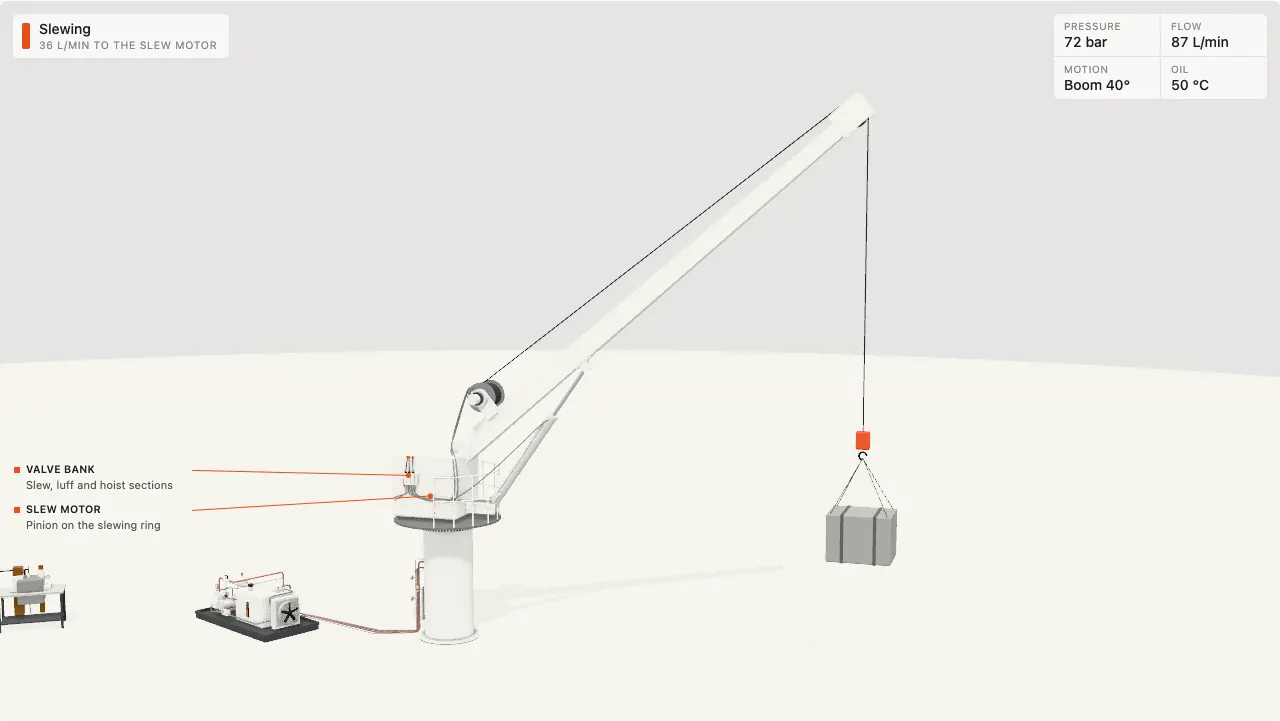
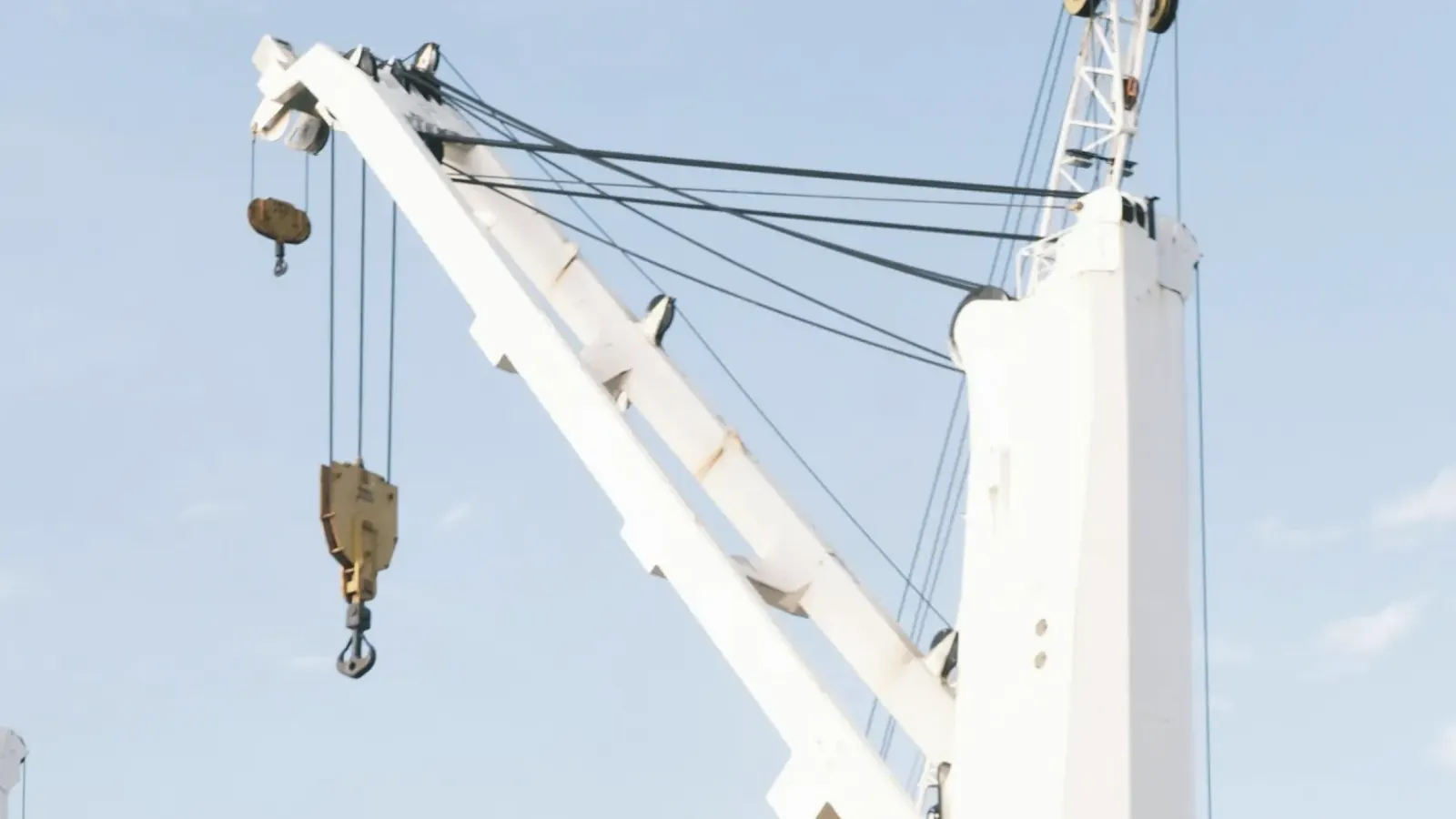
One pump feeds a valve bank with a section for each movement. Run two at once and the oil goes to whichever needs the least pressure, so the crane's behaviour depends as much on the circuit as on the load.
Finish every lesson and pass the final quiz (15 of 20) to get a Course completed card with your name and a QR code anyone can scan to verify.
Share it on LinkedIn, WhatsApp and elsewhere, or download the picture.
Learn how hydraulics works by playing with it. Every lesson has an animation in real units: pump a jack, set a relief valve, swing a crane, and switch on a fault to see the symptom you would meet on board.
The course starts with what any deck or engine-room hand needs (pressure, flow and the basic circuit), moves on to the components (pumps, valves, cylinders, motors, accumulators and filters) and ends with whole systems: load sensing, heat, cavitation, a provision crane and ship’s steering gear. Read each lesson at the depth you want: Simple, Technical or Deep dive.
3D
Lifeboats and liferafts
Why lifeboats hurt people, which rules keep crews safe, and what to check, log and leave to specialists.
8 lessons1 h 30 minIntroductory
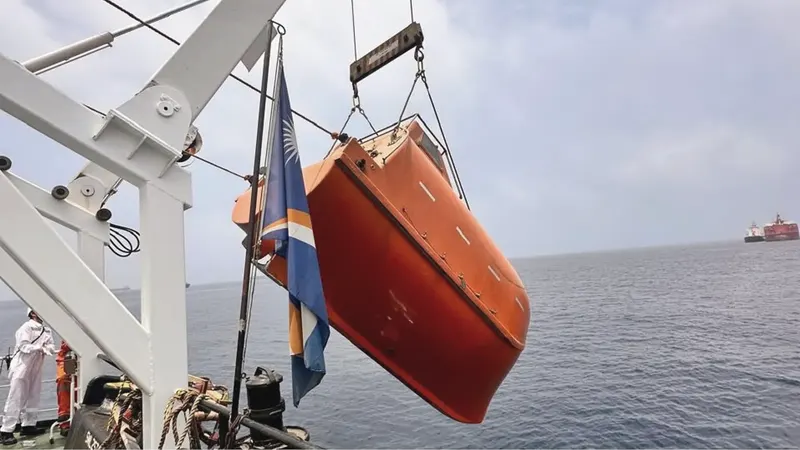 3D
Lifeboats and liferafts
What the annual and five-yearly lifeboat examinations must cover, step by step, from the hull to the winch brake.
8 lessons2 hAdvanced
 3D
Lifeboats and liferafts
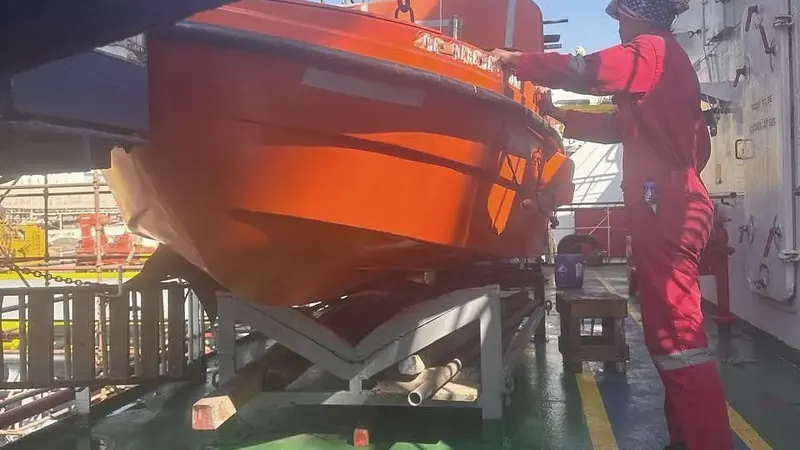
How lifeboats, rescue boats and their davits work, how they are examined and load-tested, and how to drill safely.
9 lessons2 h 10 minPractical